




























































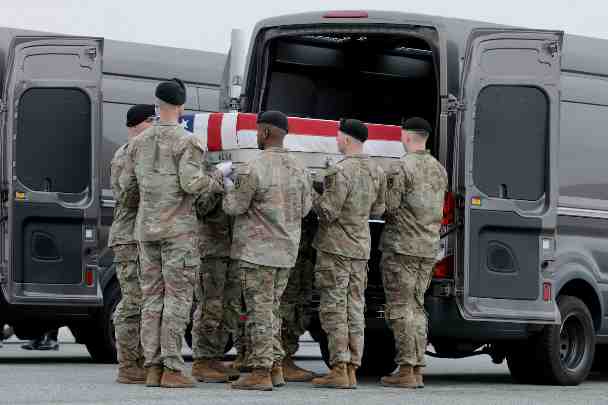
TEHRAN/DOHA/WASHINGTON (MNN); The United States has identified six American soldiers killed in an Iranian drone attack in Kuwait, marking the first confirmed US combat fatalities of the ongoing war with Iran, as fresh military strikes by both sides further escalated tensions across the Gulf region.

The Pentagon confirmed that the six soldiers, all assigned to the 103rd Expeditionary Sustainment Command, were killed in a March 1 Iranian drone strike on a US military installation near Camp Arifjan at Port Shuaiba, Kuwait. More than 30 other service members were wounded in the attack. The Pentagon released the identities of the soldiers after notifying their families.
Recent reports by US media have also revealed that survivors of the attack claimed they had repeatedly warned senior commanders about inadequate protection against drone threats before the strike. The attack has since intensified scrutiny of US force protection measures at military installations across the Gulf.
Meanwhile, the conflict entered another dangerous phase on Sunday as Iran and the United States exchanged fresh strikes across the region.
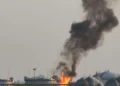
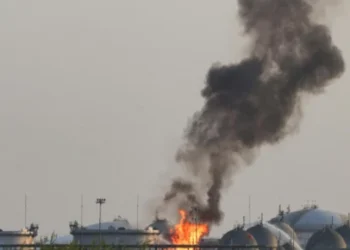
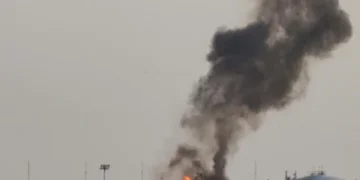
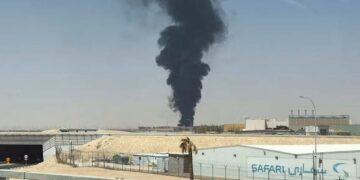
Iran’s Fars News Agency reported that the Islamic Revolutionary Guard Corps (IRGC) launched drone attacks targeting US High Mobility Artillery Rocket System (HIMARS) launchers and ammunition depots in Kuwait. However, Kuwaiti authorities did not confirm the Iranian claim, saying only that three northern border security centres and an offshore oil drilling platform were hit in what the Defence Ministry described as a “criminal attack.”
According to Kuwait’s Defence Ministry, the attacks caused material damage and injured one worker at the Kuwait Oil Company drilling platform located in the country’s territorial waters.
Iranian officials claimed the attacks targeted American military assets not only in Kuwait but also in Qatar, Bahrain, Oman, Jordan and the United Arab Emirates. None of those governments publicly confirmed that US military facilities had been struck.
Qatar strongly condemned the attacks, describing them as a blatant violation of its sovereignty and territorial integrity as well as international law. Doha warned that the continued military escalation threatened regional stability and held Iran legally responsible for the consequences of its actions.
Oman also lodged a formal diplomatic protest by summoning the Iranian ambassador following reported drone strikes in Musandam and Al Batinah provinces.
The United Arab Emirates, Bahrain and Kuwait similarly condemned the attacks and reaffirmed their commitment to protecting national security.
On the other side of the Gulf, Iran reported fresh American airstrikes targeting strategic military positions in Hormozgan province.
Explosions were reported near Bandar Abbas, Qeshm Island and Hajjiabad, all of which are considered strategically significant due to their proximity to the Strait of Hormuz.
Bandar Abbas hosts Iran’s largest commercial port and serves as the country’s principal gateway for imports and exports, while Qeshm Island houses major naval facilities, radar systems and telecommunications infrastructure belonging to the IRGC.
Military analysts say control over these locations is critical for Iran’s ability to monitor and regulate shipping through the Strait of Hormuz, one of the world’s busiest oil transit routes.
According to Iran’s state-run IRNA news agency, between 10 and 11 enemy projectiles struck military positions on Qeshm Island. Governor Hossein Amir Teymouri said all targeted sites were military installations and no casualties had been reported.
Explosions were also heard in Bandar Abbas and Hajjiabad, where Iranian officials said investigations into the attacks were continuing.
Iran’s state-owned electricity company, Tavanir, said the latest US strikes caused widespread damage to the country’s power infrastructure.
The company reported that more than 2,000 points on the national electricity grid had been damaged, resulting in a reduction of approximately 4,200 megawatts in electricity generation capacity.
Tavanir’s chief executive appealed for public cooperation, saying repair teams were working under difficult conditions while also coping with increased electricity demand caused by extreme summer temperatures.
The latest exchange of attacks comes despite ongoing diplomatic efforts by regional mediators, including Pakistan and Qatar, to revive negotiations between Tehran and Washington.
However, the renewed military confrontation has raised fresh concerns that prospects for diplomacy are rapidly diminishing as both sides continue to expand the conflict across the Gulf.