






































































DUBAI (MNN); Tensions in the Persian Gulf have escalated sharply after Iran launched a drone attack targeting Bahrain while a commercial vessel was struck in the Strait of Hormuz, in what appears to be Tehran’s retaliation for recent U.S. airstrikes on Iranian military positions.

The latest exchange has raised fears that the fragile ceasefire and diplomatic understandings between Washington and Tehran could collapse, threatening regional stability and global energy supplies.
According to Bahraini authorities, several Iranian drones targeted the island kingdom, which hosts the headquarters of the U.S. Navy’s Fifth Fleet. Bahrain condemned the attack as a serious violation of its sovereignty and a direct threat to regional security. While officials reported no significant casualties or major infrastructure damage, the incident prompted heightened military readiness across the Gulf.
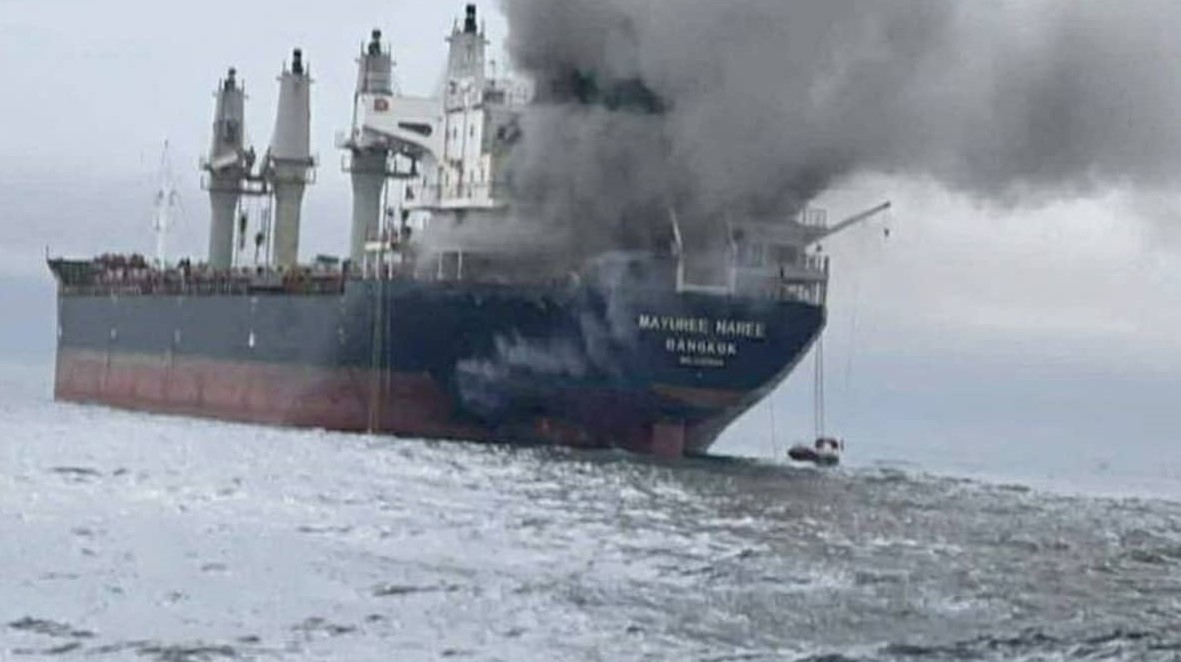
At nearly the same time, a commercial tanker navigating the Strait of Hormuz was struck by an unidentified projectile. Maritime security agencies confirmed the vessel sustained damage but remained afloat and continued its voyage. Investigators are still examining the circumstances surrounding the attack, although regional security officials suspect it was linked to the escalating confrontation between Iran and the United States.
The latest violence follows U.S. airstrikes carried out against Iranian missile storage sites, drone facilities, and coastal radar installations. Washington said the strikes were launched in response to an earlier Iranian drone attack on a Singapore-flagged cargo vessel transiting the Strait of Hormuz. U.S. Central Command described the operation as a limited military response intended to protect freedom of navigation and deter further attacks on commercial shipping.
Iran’s Islamic Revolutionary Guard Corps (IRGC) claimed responsibility for attacks on what it described as U.S.-linked military targets in the region, saying the strikes were retaliation for what Tehran called “barbaric” American air attacks. Iranian officials accused Washington of violating previous understandings designed to reduce tensions and warned that further military action would be met with a stronger response.
The Strait of Hormuz remains one of the world’s most strategically important waterways, with roughly one-fifth of global seaborne oil passing through the narrow passage each day. Any disruption to shipping in the strait can have immediate consequences for global energy markets, insurance costs, and international trade. Although oil markets remained relatively stable due to weekend trading, maritime security organizations have raised threat levels for commercial vessels operating in the Gulf.
Several international shipping companies have begun reassessing transit plans through the Strait of Hormuz, while some vessels have altered routes or delayed voyages as a precaution. Maritime authorities have also warned of increased risks from drones, missiles, and possible naval mines in the area. The International Maritime Organization has temporarily suspended some evacuation and safety operations until security conditions improve.
The United States has reaffirmed its commitment to maintaining freedom of navigation in the Gulf and warned Iran against further attacks on commercial shipping or American interests. U.S. Vice President JD Vance said disputes should be resolved through diplomacy, cautioning that any additional aggression would receive a firm military response.
Regional governments, including Bahrain and several Gulf allies, have strongly condemned the attacks and called for restraint to prevent a broader conflict. Security analysts warn that continued retaliatory strikes could derail ongoing diplomatic efforts and increase the risk of a wider regional confrontation involving multiple countries.
Despite continued diplomatic contacts between Washington and Tehran, the latest incidents demonstrate how quickly tensions can escalate in one of the world’s most sensitive geopolitical flashpoints. International observers remain concerned that any further attacks in the Strait of Hormuz could significantly disrupt global energy supplies and undermine efforts to restore stability across the Middle East.