




























































Iran has reached a preliminary framework of understanding with Oman regarding the Strait of Hormuz, according to an Iranian official, with the final agreement and details expected to be announced soon.

Hassan Ghashghavi, spokesman for Iran’s parliament’s National Security Commission, said the two sides had agreed on the broad framework but stressed that the final decision would have to be approved by senior authorities.
“The general framework of the understanding with Oman has been determined, and the final text and details will be announced soon,” Ghashghavi said. “Of course, the final decision must be made at higher levels.”
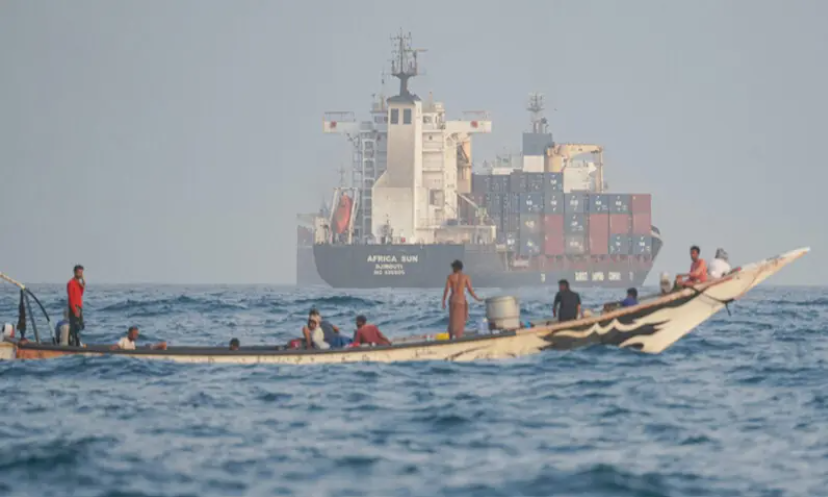
The Strait of Hormuz is a crucial global oil shipping route, carrying around one-fifth of worldwide oil consumption. Traffic through the waterway has faced repeated disruptions since the US-Israeli war with Iran expanded into a wider regional conflict, with attacks on commercial vessels increasing security concerns and freight costs.
However, industry sources said a proposed arrangement that would give Iran control over ships entering the Gulf through the strait could face difficulties because of US sanctions and restrictive insurance requirements.
Shipping activity drops
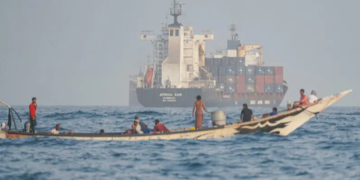
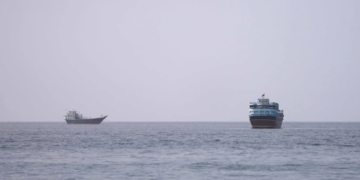
Vessel traffic through the Strait of Hormuz has fallen sharply this week. Data showed that 33 vessels passed through the waterway from Monday to Thursday, compared with 50 during the same period the previous week, as shipping companies monitored diplomatic efforts between Iran and Oman.
Only four vessels crossed the strait on the previous day, including the very large crude carrier Nissos Kea, which was carrying around 2 million barrels of Basrah crude loaded in Iraq.
Two other vessels were transporting liquefied petroleum gas, while another was a minor bulk carrier.
Only six crude oil tankers have left the strait this week, while 21 vessels have entered it, most using the Iranian route.
Chinese and Indian refiners have reportedly been looking for ships willing to enter the strait and collect discounted crude from Iraq’s Basrah Oil Terminal. However, shipping sources said no vessels had been secured because shipowners remained reluctant to navigate the waterway amid security risks.
Meanwhile, Abu Dhabi National Oil Company (ADNOC) said attacks on its vessels had significantly disrupted its operations.
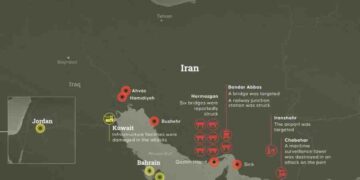
The company said 15 of its vessels had been targeted by missiles and drones while travelling through the Strait of Hormuz since the conflict began. Three attacks occurred this week, resulting in the death of one crew member and injuries to 20 others.
US imposes fresh sanctions on Iran
The United States has also introduced new sanctions against companies, exchange houses and financial intermediaries that Washington alleges helped Iran secretly transfer hundreds of millions of dollars through the international financial system.
“Teapot refinery purchases of Iranian oil provide the primary economic lifeline for the Iranian regime, the world’s leading state sponsor of terror,” US Treasury Secretary Scott Bessent said.
State Department spokesperson Tommy Pigott said the sanctions were designed to “cut the financial lifelines that sustain Iran’s ruling elite”.
Pigott alleged that the targeted networks helped Tehran access oil revenues and circumvent sanctions by moving money through front companies.
Iran says diplomacy must continue
Iranian Deputy Foreign Minister Kazem Gharibabadi said diplomacy should continue even during wartime, although its language and approach must reflect the circumstances.
He argued that diplomatic engagement should not be interpreted as weakness and warned that “unnecessary flexibility emboldens the enemy”.
“It is correct that when a country is at war, the door to diplomacy should not be closed, as most wars have been resolved through diplomacy and negotiation,” he said. “Diplomacy and the battlefield must be fully coordinated … this coordination has never been as strong as it is now.”