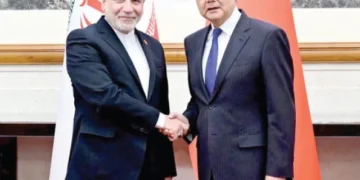



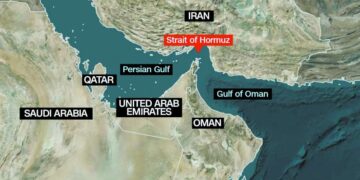































































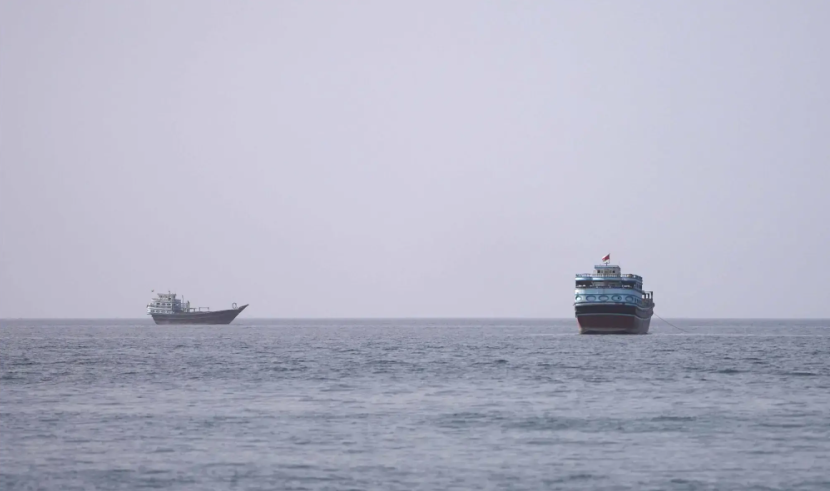
TEHRAN: Iran and Oman have agreed on a proposed shipping route through the Strait of Hormuz and are finalising arrangements for the joint management of maritime traffic, according to Iran’s Foreign Ministry.

Foreign Ministry spokesperson Esmaeil Baqaei said the two countries had agreed on the “geographical coordinates of the route” and that a joint statement outlining the key points of the agreement is in its final stages, provided there is no interference from third parties.
According to Iran’s state-run IRNA news agency, Baqaei said the negotiations with Oman were progressing but cautioned that any agreement would not automatically make the strategic waterway safe for all vessels.
“The factors making the Strait of Hormuz insecure still exist on the part of the United States, particularly the naval blockade and other aggressive and threatening actions against Iran and its interests,” he said.
Iran has maintained that ships should follow a route close to its coastline after imposing an effective blockade on the strait, while many vessels have continued using a southern route near Oman, where some have reportedly come under attack.
Iranian Deputy Foreign Minister Kazem Gharibabadi said the proposed route would pass through both Iranian and Omani territorial waters.
“A significant portion of this new route is located in Iranian territorial waters, and a part of it is in Omani territorial waters,” he said. “It is designed in such a way that commercial ships will pass through Iranian territorial waters, both on the inbound and outbound legs of their journey.”
He added that discussions with Oman had “reached fundamental understandings” on the routing of maritime traffic and that the agreement was close to being finalised.
Meanwhile, US President Donald Trump said Washington and Tehran had held “all-day negotiation” on Tuesday and expressed optimism that the Strait of Hormuz would reopen soon.
“The Strait of Hormuz is going to be open very soon,” Trump told Fox News. “If they back out again, they are going to get hit really hard.”
Reuters, citing regional sources, reported that negotiators are still discussing how authority over the route would be exercised, with Gulf states pushing for regional oversight of ship inspections and voluntary payment of any associated fees.
Iran Warns Gulf States Against Renewed US Strikes
In a separate development, Reuters reported that Iran warned several Gulf countries that any renewed US military attack on its territory would prompt retaliation against critical energy infrastructure across the region.
According to the report, Iranian Foreign Minister Abbas Araghchi held discussions with his counterparts in Saudi Arabia, Qatar, Turkey, and a senior Pakistani official, urging regional allies to persuade Washington to avoid further military action.
“We’re ready to retaliate, but finding a diplomatic solution is the best way to avoid wider escalation and destruction across the region,” sources quoted Araghchi as saying.
The report added that Saudi Crown Prince Mohammed bin Salman later spoke with President Trump, encouraging him to delay military action and pursue negotiations and a diplomatic resolution.
Houthis Claim New Attacks on Saudi Oil Tankers
Separately, Yemen’s Houthi movement claimed responsibility for attacks on two Saudi oil tankers, saying it had targeted the vessels Wafa in the northern Red Sea and Daisy in the Gulf of Aden with ballistic missiles.
Houthi spokesperson Yahya Saree said the attacks were successful, while Saudi authorities had not immediately commented on the claims.