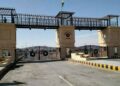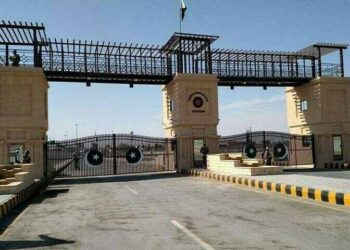



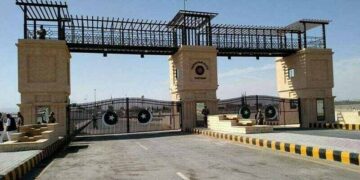









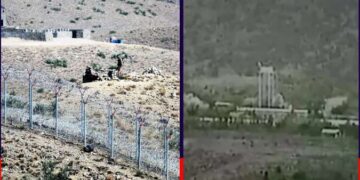











































GWADAR/QUETTA (MNN); Pakistan has suspended trade with Iran through the official Gabd-Rimdan (250) and Taftan border crossings, according to a report published in Dawn on Saturday, raising concerns over energy supplies, rising prices and losses to businesses.

The Ministry of Commerce issued a memorandum on Friday, seen by Dawn, withdrawing with immediate effect its earlier order No. 9(3)2017-Iran, dated October 3. The memorandum did not specify the reason for suspending trade.
Separately, the Quetta Chamber of Commerce and Industry (QCCI) has advised businesses engaged in trade with Iran to stop placing new import and export orders until further notice.
Sources said Pakistani and Iranian authorities had made initial contact following the suspension. Meanwhile, hundreds of freight vehicles carrying liquefied petroleum gas (LPG), rice, fresh fruit and other essential commodities were reportedly stranded on both sides of the border.
According to Iran-based Wana news agency, passenger traffic through the Gabd-Rimdan crossing remains operational, although commercial activities have been suspended. The agency quoted Syed Hossein Hosseini, director general of Iran’s Transit Office, as confirming the halt in commercial operations.
LPG Shortage Fears Grow
The Gabd-Rimdan crossing had emerged as a major route for Pakistan’s energy imports, with more than 4,000 tonnes of LPG reportedly entering the country daily through the route. Exports of Pakistani products, particularly rice, had also increased significantly in recent months, generating millions of dollars in foreign exchange.
Trade and energy sector sources warned that the suspension could worsen LPG shortages in Karachi and other parts of Pakistan. With the Taftan route already facing disruptions amid unrest in Balochistan, the latest closure could further restrict supplies and push up LPG prices in the open market.
Local traders and the chambers of commerce have warned that the disruption could cause substantial financial losses, affect livelihoods and create additional pressure on the country’s energy supply.
Recent Efforts to Expand Bilateral Trade
Since March, Islamabad and Tehran have introduced several measures to facilitate cross-border commerce, including simplifying customs procedures, formalising Taftan as a customs station and notifying new transit routes. These steps were taken amid the ongoing US-Iran war, which has placed additional pressure on regional and international economies.
In early August, an Iranian delegation led by Trade and Industry Minister Mohammad Atabak visited Islamabad for the 10th session of the Pakistan-Iran Joint Trade Committee.
During the visit, the delegation also met Prime Minister Shehbaz Sharif. Both sides agreed to expand bilateral trade by keeping border crossings operational around the clock, improving logistics and harmonising customs procedures.
The visit came only a few months after reports that trade between Pakistan and Iran through the Gabd-Rimdan crossing had come to a complete standstill.
According to Gwadar Chamber of Commerce and Industry President Jiand Hoot, trade through the Panjgur and Mand-Radig border crossings was virtually non-existent because of inadequate road infrastructure and recurring incidents of arson and vehicle burnings.
The latest suspension has renewed concerns about the stability of Pakistan-Iran trade and the potential impact on domestic energy supplies, exporters and border communities.