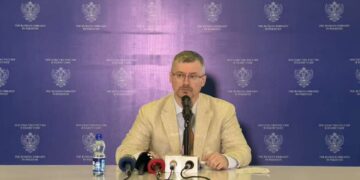






















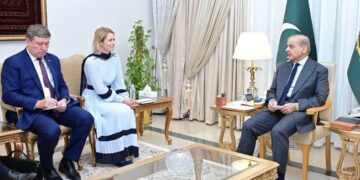








ISLAMABAD (MNN); Pakistan and Russia have agreed to strengthen bilateral security cooperation, deepen institutional ties and expand collaboration against organised crime, terrorism and cybercrime during Russian Interior Minister Vladimir Kolokoltsev’s visit to Pakistan.

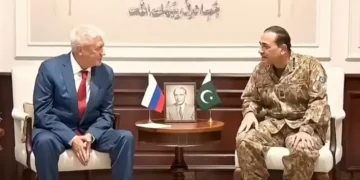
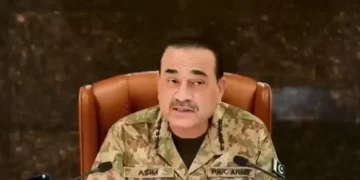
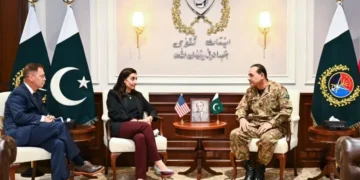
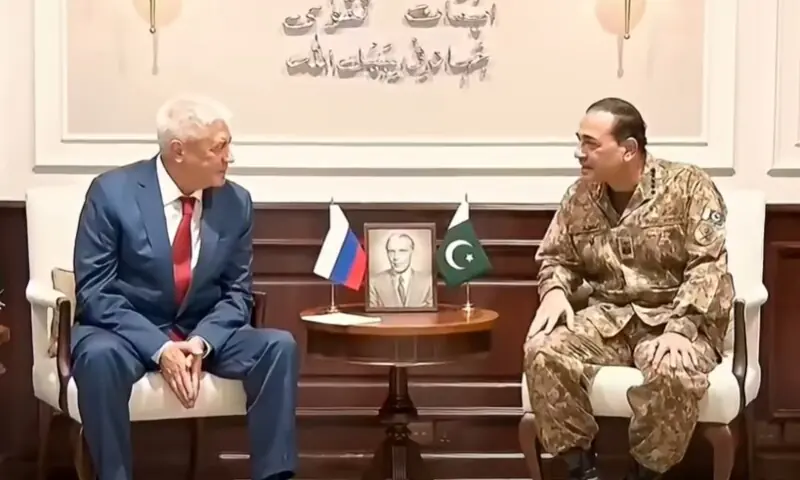
Kolokoltsev met Chief of Defence Forces and Chief of Army Staff Field Marshal Asim Munir at General Headquarters (GHQ) in Rawalpindi on Wednesday. According to the Inter-Services Public Relations (ISPR), the discussions focused on matters of mutual interest, the regional security situation and ways to enhance cooperation between the two countries’ security institutions.
The ISPR statement said both sides emphasised closer institutional links and improved coordination between their respective security agencies.
Field Marshal Munir reaffirmed Pakistan’s commitment to strengthening its longstanding relationship with Russia and expanding practical cooperation in areas of shared interest, particularly security. Kolokoltsev appreciated Pakistan’s contribution to regional peace and stability and acknowledged the professionalism and sacrifices of Pakistani security forces in combating terrorism.
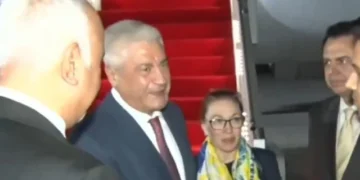
Kolokoltsev arrived in Pakistan on Monday for a four-day visit at the invitation of Interior Minister Mohsin Naqvi. His visit marks the first time a Russian interior minister has travelled to Pakistan.
Pakistan, Russia to Finalise Extradition Treaty
Earlier on Wednesday, Naqvi and Kolokoltsev agreed to finalise an extradition treaty and work towards signing a memorandum of understanding (MoU) on preventing organised crime and exchanging information.
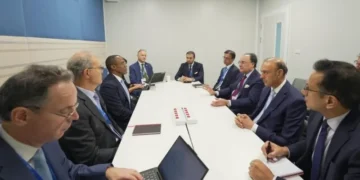
According to the Interior Ministry, the understanding was reached during a meeting in Islamabad, followed by delegation-level talks.
Naqvi described the proposed MoU on preventing organised crime as an important milestone in bilateral cooperation. Both sides also agreed to finalise an agreement on the exchange of criminals and ensure the early implementation of a readmission agreement.
The two countries pledged to strengthen cooperation between Pakistan’s Anti-Narcotics Force and relevant Russian institutions. They also agreed that working groups from both interior ministries would visit each other in the near future.
Discussions further covered the deployment of skilled Pakistani workers in Russia and measures to facilitate visa issuance for tourists and businesspeople.
The two sides also agreed to enhance cooperation between Pakistan’s National Police Academy and the Russian Police Academy to combat cybercrime.
Naqvi said easing visa procedures would promote people-to-people contacts. He also expressed Pakistan’s interest in benefiting from Russia’s experience in tackling cybercrime and noted that around 1,300 Pakistani students were currently studying in Russia, adding that Pakistan wanted more students to pursue education there.
Kolokoltsev stressed the need for joint measures against organised crime, including terrorism, drug smuggling and illegal migration. He also said Russia had achieved a 33 per cent reduction in cybercrime through effective measures.
The meeting was attended by Minister of State Tallal Chaudhry, the Russian ambassador to Pakistan, senior Interior Ministry officials and other representatives.
Growing Economic and Energy Cooperation
Pakistan and Russia have expanded their economic engagement in recent years, with energy cooperation emerging as an important area of mutual interest.
Russian President Vladimir Putin said in January that relations between Moscow and Islamabad were genuinely mutually beneficial. In July, Russian Deputy Prime Minister Alexei Overchuk described the two countries as natural allies and highlighted Pakistan’s importance as a strategic partner in the economic and energy sectors.
Following Western sanctions imposed over the Ukraine conflict, Russia sought alternative energy markets, while Pakistan looked for more affordable fuel supplies to reduce its import bill.
The energy partnership took a significant step in 2023 when Pakistan began importing Russian crude oil, adding another dimension to the expanding bilateral relationship.