




































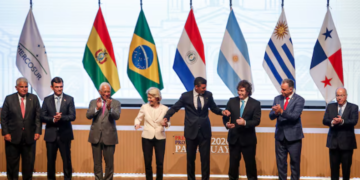













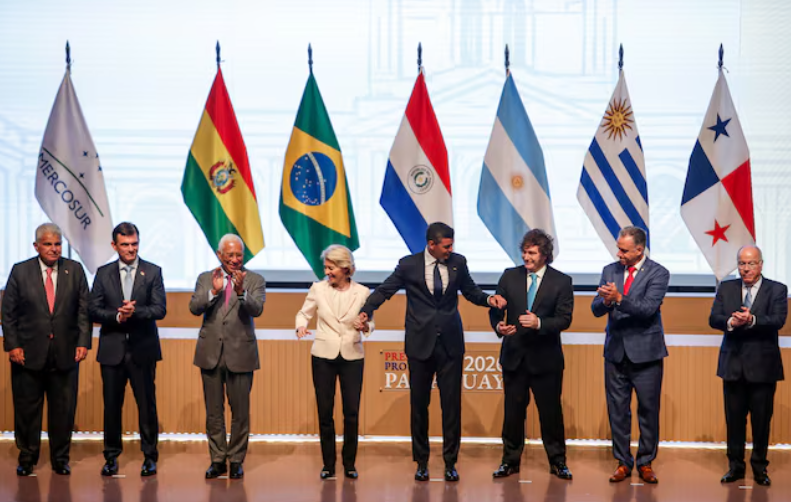
BRUSSELS: The European Union and the South American bloc Mercosur have moved ahead with implementing a long-debated free trade agreement, aiming to support exports and cushion the impact of US tariffs, even as challenges remain.

The deal, set to be provisionally applied from May 1, comes despite a legal challenge from the European Parliament, which has referred the agreement to the EU’s top court — a process that could take up to two years. However, the European Commission has decided to move forward in the meantime.
Supporters, including Germany and Spain, argue the pact will help counter the effects of tariffs imposed by US President Donald Trump and reduce dependence on China for key resources. Critics, particularly France, warn it could lead to an influx of cheaper agricultural imports such as beef and sugar, hurting local farmers, while environmental groups fear it may accelerate rainforest destruction.
Economists caution that while the agreement may provide some relief, its overall economic impact will be limited and unlikely to fully compensate for reduced trade with the United States.
The Mercosur pact is part of a broader push by the EU to secure trade deals with countries such as India, Indonesia, Australia, and Mexico following renewed US protectionist policies. These agreements are intended to strengthen global trade ties at a time when both US tariffs and Chinese export restrictions are disrupting the international trading system.
Despite these efforts, experts note that replacing the US as a major trading partner will be difficult due to its significantly higher GDP per capita. Estimates suggest the Mercosur agreement could increase EU GDP by just 0.05% by 2040, while a potential deal with India may add around 0.1%.
Analysts also highlight growing competition from China in key markets, where it has expanded its presence over the past two decades through investment and trade. Chinese exports have already surged in response to US tariffs, with significant increases in regions such as ASEAN, Latin America, Africa, and the Gulf.
While reduced tariffs under the Mercosur deal may improve the competitiveness of EU companies, experts stress that the bloc will need to strengthen its internal market to fully offset losses in US trade.