







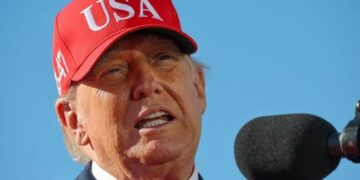






















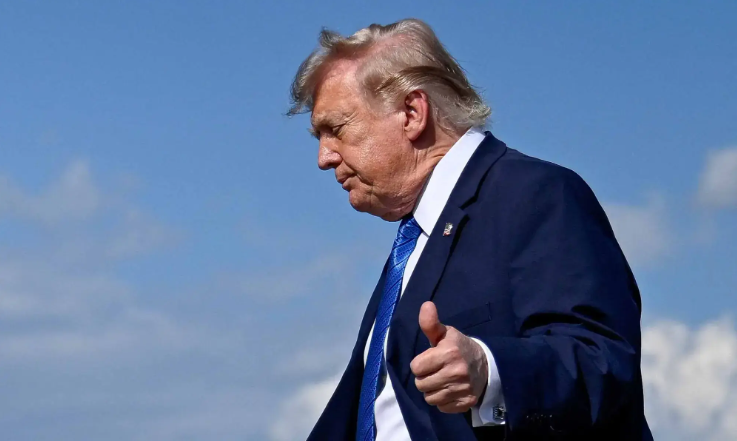
WASHINGTON / DUBAI / TEHRAN: US President Donald Trump said on Sunday that his administration was continuing low-profile contacts with Iran while watching economic pressure on Tehran increase following months of US military strikes, sanctions and a blockade, according to an interview with Axios.

“We are low keying it,” Trump was quoted as saying during a brief phone call. “We are only semi-negotiating with them. We are just watching Iran with its huge inflation and the fact they have no money.”
Meanwhile, Iran said on Sunday that an agreement with Oman to establish new shipping lanes in the Strait of Hormuz was nearing completion. However, Tehran reiterated that the vital waterway would not reopen until the United States met additional conditions.
Iran has effectively blocked the key energy route since the US and Israel launched attacks in late February. Tehran also wants to impose tolls on vessels using the passage and has accused some ships of trying to bypass its preferred route.
Iranian Foreign Minister Abbas Araghchi said the agreement concerning the strait was in the “final stages”, while repeating that the waterway would remain closed until other conditions were fulfilled.
The agreement would establish new shipping routes to be used once the US meets Iran’s demands and the strait is reopened, Iran’s Mehr news agency quoted him as saying. Araghchi denied that Tehran was negotiating directly with Washington, saying the two sides were merely “exchanging messages” through intermediaries.
Iran’s Revolutionary Guards also warned that the Strait of Hormuz would remain closed until the United States accepted Tehran’s demands, including compensation for damage caused by the war.
Iranian security chief Mohammad Bagher Zolghadr had outlined conditions for reopening the waterway on Saturday. These included ending the “war and aggression against Iran and its allies in Lebanon, Palestine, Yemen and Iraq”, lifting the US counter-blockade on Iranian ports, removing sanctions, unfreezing Iranian assets and providing compensation for wartime damage.
The Revolutionary Guards said they would maintain the closure “until the enemy accepts all our conditions… the strait is now actually a theatre of war for us and not just a waterway”.
Meeting with Khamenei
Iranian President Masoud Pezeshkian recently met Supreme Leader Ayatollah Mojtaba Khamenei, who has not appeared publicly since taking office at the beginning of the Middle East war, according to Khamenei’s office.
“Dr Masoud Pezeshkian met Ayatollah Mojtaba Khamenei and spoke with him at the start of his third year in the presidency,” the supreme leader’s office said in a statement, without specifying when the meeting took place.
The office said the two “discussed in detail the country’s issues and problems”, including the “current military situation and future prospects”.
New roles
Khamenei has appointed former Revolutionary Guards commander-in-chief Mohsen Rezaee as his representative to the Supreme National Security Council, Iran’s highest security body.
Rezaee replaces Mohammad Bagher Zolghadr, another former Guards commander who assumed leadership of the council in March. According to a statement from the supreme leader’s office, Zolghadr will now serve as a political adviser to Khamenei.