






























































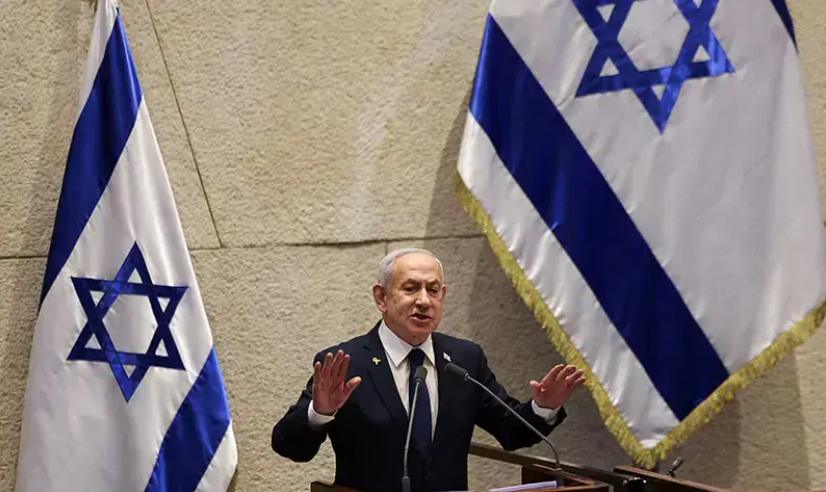
Israeli Prime Minister Benjamin Netanyahu’s government is moving quickly to pass a series of controversial bills before parliament dissolves, as he seeks to secure support from coalition allies ahead of national elections later this year.

With the Knesset, Israel’s 120-member parliament, expected to dissolve in the coming days, seven proposed laws remain on the agenda. Each bill represents a key demand of parties within Netanyahu’s ruling coalition.
By reaching political agreements with coalition partners, Netanyahu aims to reinforce his alliances and enter the late October elections from a stronger position, despite opinion polls indicating challenges in securing another term.
The veteran leader continues to face public criticism over the failures that preceded Hamas’ unprecedented October 7, 2023 attack, which led to the ongoing war in Gaza.
“While they’re busy with their coalition’s survival, we’re fighting for the country and for the interests of Israel’s citizens,” opposition leader Yair Lapid wrote on X.
The most disputed legislation involves exemptions from military service for ultra-Orthodox religious students. The issue has long been a major demand of religious parties, which have repeatedly threatened to collapse the government if their supporters lose the exemption.
The proposed Basic Law: Torah Study, which passed an initial reading in June, states that “the State of Israel shall recognise individuals who commit themselves to long-term Torah study as performing meaningful service for the benefit of the State and the Jewish people.”
The proposal has sparked months of protests across Israel and intensified political debate.
“The government is exploiting the final days of the Knesset’s session to pass laws against the army,” former military chief and Netanyahu rival Gadi Eisenkot wrote on X.
Eisenkot said his newly established Yashar party was the only political force capable of forming the next government, accusing Netanyahu’s coalition of rushing through legislation that would become difficult to pass after a change in leadership.
Under coalition agreements, lawmakers from the two ultra-Orthodox parties are expected to support legislation introduced by Netanyahu’s Likud party in return for backing the military exemption bill.
One such proposal seeks to reform regulations governing the broadcasting sector, including television, radio and streaming services. Supporters argue the reform would increase competition, while critics say it could allow political influence over media organisations and benefit outlets aligned with the government.
Another proposed reform targets the role of the state attorney general, who currently acts as the government’s legal adviser. Netanyahu’s Likud party wants to change the position by making the adviser’s legal opinions non-binding on the government.
Opposition figures have accused the government of attempting to weaken an independent institution that limits executive power and oversees criminal investigations.
Meanwhile, religious parties are pushing for the reversal of a previous government reform that ended the monopoly of religious authorities over kosher certification. Critics argue the proposed change mainly serves ultra-Orthodox parties, particularly Shas, while potentially increasing costs for businesses.
The Knesset is scheduled to dissolve automatically on July 15, marking the end of its summer session, with parliamentary elections expected to take place by October 27 at the latest.
However, lawmakers have the option to extend the session by up to 12 days, giving Netanyahu’s government additional time to pass the pending legislation.