













































Reuters: US President Donald Trump on Tuesday said he would lift sanctions on Turkiye and make a decision on a potential sale of F-35 stealth jets to Ankara, as Nato leaders unveiled arms deals worth tens of billions of dollars to drive home the message that they are heeding US calls to spend more to defend Europe.

Leaders were convening for a summit in the capital Ankara, hoping to project unity after another bruising year, in which the Iran war once again exposed cracks in the alliance that has underpinned Western security since the end of World War Two.
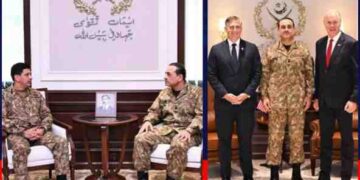
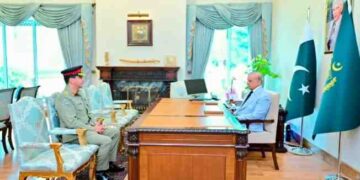
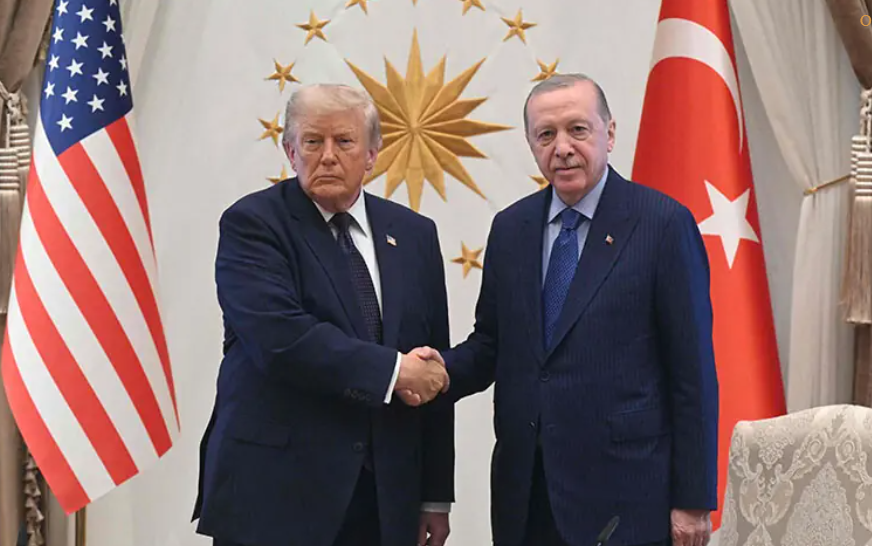
In a meeting with Turkish President Recep Tayyip Erdogan, Trump announced, “We’re going to be taking the sanctions off,” referring to the measures imposed under the Countering America’s Adversaries Through Sanctions Act (CAATSA).
In 2020, Washington imposed CAATSA sanctions on Turkiye over its acquisition of Russian S-400 air defence systems. It also removed Ankara from the F-35 fighter jet program, a move Turkiye called unjust and illegal.
Trump was expected to throw his support behind the potential sale of F-35s during the visit to Ankara, two sources familiar with the matter said on Tuesday, even as legal and congressional hurdles have yet to be fully resolved.
“It’s a decision we’re going to make,” Trump said, adding that he and Erdogan would also discuss trade.
Trump added that he might have boycotted the Nato summit altogether had it not been for his warm relations with the Turkish leader, and did not rule out further troop withdrawals from Europe.
“Well, we’re going to see. I was very disappointed with Nato,” he said, singling out Britain, France, Germany and Italy for not doing enough to support the US war on Iran.
Trump added that “we weren’t treated well” by the allies, even as he reiterated that he did not want or need their help.
“Before I asked, they said they wouldn’t be there, and we’ve invested trillions of dollars in Nato,” he noted.
Trump also said he had spoken to Russian President Vladimir Putin and Ukrainian President Volodymyr Zelensky before the summit about ending the war that started in February 2022 when Russia invaded its neighbour.
“I think they both want to make a deal. It’s too bad it took so long … Something’s going to come out,” he said.
Rutte wants defence industry revolution
NATO members have repeatedly tried to show Trump that they are stepping up. Nato Secretary General Mark Rutte said on Monday that Europeans had made “staggering” increases in defence spending.
Before Trump’s arrival, Rutte trumpeted a series of initiatives and deals at a defence industry forum, and called for a defence industry “revolution” across the alliance, warning over Russia’s massive military spending as well as China, North Korea and Iran.
“We don’t have the luxury of time. We need capabilities now to ensure we remain ready. The security situation demands it,” Rutte said. “The hum of machinery must become a roar.”
It was a rallying cry for Western arms firms to ramp up investment to increase capacity, and for governments to place long-term orders and create the conditions for companies to thrive.
Europe’s defence sector has often been criticised as fragmented and saddled with red tape and rivalries between companies and countries. That has left Europe more reliant on purchases of weapons from the United States.
Weak economic growth and the need to maintain generous state welfare provisions have also made defence spending a tougher sell in Europe.
The deals, which had been mostly kept under wraps to make a splash at the summit, included European countries buying surveillance drones from US company Northrop Grumman, and Nato buying planes from Sweden’s Saab.
Saab shares were the biggest gainers in Europe, up more than 5 per cent as investors bet on the company benefiting from European rearmament. Morgan Stanley upgraded the stock.
US defence company Lockheed Martin and Germany’s Rheinmetall signed a draft deal to jointly produce Army Tactical Missile System (ATACMS) missiles in Germany, a move that would mark the first non-US manufacture of the short-range ballistic missile.
Rutte said Nato allies will invest more than $40 billion in the next five years in their anti-drone capabilities.
Iran war prompted Trump to revive criticism of Nato
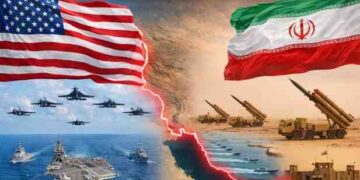
Tensions within Nato have deepened since the US attacked Iran in February. Trump has repeatedly criticised Nato members for insufficient support in the conflict, threatening to quit the alliance.
European officials insist they largely honoured commitments to let the US use their airspace and bases, despite not having been consulted about a deeply unpopular war that roiled their economies.
The US has also announced troop withdrawals from Europe and launched a six-month review of its military presence on the continent. European officials say they are braced for a repeat of some of Trump’s recent criticism and cannot be sure of a positive outcome.
There is also Trump’s volatile relationship with some leaders, most recently seen in a feud with Italian Prime Minister Giorgia Meloni.
Nato members are expected to reaffirm support for Ukraine and pledge assistance of €70bn ($80bn) in 2026.
Underscoring the stakes, Russia hammered the Kyiv region with missiles and drones on Monday, killing at least 28 people and exposing Ukraine’s critical shortage of US-made air-defence interceptors.