







































































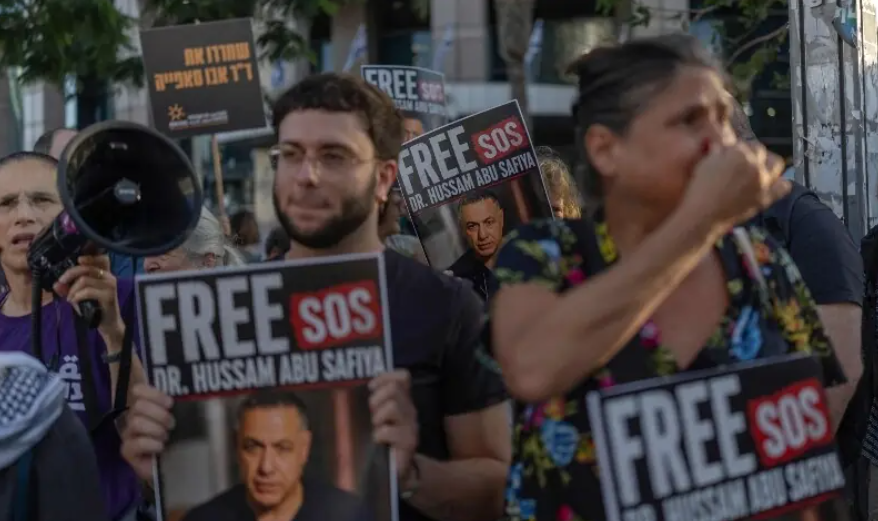
GENEVA: A United Nations human rights body on Monday ruled that Israel’s detention of Gazan doctor Hussam Abu Safiya was arbitrary and called for his immediate release, as rights organisations and his legal team warned that his health and life were at serious risk.

In its findings, the UN Working Group on Arbitrary Detention said Israel’s detention of Abu Safiya violated several provisions of the Universal Declaration of Human Rights and the International Covenant on Civil and Political Rights.
“The appropriate remedy would be to release Mr Abu Safiya immediately and accord him an enforceable right to compensation and other reparations,” the panel said.
The working group also expressed concern that Abu Safiya’s case, along with other complaints it has reviewed, could point to a broader pattern of arbitrary detention in Israel.
Israeli authorities did not immediately respond to requests for comment. According to the UN panel, Israel also did not respond when the working group sought information on the case in July last year.
The complaint was submitted by the MENA Rights Group, which said the 52-year-old paediatrician and director of Gaza’s Kamal Adwan Hospital has been detained since December 2024.
The rights group alleged that Abu Safiya has endured repeated periods of solitary confinement, prolonged interrogations, and physical abuse, including beatings with batons and electric shock sticks.
Earlier on Monday, his lawyer, Nasser Odeh, said through a prisoners’ advocacy group that Abu Safiya’s condition had deteriorated significantly and that he was being subjected to daily abuse. Footage from a Supreme Court hearing last month showed the doctor appearing noticeably thinner.
“If Dr Abu Safiya dies in that cell, it will be murder, and everyone who had the power to stop it — and did nothing — will be complicit,” said Steve Cutts, CEO of charity Medical Aid for Palestinians.
The Israel Prison Service has previously denied allegations that Abu Safiya and other detained medical professionals have been mistreated.
Last month, Israel’s Supreme Court rejected an appeal seeking his release, citing “confidential materials” under legislation governing so-called unlawful combatants, which permits detention for renewable indefinite periods.