



































































Saudi Arabia’s crude oil exports from the Red Sea are becoming increasingly difficult to track as tankers switch off their tracking systems to avoid potential attacks by Yemen’s Houthis, creating uncertainty over the actual impact on oil shipments.

Analysts said recent crude loadings from the Saudi port of Yanbu have been conducted “dark”, meaning vessels have disabled their AIS tracking signals while operating in areas considered vulnerable to attack.
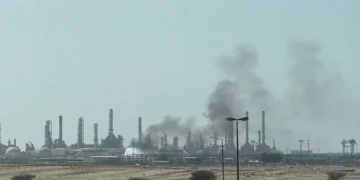
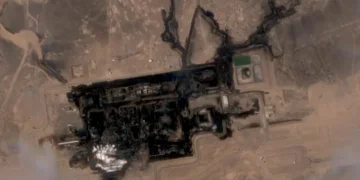
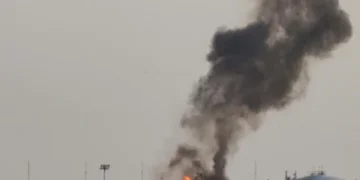
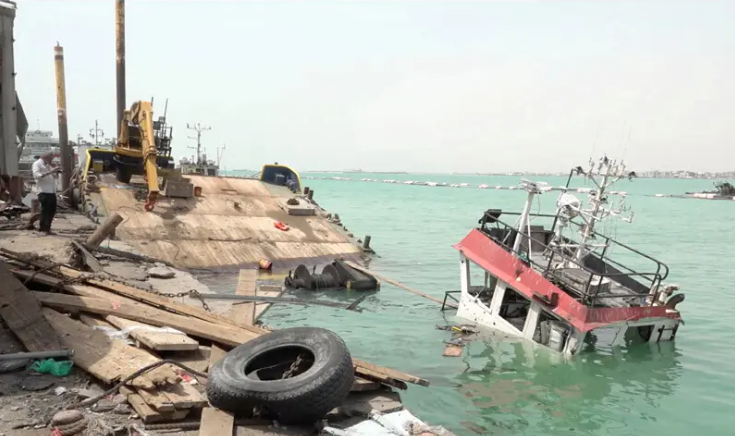
The Houthis declared a maritime embargo on Saudi Arabia on July 20 as part of their campaign targeting the United States and its allies in the Gulf conflict. Since then, the group has claimed attacks against Saudi-linked tankers, Yanbu oil facilities and the Jazan refinery, prompting vessels to conceal their movements.
The use of “dark voyages” has made it harder to determine the extent of disruption to Saudi crude exports. Ship-tracking companies have produced sharply different estimates, data that is closely monitored by the International Energy Agency, OPEC and oil traders.
For the week beginning August 3, Vortexa estimated that Yanbu loadings dropped to 2.38 million barrels per day from 2.71m bpd the previous week. Kpler estimated a much steeper decline to 1.78m bpd from 4.04m, while AXSMarine estimated an increase to 850,000 bpd from around 420,000 bpd.
Analysts monitoring the shipments are relying on satellite information and tracking data to reconstruct vessel movements after ships reappear on tracking systems once they leave high-risk areas.
Vortexa’s George Morris and Kpler’s Nhway Khin Soe said recent Yanbu cargoes were loaded “dark”. Around 70pc of Saudi Arabia’s west coast shipments have lacked continuous AIS coverage since July 23.
Houthi attacks have also reduced shipping traffic through the Bab al-Mandeb Strait, with vessel numbers falling to 32 from 50.
Saudi Arabia has increasingly redirected oil shipments through the Suez Canal or Egypt’s SUMED pipeline. Loadings at Sidi Kerir have reached a record 2.17m bpd, with Saudi crude accounting for around 90pc of the volume.
Iran-US tensions remain unresolved
Meanwhile, Iran and the United States remain at odds over efforts to establish a permanent end to the Gulf war.
A senior Iranian source said there had been no discussions about extending the ceasefire because Tehran believed the agreement had never formally begun.
“One of the issues that is being discussed via mediators is the US returning to the interim agreement and defining a timeframe,” the source said. “There has been absolutely no progress on this issue.”
Tensions between Washington and Tehran have also intensified in recent days.
US President Donald Trump claimed that the United States had control over the Strait of Hormuz.
“The US has total control over the Strait of Hormuz. I think we will keep it!” he wrote on Truth Social. “Our Naval Blockade is being called, by everyone, a wall of steel, and there is nothing Iran can do about it.”
Iranian security official Mohsen Rezaei, meanwhile, said the Strait of Hormuz would remain closed unless Washington agreed to Tehran’s conditions for ending the war.