






























MUSCAT/ISLAMABAD: Iran and Oman have reaffirmed their sovereign authority over the Strait of Hormuz and agreed to examine the possibility of charging fees for services related to the administration of the strategically important waterway, despite international concerns over any changes to its status.

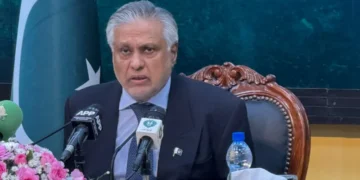
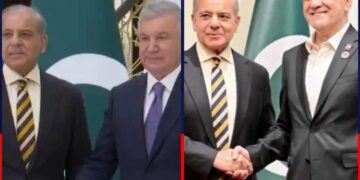
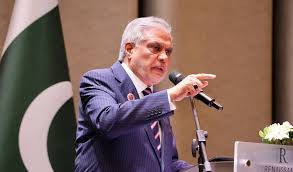
The announcement came as Deputy Prime Minister and Foreign Minister Ishaq Dar reiterated Pakistan’s support for maintaining the strait as a toll-free route, free from permits and service charges.
In a joint statement issued on Tuesday, Tehran and Muscat stressed their “sovereign rights over their territorial waters” while also committing to continued discussions on the future management of navigation through the strait. Oman’s foreign minister stated that both countries remained committed to ensuring “toll-free safe passage”.
According to the statement, the two sides agreed to establish a joint working group between their foreign ministries to continue dialogue on the matter. The group will work towards an agreement on future navigation management in the Strait of Hormuz, including maritime services that may be provided and the associated costs, in line with international standards.
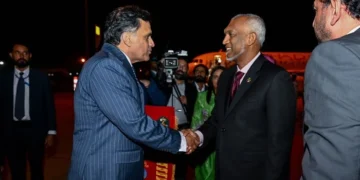
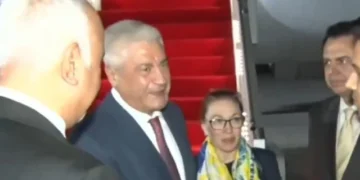
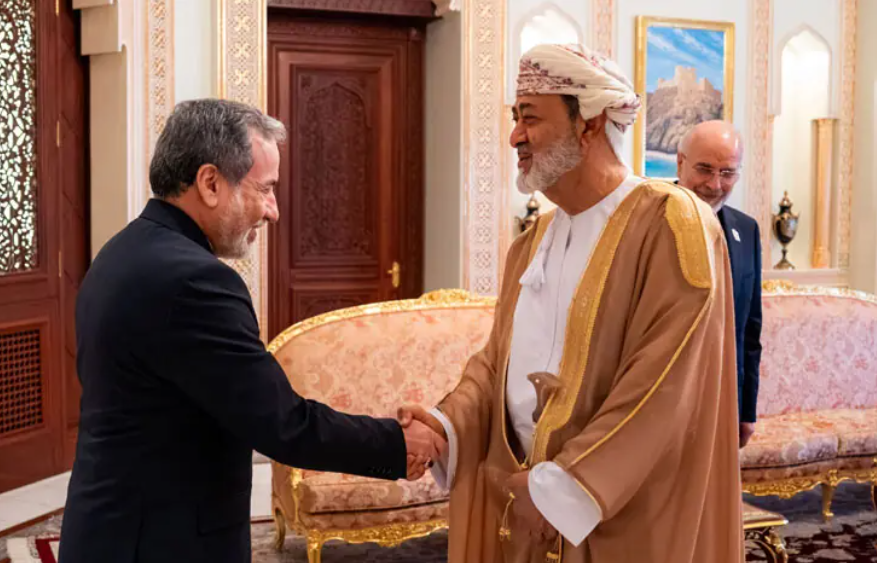
The announcement followed high-level meetings in Muscat between Iranian Foreign Minister Abbas Araghchi, Iranian negotiator Bagher Ghalibaf, Oman’s Sultan Haitham bin Tariq and Foreign Minister Badr Albusaidi.
Iran’s foreign ministry had earlier announced plans to introduce maritime service fees for vessels crossing the strait. Ghalibaf stated that any such charges would only take effect after a 60-day toll-free period outlined in a memorandum of understanding (MoU) signed between Iran and the United States.
Under the MoU, Iran and Oman will consult with other Gulf states regarding the future administration of the strait and maritime services connected to it.
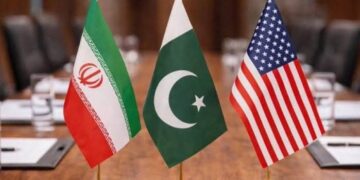
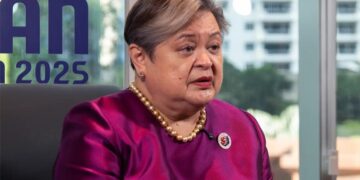
Speaking to Al Arabiya, Foreign Minister Ishaq Dar described the recently signed MoU as a positive step toward regional stability, noting that declining energy prices and the restoration of maritime traffic reflected the benefits of reduced tensions.
He argued that the Strait of Hormuz should return to its pre-conflict status, allowing unrestricted passage without tolls, permits or additional charges.
“No permits, no toll, no additional charge, whatever you name it; it should be free movement and sea lanes should be freely moving [on] both sides,” Mr Dar said.
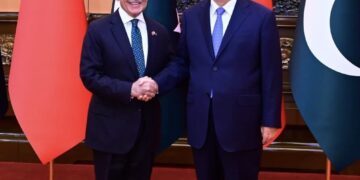
He added that Pakistan and China had earlier agreed that navigation through the strait should remain open and unrestricted under a five-point framework discussed during his March visit to Beijing.
Mr Dar noted that the current arrangement guarantees free movement through the waterway for at least 60 days.
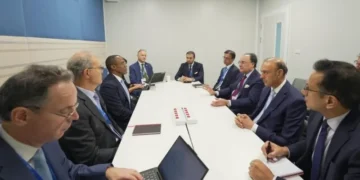
Discussing broader US-Iran negotiations, he described the ongoing talks in Burgenstock, Switzerland, as the second phase of the diplomatic process. He explained that three technical working groups had been established to address the nuclear issue, sanctions and frozen assets, and the situation in Lebanon.
According to the minister, the first phase of negotiations has already been completed with the signing of the MoU, while most remaining issues are expected to be resolved within 60 days, with the possibility of extending the timeline by mutual agreement.
“We have no doubt that they are sincere and want to move forward,” FM Dar said.
Expressing optimism about the prospects for a final agreement, he emphasised that Pakistan’s mediation efforts were conducted without any vested interests and were aimed solely at promoting peace and stability.
Addressing concerns about Iran’s uranium stockpile, Mr Dar said Tehran had shown flexibility during earlier discussions. While Iran had resisted US demands to remove the stockpile, he noted that the enriched uranium could potentially be reduced from its reported purity level of 60 per cent through downblending.
On the issue of Lebanon, the foreign minister said recurring tensions had repeatedly complicated the peace process. He revealed that negotiations in Switzerland were nearly disrupted due to Israeli military actions in Lebanon, which threatened to undermine diplomatic progress.