

















































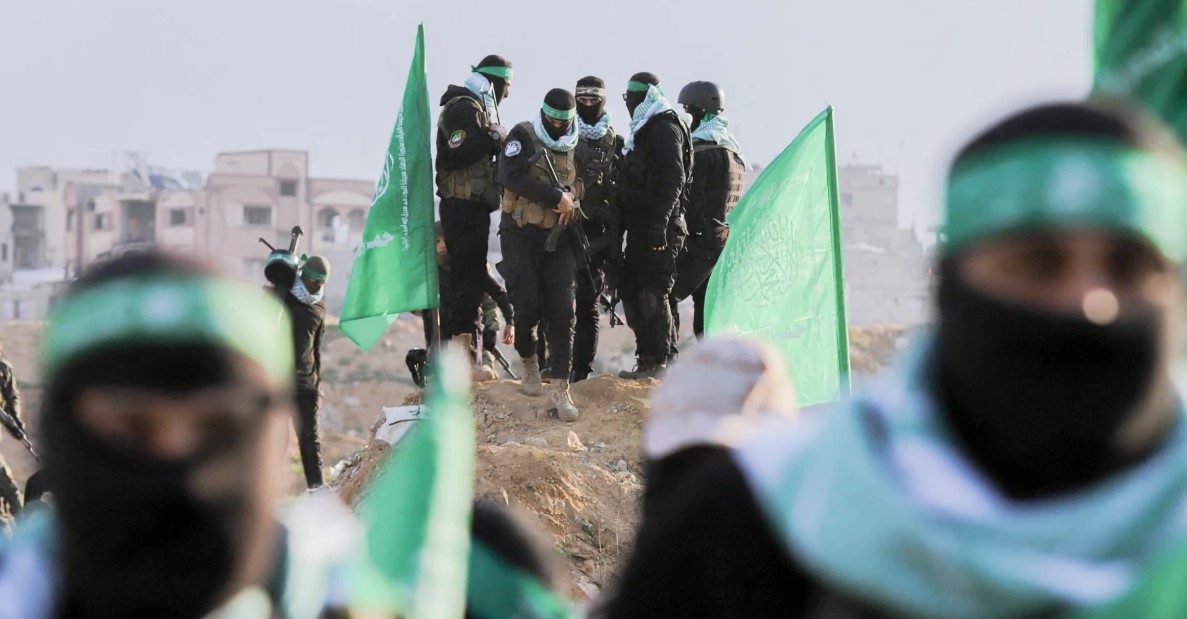
ISLAMABAD (MNN); Palestinian resistance group Hamas has announced the dissolution of the governing body that has administered the Gaza Strip for nearly two decades, paving the way for a technocratic administration to oversee civilian affairs under a proposed peace framework.

The decision marks a significant political development, as Hamas has governed Gaza since 2007 after taking control of the territory following its victory in the 2006 Palestinian legislative elections and subsequent conflict with the Fatah movement.
According to Hamas officials, the head of the government’s Emergency Committee, Mohammed al-Farra, has formally resigned and dissolved the committee to facilitate the transfer of administrative responsibilities to the National Committee for the Administration of Gaza (NCAG).
Hamas spokesperson Hazem Qassem said the decision reflects the group’s willingness to step aside from governing Gaza in order to remove what it described as obstacles to ending the conflict.
He reaffirmed Hamas’ readiness to hand over civilian administrative responsibilities to the NCAG and expressed hope that the committee would soon begin operating inside Gaza.
Technocratic Committee Ready to Assume Responsibility
The NCAG, headed by Palestinian technocrat Ali Shaath, was established under a 20-point peace framework proposed by the Board of Peace (BoP) following the ceasefire brokered between Hamas and Israel in October 2025.
In a statement, Ali Shaath said the committee is fully prepared to assume governance responsibilities once adequate resources and operational capabilities become available.
He emphasized that the success of the new administration depends on a unified governing authority, a single legal framework, and one security structure operating under the authority of the committee.
The Board of Peace welcomed Hamas’ announcement and reiterated that all weapons in Gaza should ultimately come under the authority of the NCAG as part of the peace process.
Disarmament Remains the Main Challenge
Despite the political transition, Hamas has not agreed to disarm, leaving one of the key issues in ceasefire negotiations unresolved.
Political analysts believe the announcement represents an important symbolic step but note that lasting progress depends largely on reaching an agreement over the future of Hamas’ military wing.
The second phase of the Gaza ceasefire, which envisages Hamas’ disarmament and the gradual withdrawal of Israeli forces, has remained stalled for months despite several rounds of Egyptian-mediated talks in Cairo.
Reports indicate that Israeli forces continue to maintain an extensive military presence across much of Gaza, while Hamas insists that a recognized Palestinian administration must first be established before any discussion on handing over its weapons.
The future governance of Gaza remains one of the most contentious issues in ongoing negotiations, with Israel rejecting both Hamas’ continued rule and an immediate transfer of authority to the Palestinian Authority.