













































































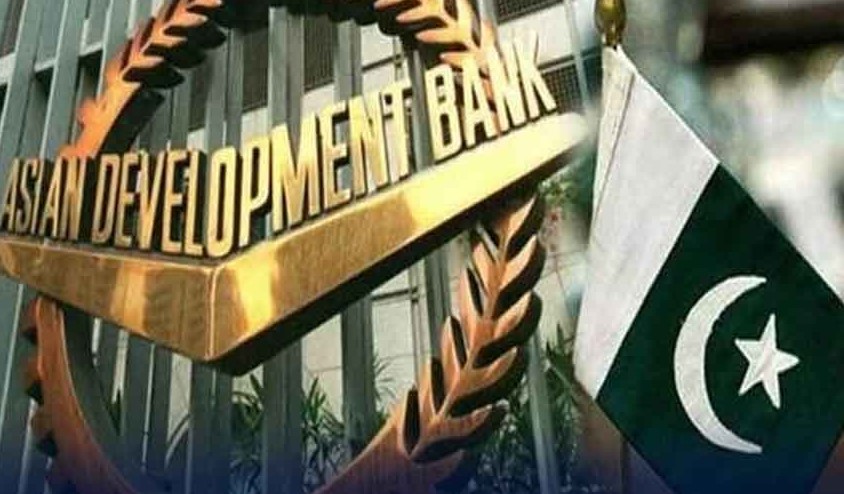
ISLAMABAD (MNN); The Asian Development Bank (ADB) has maintained Pakistan’s economic growth forecast at 3.7 percent for the current fiscal year while projecting inflation at 8.3 percent, slightly above the government’s estimate.

In its Asian Development Outlook (ADO) July 2026, released on Thursday, the Manila-based lender said Pakistan’s economic outlook remains unchanged despite mounting regional and global economic challenges.
However, the ADB lowered its overall growth forecast for developing Asia and the Pacific to 4.9 percent for 2026, down from 5.5 percent in 2025 and 0.2 percentage points lower than its April projection.
According to the report, prolonged disruptions in global energy markets caused by the ongoing Middle East conflict have had a greater-than-expected impact on regional economies, increasing inflationary pressures and slowing economic growth.
The bank expects global energy market disruptions to ease only gradually despite the framework agreement reached in June, warning that elevated energy prices, higher fertiliser costs, rising commodity prices and supply chain disruptions are likely to keep inflation under pressure.
The ADB forecasts regional inflation at 4.3 percent in 2026, compared with 3 percent in 2025, while maintaining its 2027 inflation estimate at 3.4 percent.
ADB Chief Economist Albert Park said that although the implementation of the recent framework agreement could help stabilise global energy markets, the pace of recovery remains uncertain and significant downside risks persist.
He noted that while developing Asia continues to demonstrate economic resilience, policymakers face the challenge of balancing economic growth with inflation control amid persistent geopolitical tensions.
The report cautioned that any renewed escalation in regional conflicts could further disrupt energy markets, increase inflation, raise borrowing costs and widen fiscal deficits across several economies.
It also warned that tighter global financial conditions, higher trade tariffs, policy uncertainty and rising fertiliser prices could negatively affect investment, agricultural production and food security.
Among major regional economies, the ADB maintained China’s growth forecasts at 4.6 percent for 2026 and 4.5 percent for 2027, supported by strong exports and infrastructure investment.
India’s growth forecast for 2026 was revised downward to 6.6 percent due to rising energy costs, while its 2027 projection remained unchanged at 7.3 percent.
Growth projections for Southeast Asia and Pacific economies were also lowered because of weaker domestic demand, slowing tourism, higher inflation and increasing import costs.