





















































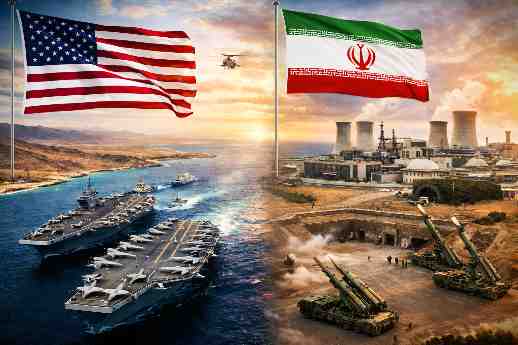
WASHINGTON/TEHRAN/ISLAMABAD (MNN); The United States and Iran moved closer to a wider regional confrontation on Monday as both sides exchanged military threats and attacks, while tensions spread across the Gulf, the Strait of Hormuz and Yemen.

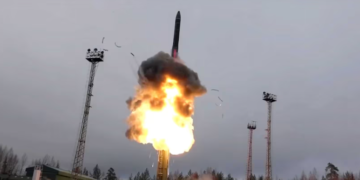
The US Central Command (CENTCOM) confirmed that American forces had carried out a fresh wave of military strikes against Iranian targets on the orders of President Donald Trump, saying the operations were intended to weaken Iran’s military capabilities and reduce its ability to threaten commercial shipping and civilian vessels in the Strait of Hormuz.
CENTCOM stated that the strikes would continue to impose a heavy cost on Iranian forces and reaffirmed that US military operations could continue in the coming weeks. President Trump indicated that military action against Iran may continue for another two to three weeks, warning Tehran of further consequences if it failed to change course.
The US military also confirmed that it would begin enforcing the reimposed American naval blockade on Iranian ports from 20:00 GMT on Thursday, targeting vessels travelling to and from Iranian ports and coastal areas. CENTCOM said commercial ships complying with the blockade would be allowed safe passage, while humanitarian shipments would continue to be facilitated.
According to CENTCOM, during the previous blockade between April and June, more than 140 compliant vessels were redirected, nine non-compliant ships were disabled, and over 50 humanitarian aid vessels were permitted to continue their journeys.
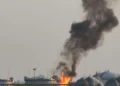
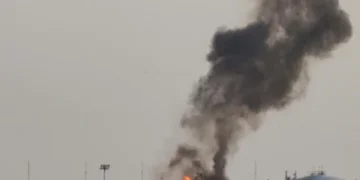
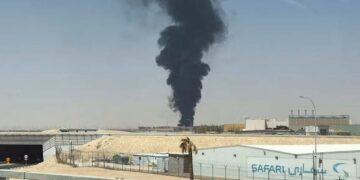
Meanwhile, Iranian media reported explosions in the southern port city of Bandar Abbas and on Kish Island in the Persian Gulf. Iran’s state broadcaster IRIB, quoting military sources, claimed that the Iranian Navy launched cruise missiles at what it described as a hostile American vessel, while attacks were also reported across several Gulf states hosting US military facilities.
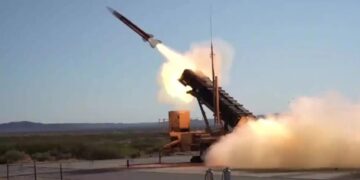
The Iranian military announced that it had launched drones targeting US military installations in Kuwait, including Patriot missile systems, fuel storage facilities, communications infrastructure, ammunition depots and observation towers.
Iran’s Tasnim News Agency also reported that several vessels allegedly violating Iranian regulations were targeted in the Strait of Hormuz.
Earlier, Iranian Foreign Minister Abbas Araghchi rejected Washington’s claim of becoming the “guardian” of the Strait of Hormuz, stating that Iran had always safeguarded the strategic waterway and would continue to do so.
President Trump also issued another warning, identifying Iran’s heavily fortified Kuh-e Kolang Gaz La, commonly known as “Pickaxe Mountain,” as a potential military target. He claimed the underground nuclear facility could face a major strike, saying Iran should prepare for further military action.
Regional tensions intensified further as Yemen’s Houthi movement announced that it had launched multiple ballistic missiles and drones targeting Saudi Arabia’s Abha International Airport. The group warned international airlines against using Saudi airspace, following an earlier strike by Yemen’s internationally recognised government on Houthi-controlled Sanaa International Airport.
The latest developments underscore growing fears that the confrontation between Washington and Tehran could expand into a broader regional conflict involving Gulf states, Yemen and key international shipping routes.