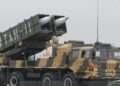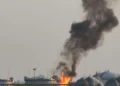

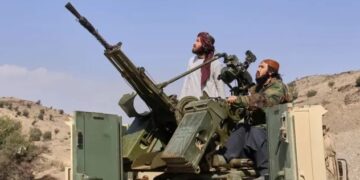




















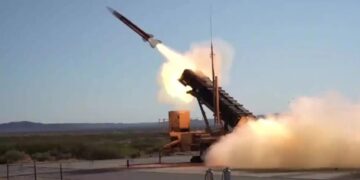




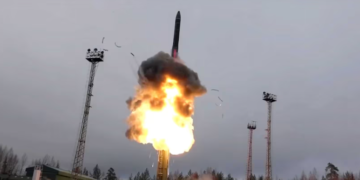































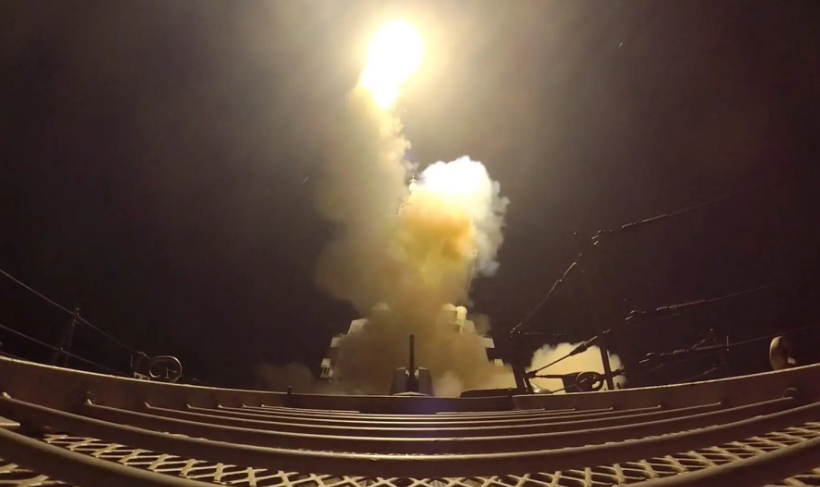
The United States carried out fresh strikes on Iran on Monday, marking the second consecutive day of attacks, as Tehran responded by targeting US-linked military assets in Gulf countries amid escalating tensions over the strategic Strait of Hormuz.

The latest escalation has further threatened an interim agreement between Washington and Tehran aimed at ending their conflict, which has already triggered major global economic uncertainty since it began in late February.
According to the US Central Command (Centcom), American forces launched the latest wave of strikes at 2100 GMT on Sunday, less than a day after an earlier operation in which Centcom said 140 Iranian military targets were hit.
Centcom later announced that it had completed another round of “offensive strikes” against Iran, targeting “dozens of targets at multiple locations with precision munitions” to reduce Tehran’s ability to attack international shipping passing through the Strait of Hormuz.
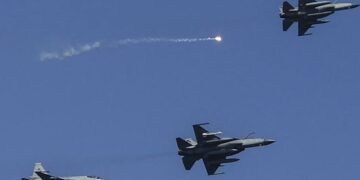
“Centcom forces struck Iranian military air-defence systems, coastal radar sites, missile and drone capabilities, and small boats using US fighter aircraft, naval vessels, one-way attack aerial drones, and one-way attack sea drones for the first time,” the command said.
Centcom maintained that Iran did not control the Strait of Hormuz and said US forces were prepared to ensure freedom of navigation for commercial vessels despite what it described as Iran’s continued aggression and threats.
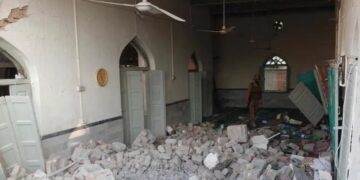
Iranian state media reported that the US strikes hit several locations across southern and western Iran, including Qeshm Island, Bandar Abbas near the Strait of Hormuz, and Khuzestan province bordering Iraq.
An Iranian official said a US strike hit an agricultural water pumping facility in Mahshahr city, located in southwestern Iran. According to the IRNA news agency, one person was killed and four others were injured in the attack.
Iran Targets US Assets in Gulf Countries
Meanwhile, Iran’s Islamic Revolutionary Guard Corps (IRGC) claimed it had carried out attacks on US military targets and bases in Jordan, Bahrain, Kuwait, and Oman.
Iranian state media reported that the IRGC targeted Prince Hassan Air Base in Jordan, a US drone command centre in Bahrain, and military facilities including Ali Al Salem Air Base in Kuwait.
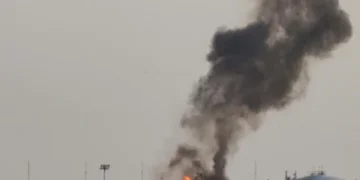
The IRGC also claimed that missile and drone strikes caused fires at fuel storage facilities and ammunition depots at the Jordanian base used by US forces.
It further said its attacks targeted Bahrain’s Sheikh Isa military base, as well as Ali Al Salem and Ahmad Al Jaber bases in Kuwait, both of which host US military operations.
The Iranian military also claimed it destroyed US military facilities in Bahrain’s Jafirah area and radar systems in Oman. It said an air defence unit had shot down a US Low-Cost Uncrewed Combat Attack System (LUCAS) drone near Bandar Abbas.
The United States had not immediately responded to the Iranian claims.
The IRGC warned that ending US military involvement in the Strait of Hormuz was the only way to restore shipping activity and cautioned that continued tensions could create further disruptions in the global oil and gas market.
Oil prices increased by more than 3.5 per cent during Monday trading in Tokyo, with US benchmark West Texas Intermediate (WTI) rising above $74 per barrel.
Rising Tensions Over Strait of Hormuz
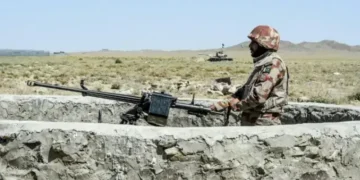
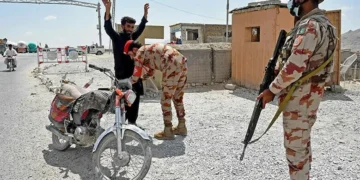
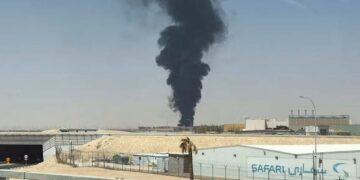
The latest exchanges followed reports of strikes on Iran’s southern islands and attacks on border posts and an offshore oil platform in Kuwait.
The renewed confrontation began after Iran described an incident involving a commercial vessel in the Strait of Hormuz as a warning shot. The ship caught fire, forcing its crew to abandon it.
Following the incident, the IRGC announced that “the Strait of Hormuz would be closed until further notice and until the end of American interventions in this region,” according to Iran’s state news agency IRNA.
Centcom rejected the claim, saying the strait remained open for lawful maritime traffic and that US forces were positioned to protect freedom of navigation.
Ship-tracking data from Kpler showed that only six vessels passed through the strait on Sunday, the lowest figure recorded in five weeks.
Diplomatic Efforts Continue
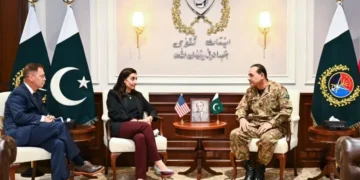
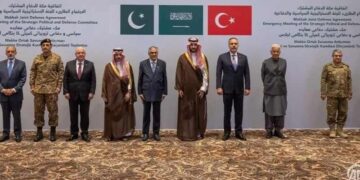
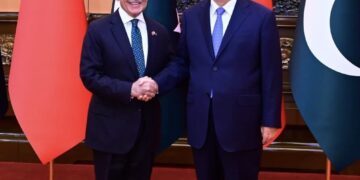
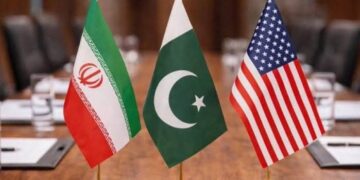
The renewed fighting comes as mediators, including Pakistan, attempt to revive diplomatic efforts to end the conflict after US President Donald Trump said a ceasefire agreement with Iran had ended following the signing of an interim accord on June 18.
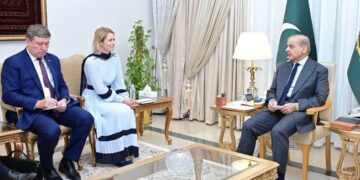
Pakistan’s Deputy Prime Minister and Foreign Minister Ishaq Dar called for “de-escalation” during a phone conversation with Iranian Foreign Minister Abbas Araghchi.
“Dialogue and diplomacy remain the only viable path to resolving disputes and achieving lasting peace,” Dar said.
UN Secretary-General Antonio Guterres also urged an end to the violence, with his spokesperson stating that “these attacks must stop.”
Iran’s foreign ministry said the US strikes had increased insecurity around the Strait of Hormuz and undermined efforts to establish peace in the region.
The strategic waterway has become a major point of leverage for Iran, with an adviser to the country’s supreme leader saying control of the strait was more significant than “dozens of atomic bombs.”