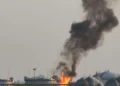



























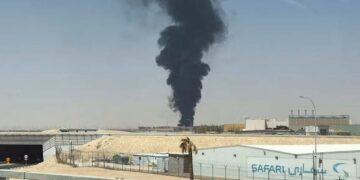





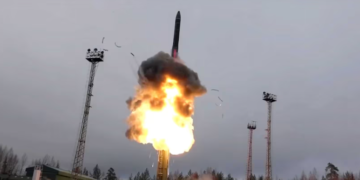
































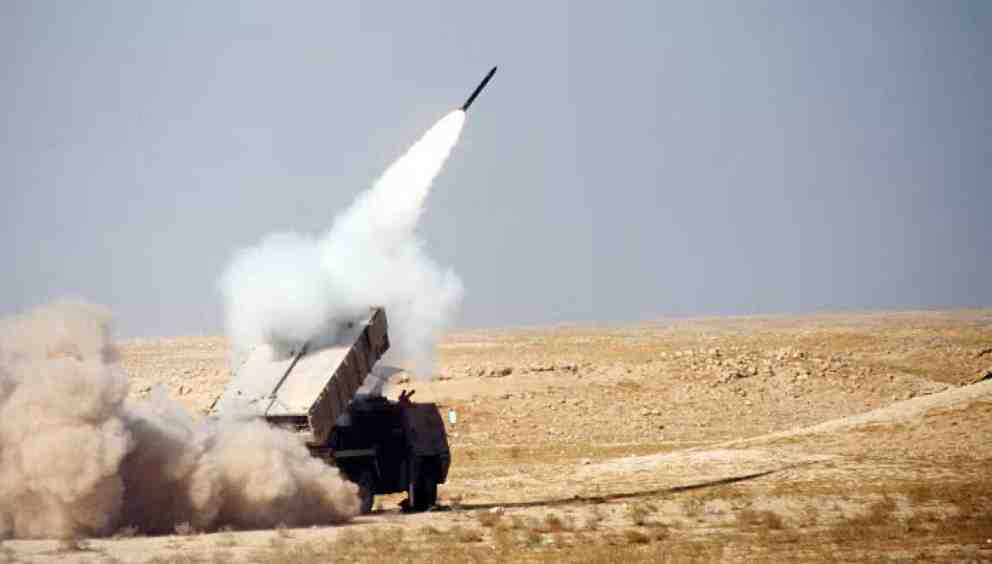
DUBAI/ISLAMABAD (MNN); Yemen’s Houthi movement launched a ballistic missile towards southern Saudi Arabia on Monday, hours after accusing the Saudi-led coalition of carrying out an airstrike on Sanaa International Airport, in the most serious escalation between the two sides in years and a development that could jeopardize the fragile 2022 ceasefire.

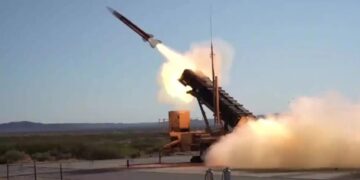
Saudi-led coalition spokesman Turki Al-Maliki confirmed that Saudi air defence systems successfully intercepted a ballistic missile fired by what he described as the “terrorist Houthi militia” towards the Kingdom’s southern region.
Earlier, Houthi military spokesman Yahya Saree accused Saudi Arabia of ending the de-escalation phase and warned that the attack on Sanaa airport would not go unanswered. The Houthis vowed retaliation, saying Riyadh would bear responsibility for the consequences.
The internationally recognized Yemeni government acknowledged targeting the runway at Sanaa International Airport, stating the operation was intended to prevent an Iranian aircraft from landing without authorization. Officials claimed the Houthi delegation returning from Tehran after attending the funeral of Iran’s late Supreme Leader Ali Khamenei had refused to board Yemenia Airlines and instead attempted to return on an Iranian aircraft.
Yemen’s Defence Ministry said the Iranian plane had violated Yemeni airspace, forcing government forces to strike the airport runway. However, Presidential Leadership Council Chairman Rashad Al-Alimi later said he had instructed authorities not to expand the military confrontation.
Iran strongly condemned the airport strike, with Foreign Ministry spokesman Esmaeil Baghaei calling it a clear violation of international law.
Security analysts warned that the latest exchange of attacks could bring an end to the April 2022 ceasefire framework, which has largely prevented major hostilities despite formally expiring. Mohammed Al-Basha, head of the US-based Basha Report risk advisory, said continued retaliation by both sides could trigger a return to full-scale military conflict and renewed ground operations.
The incident comes amid heightened regional tensions following exchanges between the United States and Iran and growing security concerns in the Gulf and the Strait of Hormuz.
For more than a decade, aircraft entering Yemeni airspace have required prior approval from the Saudi-led coalition. The Houthis recently challenged that arrangement by facilitating direct flights between Iran and Sanaa, increasing tensions with the Yemeni government and its regional allies.
Earlier this month, the Houthis had accused Saudi Arabia of attacking an Iranian aircraft carrying a delegation after it departed Sanaa, warning they would target Saudi airports and strategic installations if similar incidents were repeated.
Military experts say it remains technically possible that Yemeni government forces carried out the airport strike using aircraft supplied by the United Arab Emirates, although operational limitations remain.
Meanwhile, the Yemeni government accused the Houthis of preventing an International Committee of the Red Cross (ICRC) aircraft from departing Sanaa and temporarily holding its pilot and co-pilot. The ICRC later confirmed that all its staff and flight crew were safe and accounted for.
The Houthis have controlled Yemen’s capital Sanaa and much of northern Yemen since 2014, while the internationally recognized government administers large parts of the south. The decade-long conflict has claimed hundreds of thousands of lives and triggered one of the world’s worst humanitarian crises.