
































































KARACHI/ISLAMABAD (MNN); The Pakistan Stock Exchange (PSX) witnessed one of its steepest declines in recent weeks on Tuesday, as renewed fears of an escalation in the Iran-US conflict and surging global oil prices triggered heavy selling across the market.

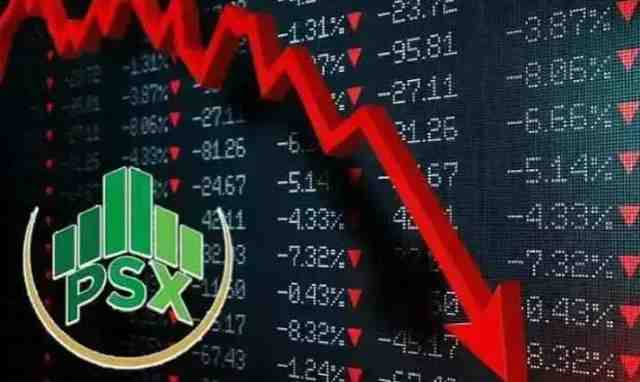
The benchmark KSE-100 Index closed at 173,518.81 points, shedding 6,408.23 points, or 3.56 percent, compared to Monday’s close of 179,927.04 points.
During intraday trading, the benchmark index plunged as much as 6,577.63 points to an intraday low of 173,349.41, while its highest level during the session remained in negative territory at 178,112.04 points.
Market analysts attributed the sharp decline to growing geopolitical uncertainty in the Middle East following renewed military tensions between the United States and Iran.
Independent economist and investment analyst AAH Soomro said investors were once again adopting a cautious approach amid fears that the conflict could escalate further.
“The possibility of a prolonged conflict and higher oil prices is keeping investors on edge. Markets are likely to remain volatile until there is clarity on the geopolitical situation,” he said.
Ismail Iqbal Securities Chief Executive Officer Ahfaz Mustafa said investor sentiment was primarily driven by soaring crude oil prices and uncertainty surrounding the regional conflict.
He added that the upcoming corporate earnings season could play a key role in determining the market’s future direction.
Tuesday’s decline followed Monday’s sharp sell-off, when the KSE-100 Index had already fallen by more than 2,300 points, indicating sustained pressure on the local equity market.
International oil prices climbed to their highest levels in nearly a month after the United States reinstated a naval blockade on Iranian shipping, while renewed military exchanges between Washington and Tehran raised fears over disruptions to energy supplies through the strategically important Strait of Hormuz.
Brent crude rose above 86 dollars per barrel, while US West Texas Intermediate crude traded above 80 dollars, both reaching their highest levels in nearly four weeks.
The Strait of Hormuz remains one of the world’s most critical energy corridors, handling nearly one-fifth of global oil and liquefied natural gas shipments.
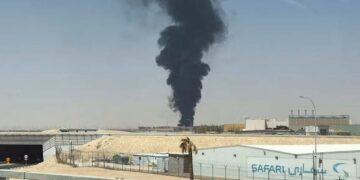
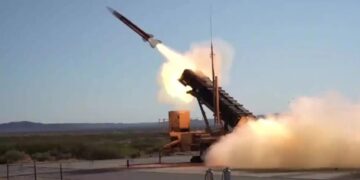
Regional tensions intensified further after Iran claimed attacks on US-linked targets, while Yemen’s Houthi movement launched missile attacks towards Saudi Arabia, adding to concerns over stability across the Gulf.
Global financial markets also came under pressure. European shares opened lower, while Wall Street had ended the previous session in negative territory, with technology stocks leading losses.
Investor caution was further reinforced by expectations that the US Federal Reserve could maintain a tighter monetary policy after officials indicated that additional interest rate hikes remain possible if inflation stays above target.
Market participants are now closely watching upcoming US inflation data and central bank signals, which could further influence global financial markets in the coming days.