




















































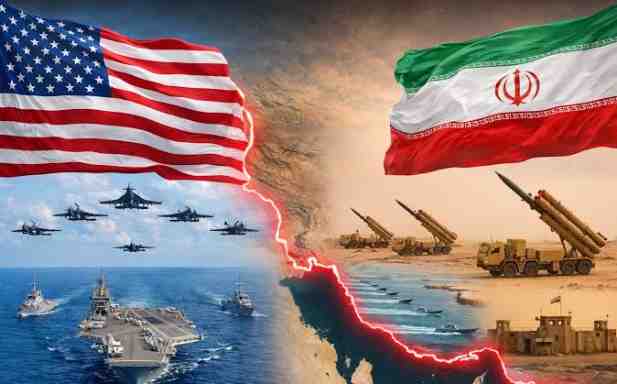
WASHINGTON/TEHRAN (MNN); The United States has launched another wave of military strikes against Iran as tensions between the two countries continue to escalate, with both sides exchanging military threats and economic measures amid growing instability across the Gulf region.

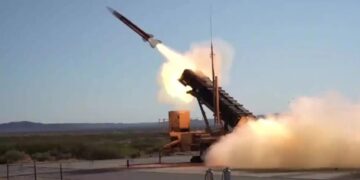
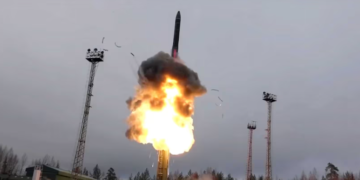
The US Central Command (CENTCOM) announced that its forces had begun an additional round of precision strikes targeting Iranian military capabilities allegedly used in attacks on commercial shipping in the Strait of Hormuz.
In a statement posted on X, CENTCOM said the operation aims to further degrade Iran’s ability to threaten international maritime trade and regional security.
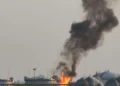
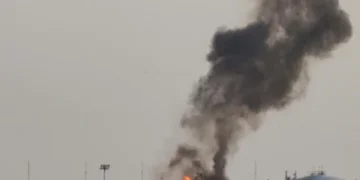
Iranian state media reported that US projectiles struck areas on Qeshm Island, with the official IRNA news agency confirming that locations on the strategically important island had come under American attack. Iranian authorities said damage assessments were underway.
Meanwhile, US President Donald Trump reiterated Washington’s blockade of Iranian ports in a social media post and announced a reversal of his previously proposed 20 percent tariff policy. The White House has not yet released further details regarding the tariff decision.
The US Treasury Department also unveiled a fresh package of Iran-related sanctions targeting several individuals, companies and vessels allegedly linked to Tehran. At the same time, Washington issued a general license allowing limited wind-down activities, safety operations, environmental transactions and cargo offloading involving certain sanctioned vessels designated on July 14.
Iran, however, claimed it had expanded its retaliatory military operations, alleging attacks on US military facilities in Kuwait, Bahrain and Jordan, as well as strikes against two oil supertankers transiting the Strait of Hormuz.
The Islamic Revolutionary Guard Corps (IRGC) claimed it destroyed weapons storage facilities in Bahrain and drone deployment sites in Kuwait, alleging that several US drones were destroyed or damaged during the attacks. Independent verification of these claims has not been possible.
The IRGC warned that retaliation would continue as long as US military operations persisted, adding that continued hostilities could prevent the resumption of oil and gas exports through the Strait of Hormuz.
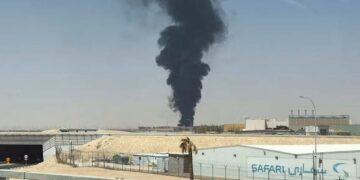
Regional maritime security also deteriorated after Oman confirmed the evacuation of crews from two Liberia-flagged oil tankers targeted near Musandam and South Al Sharqiyah. Oman’s Maritime Security Centre said it rescued eight crew members from the tanker Al Bahyah following the attack.
The United Arab Emirates also reported that two of its commercial vessels were struck by Iranian cruise missiles, while India summoned an Iranian diplomat after an Indian crew member was killed and several others were injured in one of the maritime attacks.
On the diplomatic front, Iran’s Deputy Foreign Minister Kazem Gharibabadi declared that Tehran no longer considered itself bound by the memorandum of understanding previously reached with Washington.
“America has violated all of its commitments and effectively dismantled the agreement,” he said, accusing the United States of destroying the framework through its latest military actions.
Gharibabadi also accused Washington of attempting to undermine the International Criminal Court (ICC) by imposing sanctions, travel bans and political pressure on member states ahead of possible investigations involving the US and Israel.
His remarks came a day after the US administration announced plans to “systematically disable” the Hague-based court, with eleven ICC officials, including the chief prosecutor, already facing US sanctions and travel restrictions.
The latest developments mark another dangerous escalation in the Iran-US confrontation, raising concerns over regional security, global energy supplies and the future of diplomatic efforts to contain the conflict.