















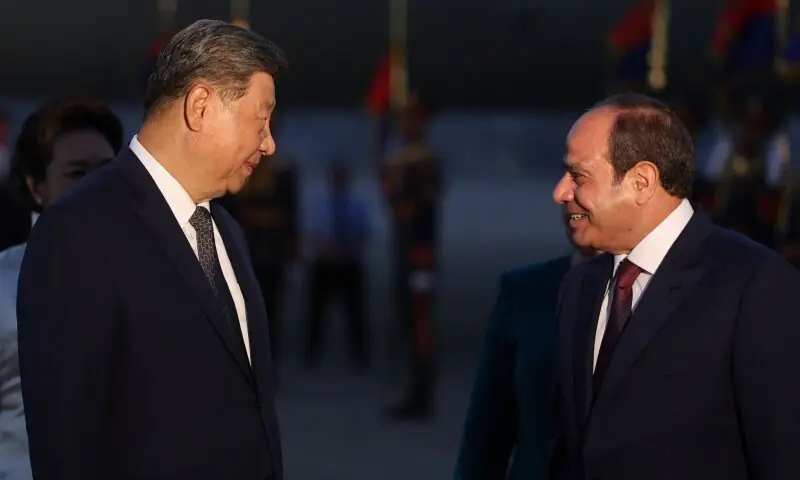
CAIRO/ISLAMABAD (MNN); Chinese President Xi Jinping has called on Middle Eastern countries to resist external interference and take greater control of their own future by exploring a new regional security framework.

Xi made the remarks during a visit to Egypt on Wednesday, his first trip to the Middle East in four years, as China seeks to expand its political, economic and strategic influence in the region amid the ongoing US-Israeli war against Iran.
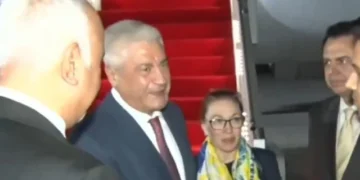
The Chinese president was welcomed in Cairo by Egyptian President Abdel Fattah al-Sisi with an official military ceremony.
According to China’s state news agency Xinhua, Xi said countries in the Middle East should become “masters of their own destiny” and work towards establishing a new regional security architecture.
Xi also offered China’s cooperation in safeguarding key international shipping routes, which have become increasingly vulnerable following disruptions in the Strait of Hormuz and Bab al-Mandeb.
The security of these vital waterways has emerged as a major international concern due to their importance for global oil supplies, trade and commercial shipping.
According to a joint statement, China and Egypt agreed to deepen security cooperation and strengthen coordination in counterterrorism efforts.
The two countries also agreed to expand cooperation in advanced technology sectors, including data centres, semiconductors and critical minerals supply chains.
Both sides further agreed to promote greater use of their national currencies in bilateral trade and investment.
Xi’s visit comes at a time when several traditional US partners in the Middle East are reassessing their strategic relationships following months of conflict that have disrupted regional trade, weakened economies and raised questions about Washington’s long-term role in the region.
Egypt remains one of the United States’ key defence partners in the Middle East and receives approximately $1.3 billion in annual US military assistance.
However, Cairo has steadily expanded its economic, political and military relations with China in recent years as part of a broader strategy to diversify its international partnerships.
Egypt Pursues ‘Strategic Balance’
President Sisi has described Egypt’s foreign policy as one of “strategic balance” amid growing competition between major global powers.
In an article published before Xi’s visit, the Egyptian president said Cairo was seeking to broaden its relations with major international powers, including China.
Former Egyptian diplomat Ayman Zaineldine said Egypt wanted to widen the scope of its strategic partnerships and that Cairo and Beijing shared increasingly converging interests.
For China, Egypt’s strategic location, large population and regional diplomatic influence make it a particularly valuable partner.
Egypt is home to the Suez Canal, one of the world’s most important maritime trade routes, and serves as a key bridge between the Middle East, Africa and Europe.
Analysts believe Beijing sees Egypt as an important gateway for expanding Chinese investment and influence across Africa and the wider Arab world.
Egypt’s role in regional diplomacy, particularly on the Palestinian issue, also adds to its strategic importance for China.
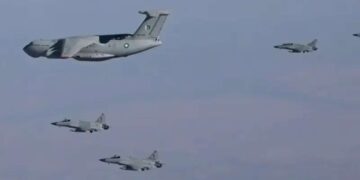
Growing military cooperation between Beijing and Cairo was highlighted last month during the “Eagles of Civilisation” military exercises.
The drills included a rare air combat exercise involving Chinese-made J-16 fighter jets and French-made Rafale aircraft operated by Egypt.
The exercises were seen as another sign of expanding defence and military cooperation between the two countries.
Economic Partnership Continues to Grow
China has become an increasingly important economic partner for Egypt.
With a population of more than 110 million people and control over the strategically vital Suez Canal, Egypt represents a major market and investment destination for Chinese companies.
Egypt imported approximately $10 billion worth of Chinese goods during the first half of this year alone.
Chinese investment in Egypt has also increased significantly since President Sisi visited China and signed a strategic partnership agreement with Beijing in 2014.
Chinese companies have invested billions of dollars in container ports, industrial zones, green hydrogen projects and manufacturing facilities producing iron pipes, vehicle tyres and satellites.
During Xi’s visit, Egyptian authorities also announced plans to expand a Chinese-developed industrial zone.
Meanwhile, ZC Rubber Group signed a preliminary agreement to study the establishment of a $500 million tyre manufacturing complex.
The Chinese president’s visit generated considerable public attention in Cairo, where streets were decorated with Chinese flags and images combining iconic Egyptian landmarks, including the Sphinx, with symbols of China such as the Great Wall.
Xi’s visit is being viewed as another major step in the growing China-Egypt partnership and Beijing’s broader efforts to strengthen its diplomatic, economic and security presence in the Middle East.