





























































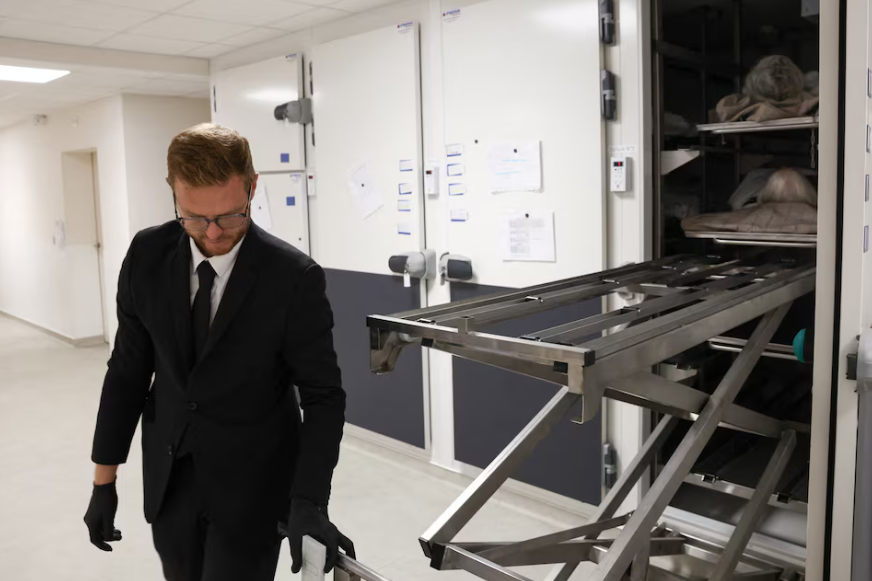
ORLEANS, France, (Reuters) – In nearly 25 years as a funeral director, Gautier Caton has never experienced anything like France’s record-breaking late-June heatwave, when he rented five refrigerated containers to store bodies arriving at up to three times the normal rate.

A fifth-generation undertaker who grew up with coffins stacked in his parents’ garage, Caton joined the family firm just weeks after an infamous 2003 heatwave that contributed to nearly 15,000 excess deaths across France. But this year, in a first, his Orléans funeral homes took in four bodies from overstretched firms in Paris, two hours’ drive away.
“The Paris region was hit extremely hard, they were in crisis,” he said. “And then it spread to us in Orléans, where our funeral facilities became severely overcrowded. It hit us with full force.”
France’s summer of 2026 has brought a grim encounter with three forces reshaping the country: a warming planet, an ageing population and a cash-strapped state struggling to fund the investments needed to adapt for the future.
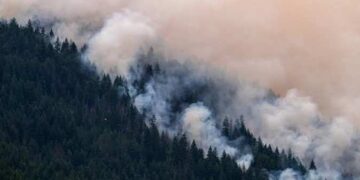
Historic high temperatures, arriving ever-earlier in the year, have sparked unprecedented wildfires near Paris, shuttered schools and strained ill-equipped hospitals. The heat has also accelerated the demise of vulnerable old people living in stifling houses or care homes.
LESSONS LEARNED?
France announced 2,025 excess deaths during the late-June heatwave, when temperatures reached as high as 43.8 degrees Celsius (110 degrees Fahrenheit), with deaths up nearly 65% in Paris and almost 50% in the Centre-Val de Loire region where Caton’s firm is based.
Those numbers are preliminary, based on around 60% of all deaths, and will likely rise with more complete data.
Francois Bourdillon, who led France’s public-health agency from 2016 to 2019, said the country had come a long way since the 2003 heatwave. That event blindsided authorities and led to the creation of an alert system that mitigates the deadliest impacts of heatwaves with forecasting, public warnings and protections for vulnerable people.
But he said France had shirked addressing structural vulnerabilities in cities, hospitals, schools and care homes, and now needed to adopt a multi-year strategy, overseen by the prime minister’s office, “to transform the country to deal with heat epidemics.”
“The lesson of 2003: We were blind. We’re no longer blind, that’s certain. We have indicators and we sound the alarm,” said Bourdillon.
“The lesson of 2026: Well, it’s not enough. We are in a sort of dystopia in which we can deal with the effects of the heatwave … but we forget the structural issues.”
French Prime Minister Sebastien Lecornu has promised hundreds of millions of euros for cooling hospitals and nursing homes. Critics, including the Greens who launched a failed no-confidence measure over Lecornu’s handling of the heatwave, say that’s not enough.
But the government finds itself in a bind, having to invest for more extreme heat while also reducing the deficit and maintaining spending targets in areas like defence.