



























































Germany may reintroduce compulsory military service if its voluntary recruitment programme fails to meet troop targets, with a final decision expected by July 2027, a senior German lawmaker has said.

Berlin is seeking to expand its armed forces from around 185,000 personnel to at least 260,000 by 2035 as it responds to growing security concerns over Russia and uncertainty surrounding future US military commitments in Europe.
In November, the German government launched a voluntary military service programme alongside mandatory registration for 18-year-old men. However, the initiative has attracted only 530 new recruits between January and May, despite outreach to approximately 300,000 young people.
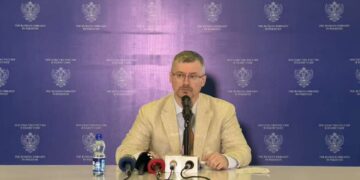
“If Germany cannot reach its targets through the voluntary system, we will have to return to conscription,” said Thomas Roewekamp, chairman of the German parliament’s defence committee.
“We must take that decision by July 31 of next year,” he added.
Roewekamp said the government would hold a comprehensive review in the first half of 2027 to determine whether voluntary recruitment could meet the military’s expansion goals.
“In the first half of next year… we will need to have a very fundamental discussion about whether we can achieve the very ambitious growth requirements for active forces and reservists on a voluntary basis,” he said.
“I still have serious doubts that we can.”
He clarified that compulsory service, if restored, would not necessarily apply to every 18-year-old man. Instead, recruitment would be based on the number of soldiers required to meet annual defence targets.
“My great concern is the growth in the number of career and contracted soldiers — because they are the ones who fly the fighter jets, navigate the ships, operate the tanks and man the Patriot air defence systems,” Roewekamp said.
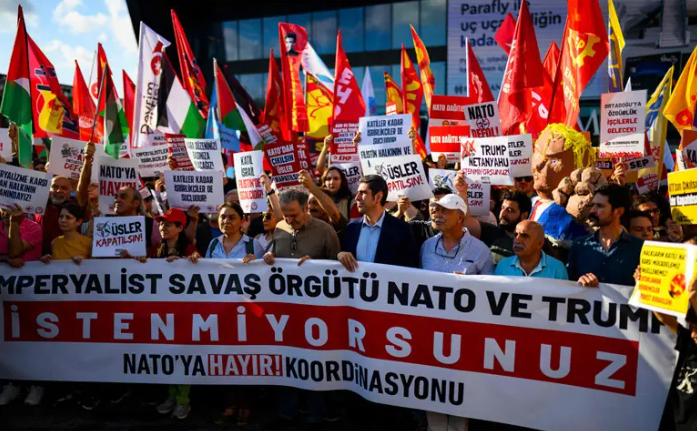
Germany has witnessed several demonstrations against the possible return of military conscription in recent months. Roewekamp acknowledged public concerns but argued that younger generations have had limited engagement with defence issues since compulsory military service was suspended in 2011.
“Since compulsory military service was suspended in 2011, we have not discussed questions of war and peace and the need for defence with the younger generation at all,” he said.
“That is why I strongly advocate that we talk with this generation, not just about them,” he added, while repeating Berlin’s assessment that Russia could be capable of attacking a Nato member by 2029.
Roewekamp also urged Europe to strengthen its own defence capabilities, arguing that the continent must become less dependent on the United States due to shifting American military priorities and uncertainty over long-term support.
He said European rearmament should be driven by strategic needs rather than industrial competition, referring to the collapse of the Future Combat Air System (FCAS) fighter jet project following disagreements between Dassault and Airbus.
“In the past — this I freely admit — joint armaments projects were often heavily shaped by national industrial interests, including in Germany,” Roewekamp said.
“But I believe that by now all those involved understand that national industrial interests are no longer the right answer.”
He also expressed hope that the Nato summit scheduled for July 7–8 in Ankara would send a strong message of unity to Russia.
“It is now absolutely crucial to once again express our determination to act together. Because I believe one of Putin’s war aims is also to attack the unity of the Nato defence alliance,” he said.