





















































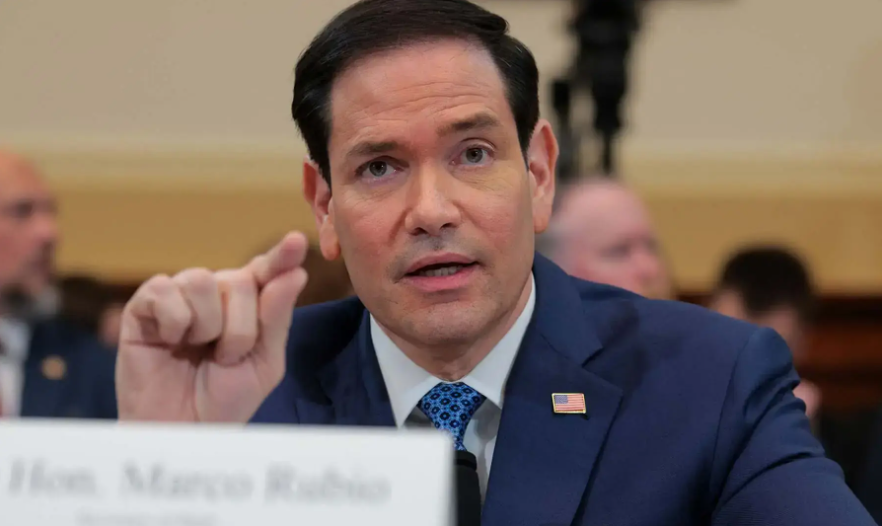
US Secretary of State Marco Rubio warned on Thursday that imposing tolls on ships using the Strait of Hormuz could create “total chaos”, as disputes over shipping routes and transit fees threatened to complicate ongoing negotiations between Washington and Tehran.

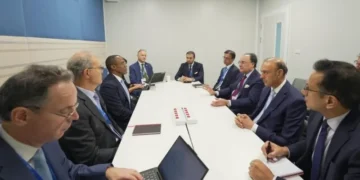
Speaking at a Gulf Cooperation Council (GCC) meeting in Bahrain, Rubio said the United States wanted a lasting agreement with Iran but “not at any price”, stressing that any deal must safeguard the security and stability of Gulf allies.
“While we want a deal, we don’t want a deal at any price,” Rubio said. “We want to ensure… that there is no part of this deal that’s undertaken that in any way undermines the security, the stability, or the prosperity of any of our partners in the Gulf region.”
The remarks come as the US and Iran continue negotiations following a preliminary agreement to end months of conflict. Talks are expected to address Iran’s nuclear programme, sanctions relief and maritime security in the Strait of Hormuz.
Rubio firmly rejected Iran’s proposal to introduce maritime service fees in the strategic waterway, saying international waterways should remain free for navigation.
“International waterways do not belong to any nation state. This is a foundational principle in the world today, without which the world would be in total chaos,” he said.
“If in fact we accepted that you can charge money to use an international waterway because it happens to be near your territorial space, well then this will spread throughout the world like a contagion,” he added.
He also said there was “zero support” among Gulf states for imposing tolls and noted that Oman had expressed opposition to such measures during the meeting.
Meanwhile, Oman’s Foreign Minister Badr Albusaidi said future arrangements for the Strait of Hormuz “do not entail the imposition of any transit fees,” despite earlier statements from Muscat and Tehran indicating that maritime service costs were under consideration.
Oman also announced a temporary shipping corridor near its coastline, saying it had been coordinated with the International Maritime Organisation (IMO). Iran’s Revolutionary Guards appeared to criticise the move, warning ships not to cross the Strait of Hormuz without authorisation.
“The only authorised route for passage through the Strait of Hormuz is the route announced by the Islamic Republic of Iran,” the Guards said, warning that unauthorised crossings “will be dealt with.”
Iranian Foreign Minister Abbas Araghchi and his Omani counterpart later discussed maritime coordination and temporary navigation measures during a phone call, agreeing to continue diplomatic and technical consultations.
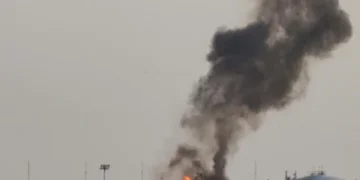
Separately, the IMO suspended plans to evacuate around 11,000 stranded mariners after a cargo vessel was reportedly struck by an unknown projectile in the Gulf of Oman. The evacuation programme had been launched following the preliminary US-Iran agreement to end hostilities.
Although shipping traffic through the Strait of Hormuz has begun to recover, officials said it remains well below normal levels despite recording its busiest day since the closure imposed during the conflict.
Iran also criticised NATO after Secretary General Mark Rutte expressed support for the United States, with Foreign Ministry spokesman Esmaeil Baqaei accusing the alliance of “complicity” in an “unlawful war.”
Iran’s lead negotiator Mohammad Bagher Ghalibaf also dismissed US suggestions that Tehran would use unfrozen assets to purchase American agricultural products.
“The US only exports GMO soya beans, broken promises and trash talks,” Ghalibaf said.
The GCC and the United States reiterated that any future trade and investment with Iran would depend on its compliance with the agreement and an end to what they described as Tehran’s “destabilising behaviour,” including its missile programme and support for regional proxy groups.