




























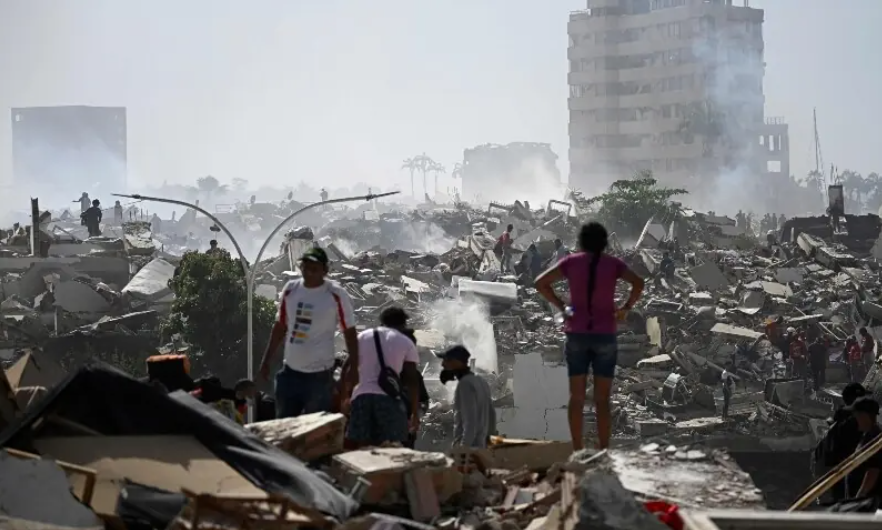
Foreign rescue teams and humanitarian aid began arriving in Venezuela on Friday, nearly two days after powerful twin earthquakes devastated areas in and around Caracas, leaving hundreds dead and thousands injured.

Interim President Delcy Rodriguez said the death toll had risen to 589, while the government confirmed 2,980 injuries. UN aid chief Tom Fletcher warned that the number of fatalities was likely to “rise significantly.” A government website established to help locate missing people had received reports of around 50,000 individuals still unaccounted for by Friday morning.
The magnitude 7.2 and 7.5 earthquakes struck about 160 kilometres west of Caracas on Wednesday evening during a public holiday, making them among the strongest earthquakes in Latin America’s modern history. The US Geological Survey has projected that the disaster could ultimately claim more than 10,000 lives.
The Venezuelan government pledged a large-scale emergency response, but rescue efforts remained uneven. While firefighters, police, civil protection personnel and the military were active in some areas, residents in others complained of little or no official assistance.
La Guaira, a coastal city near Caracas, suffered the worst destruction, with at least 100 buildings, including high-rise apartment blocks, collapsing. Residents searched through the rubble by hand or with basic tools, expressing frustration over the shortage of heavy machinery and rescue equipment.
“He’s under the slabs and there’s no machinery to get him out,” said Yamileth Jimenez, referring to her 19-year-old son trapped beneath the remains of their seven-storey apartment building.
Alongside official efforts, volunteers from across the country mobilised to deliver food, water and other essential supplies. Motorcycle caravans travelled from Caracas and Valencia to assist survivors.
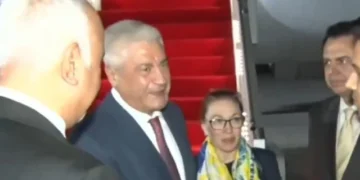
International rescue teams also began reaching the affected areas. The Dominican Republic was the first to arrive, followed by teams from Mexico, El Salvador, Spain, Colombia, Switzerland and Germany. Many of the teams brought search dogs, specialised equipment and sound-detection devices to assist in locating survivors.
The United States announced $150 million in humanitarian assistance and temporarily eased sanctions to facilitate relief operations. US Secretary of State Marco Rubio said Washington would deploy rescue teams, while the Pentagon would help support operations at Caracas’ damaged airport. Rodriguez thanked countries providing assistance and said international rescue teams had been assigned to different affected regions.
The earthquakes struck a country already facing prolonged economic and political challenges, with millions living in poverty and infrastructure weakened after years of crisis.
“My building is uninhabitable and now I have nothing. It’s just me and my son, and I have no family in the country,” said Suhayl Sarquiz, who lost both her home and her livelihood.
The UN’s migration agency estimated that nearly seven million people could be affected and said it was providing emergency shelter and relief supplies.
“We lost everything,” said Pedro Perez, who said both his home and upholstery business were destroyed. “We hope help arrives quickly.”
Near the epicentre in Moron, residents were left without electricity and water as they recovered belongings from damaged homes.
Despite the widespread destruction, foreign energy companies reported that oil production and infrastructure had escaped major damage. The Caracas Stock Exchange remained closed after being converted into a humanitarian aid collection centre.
Before this disaster, Venezuela’s deadliest modern earthquake occurred in 1967, when 240 people were killed.