



























































WASHINGTON/TEHRAN/ISLAMABAD (MNN); Tensions in the Middle East escalated sharply on Sunday after Iran launched a fresh wave of drone and missile attacks targeting Bahrain and Kuwait in retaliation for new U.S. airstrikes, while warning that negotiations aimed at ending the conflict could come to a “complete halt” if Washington continues military operations against the Islamic Republic.

The latest escalation marks one of the most serious setbacks to ongoing diplomatic efforts that had sought to stabilize the region after weeks of intense military confrontation involving Iran, the United States, and their regional allies. The attacks targeted Gulf states hosting key U.S. military installations, underscoring Tehran’s willingness to expand the battlefield beyond its own borders in response to American military action.
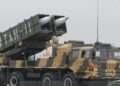
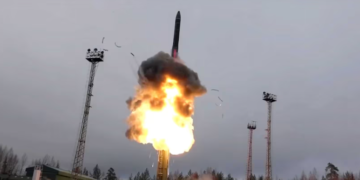
Iran’s Islamic Revolutionary Guard Corps (IRGC) claimed responsibility for the strikes, describing them as a direct response to recent U.S. air attacks on Iranian military facilities. Iranian officials accused Washington of violating the spirit of ongoing negotiations and warned that any additional military action would effectively end prospects for a diplomatic settlement.
“The continuation of American aggression will leave no room for dialogue,” Iranian officials said, warning that negotiations would face a “complete halt” unless the United States immediately ceased further attacks.
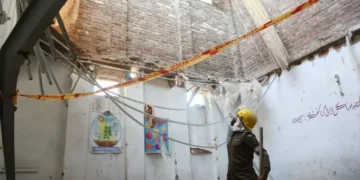
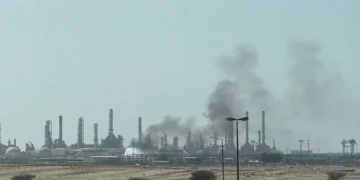
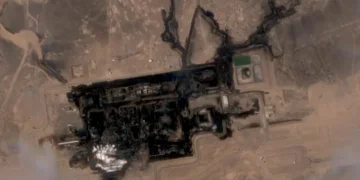
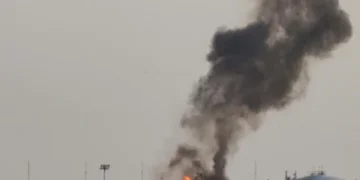
According to Gulf authorities, air defense systems in Bahrain and Kuwait intercepted several incoming missiles and drones before they reached their intended targets. Kuwaiti officials reported that two ballistic missiles were successfully intercepted, while Bahrain confirmed that debris from intercepted projectiles caused limited damage to a residential building near the country’s main airport. No fatalities were immediately reported, although authorities continued to assess damage and investigate the attacks.
Both Bahrain and Kuwait host significant American military facilities that serve as critical operational hubs for U.S. forces stationed across the Gulf. Analysts said the selection of these targets reflected Iran’s strategy of applying pressure on Washington without directly striking the U.S. mainland.
The renewed confrontation followed U.S. airstrikes on Iranian military infrastructure that American officials described as a response to previous Iranian attacks on commercial shipping in the strategically vital Strait of Hormuz. Washington said its operations were aimed at degrading Iran’s drone capabilities and protecting international maritime traffic through one of the world’s most important oil transit routes.
The Strait of Hormuz remains central to the crisis. Roughly one-fifth of global oil supplies pass through the narrow waterway, making any disruption a significant concern for international energy markets. The United States and its allies have sought to secure alternative shipping routes while maintaining freedom of navigation, whereas Iran insists that maritime traffic through the area should remain subject to its oversight and security arrangements.
The latest exchange of attacks has significantly increased concerns that months of diplomatic engagement could collapse entirely. International mediators had been working to preserve a fragile framework for negotiations intended to reduce military tensions and reopen secure shipping lanes in the Gulf. Sunday’s developments, however, cast fresh doubt over whether either side remains committed to sustained dialogue.
U.S. officials defended the latest military operations, arguing that Iran had repeatedly violated previous understandings through attacks on commercial vessels and regional military installations. Washington warned that additional Iranian attacks would invite further military responses while maintaining that diplomatic channels remain open if Tehran refrains from further escalation.
Regional governments reacted with growing alarm. Bahrain and Kuwait condemned the attacks on their territories and reaffirmed their commitment to national security while coordinating closely with international partners. Security forces remained on heightened alert across the Gulf as intelligence agencies monitored the possibility of additional missile or drone launches.
The renewed violence also raised concerns among global financial markets, particularly over the potential impact on energy supplies. Investors closely watched developments in the Gulf, fearing that any prolonged disruption to shipping through the Strait of Hormuz could trigger renewed volatility in international oil prices and threaten global economic stability.
Military analysts noted that the latest exchange illustrates the increasingly dangerous cycle of retaliation between Washington and Tehran. Each side continues to justify its military actions as defensive while accusing the other of undermining diplomatic efforts, making de-escalation increasingly difficult.
The broader regional security environment also remains fragile due to ongoing fighting involving Iran-backed groups elsewhere in the Middle East. Continued instability in Lebanon and persistent concerns over maritime security have complicated efforts by international mediators to establish a lasting ceasefire across multiple conflict zones.
Diplomatic observers warned that Iran’s threat to suspend negotiations represents one of the strongest signals yet that the current peace process may be nearing collapse. Should talks formally break down, both sides could face mounting pressure to rely increasingly on military rather than diplomatic options, raising the risk of a wider regional conflict.
Despite the escalating rhetoric, international mediators continue to urge restraint, emphasizing that dialogue remains the only viable path toward preventing a broader war. Whether recent military exchanges prove to be temporary setbacks or the beginning of a more prolonged confrontation will largely depend on decisions taken in Washington and Tehran over the coming days.
For now, the Middle East remains on edge as military preparedness intensifies, diplomatic efforts face unprecedented strain, and concerns grow that another cycle of retaliation could further destabilize an already volatile region.