































































Tensions between the United States and Iran escalated on Sunday as both sides accused each other of breaching a fragile Pakistan-brokered ceasefire, with fresh military exchanges threatening to derail ongoing peace efforts.

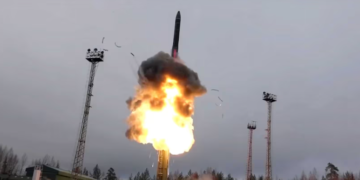
Iran said it launched a third consecutive day of retaliatory strikes following recent US attacks on its territory, while the United States carried out fresh strikes on Iranian military targets, claiming Tehran had violated the ceasefire agreement.
The latest escalation has raised concerns over the future of the Islamabad-mediated peace process, launched after months of conflict that disrupted shipping through the Strait of Hormuz and unsettled global energy markets.
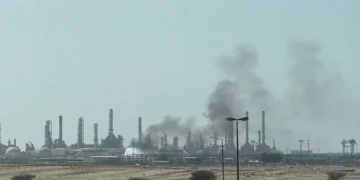
Iran’s Islamic Revolutionary Guard Corps (IRGC) announced tighter control over maritime traffic in the Strait of Hormuz, warning that vessels failing to use Tehran’s authorised shipping corridor would face stronger action. The IRGC also claimed responsibility for strikes on US military facilities in Kuwait and Bahrain, saying they had destroyed eight key installations, including the Ali al-Salem Air Base in Kuwait and the US Fifth Fleet headquarters in Bahrain.
“Any enemy aggression, whatever the pretext, even against insignificant targets… will have a crushing response,” the IRGC said.
Air raid sirens sounded twice in Bahrain, where authorities reported damage to a residential building in Muharraq province but no casualties. Kuwait said it intercepted two ballistic missiles without any damage or injuries, while a US official confirmed attacks on American facilities but said there were no reported casualties or significant damage.
The IRGC accused Washington of violating the ceasefire, saying the US strikes “will result in the complete halt of all diplomatic processes”. It also warned that American military bases in the region “will experience hell in the coming days”.
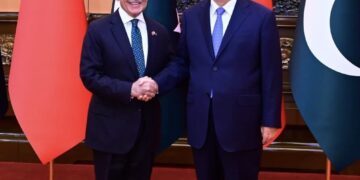
The ceasefire stems from a memorandum of understanding signed by Washington and Tehran on June 18 under Pakistan’s mediation, committing both sides and their allies to avoid military action and refrain from threats or the use of force.
US President Donald Trump responded with a stern warning, saying Iran would “no longer exist” if hostilities resumed.
“United States aircraft just struck Iranian missile and drone storage locations, and coastal radar sites, for violating the Cease Fire Agreement, AGAIN!” Trump wrote on Truth Social.
“There may come a point when we are no longer able to be reasonable, and will be forced to militarily complete the job that we very successfully started. If that happens, the Islamic Republic of Iran will no longer exist!” he added.
US Central Command said Saturday’s strikes targeted surveillance infrastructure, communication systems, air defence sites, drone storage facilities and minelayer capabilities in response to an Iranian drone attack on the Panama-flagged oil tanker Kiku, which was carrying approximately two million barrels of crude.
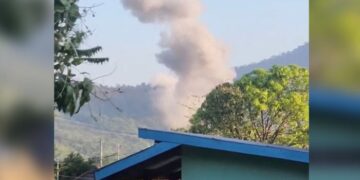
Iranian state media reported explosions in the southern city of Sirik, while the IRGC insisted the US strikes would not weaken its control over the Strait of Hormuz.
“America’s blind shots at Sirik will not resolve our dominance over the Strait of Hormuz. But our shots at violators will remind the rest of the vessels of the clear passage route,” the Guards said.
The latest US operation followed similar strikes a day earlier after Iran allegedly targeted another commercial vessel, the Ever Lovely.
Meanwhile, tensions also persisted in Lebanon. Israel launched fresh strikes after Hezbollah leader Naim Qassem rejected a US-backed Israel-Lebanon peace agreement, describing it as “humiliating, shameful and a surrender of sovereignty”. He instead called for full implementation of the Washington-Tehran agreement, which includes ending hostilities in Lebanon.
Iran condemned Israel’s attacks as “these brutal attacks… a blatant violation” of the interim truce.
Although Iran had agreed under the Islamabad memorandum to allow “safe passage of commercial vessels with no charge, for 60 days only, from the Persian Gulf to the Sea of Oman, and vice versa”, shipping through the Strait of Hormuz remains under pressure as Tehran continues to warn vessels against using unauthorised routes.
Analysts say Iran is likely to maintain limited pressure on shipping in the strategic waterway while avoiding a broader conflict, as both Washington and Tehran weigh their political and diplomatic priorities.