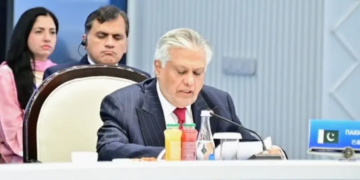

















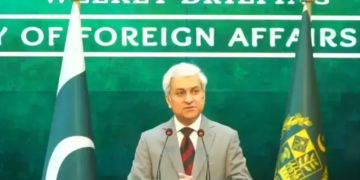




























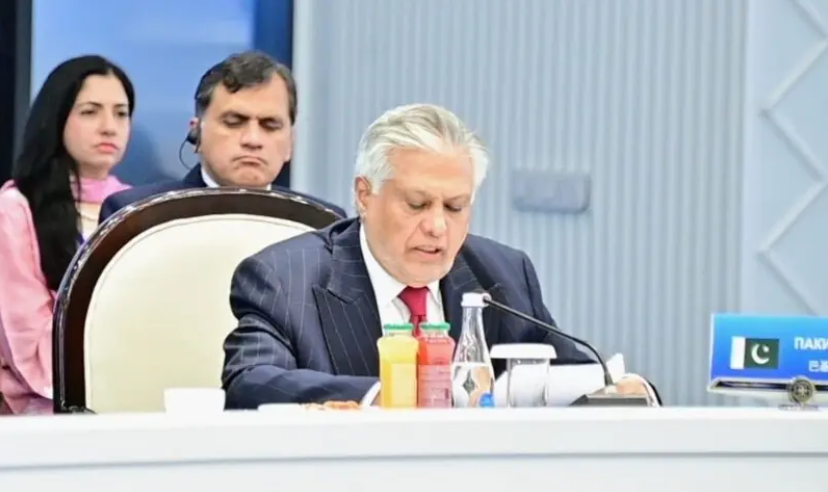
Deputy Prime Minister and Foreign Minister Ishaq Dar on Friday said lasting peace, stability and economic development in the region could only be achieved by eliminating the threat of terrorism originating from neighbouring Afghanistan.

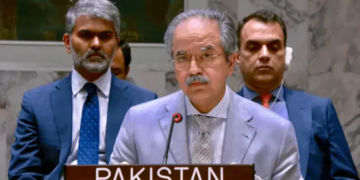
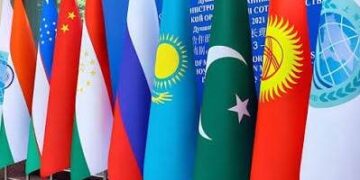
Addressing the Shanghai Cooperation Organisation (SCO) Council of Foreign Ministers’ meeting, Dar said Pakistan sought a “peaceful, stable, regionally integrated and prosperous Afghanistan which is at peace with itself and its neighbours”, stressing that such an outcome would benefit all SCO member states and the wider region.
He described terrorism emanating from Afghanistan as one of Pakistan’s most pressing security challenges, alleging that militant groups continued to recruit, train and operate from Afghan territory “under the watch and facilitation of the Afghan Taliban regime”.
Calling the support “well-documented”, Dar said Pakistan remained on the front line of the threat, noting that more than 560 Pakistanis had been killed in over 2,000 terrorist attacks so far this year.
“It is also deeply concerning that Afghan nationals have been found to be involved in these terrorist incidents,” the minister said.
He urged the SCO to press the Afghan Taliban administration to “honour its counter-terrorism commitments to the international community and fulfil its responsibilities towards global peace and security”.
Reflecting on the SCO’s evolution, Dar said the organisation had grown from the security-focused Shanghai Five into “a comprehensive entity that integrates security, economy, development, culture and peace among others”.
He said the bloc’s strategy for the coming decade should prioritise digital inclusion, narrowing the technological gap and strengthening energy security.
Turning to the Middle East, Dar said, “Pakistan firmly believes that dialogue, diplomacy and mutual respect provide the only sustainable way forward to resolve conflicts and achieve durable peace and security.”
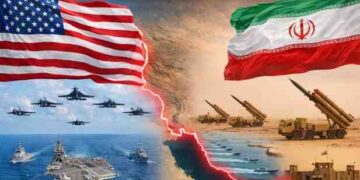
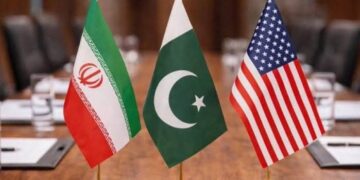
He said this approach had led Pakistan to host talks between the United States and Iran in Islamabad in April, “enabling first high-level direct diplomatic contact between the two sides after 47 years”.
Describing the Islamabad memorandum of understanding (MoU), signed in June 2026, as a “historic breakthrough”, Dar said it was made possible through Pakistan’s close engagement with both countries and extensive diplomatic outreach to regional and international partners.
“Pakistan deeply appreciates the trust and confidence reposed in it by both Iran and the United States in undertaking this challenging responsibility in the larger interests of peace and security.”
He urged the international community to build on the momentum created by the Islamabad MoU and the ongoing US-Iran technical talks to advance lasting peace.
On the sidelines of the meeting, Dar held separate meetings with Kyrgyz President Sadyr Nurgozhoevich Zhaparov and Chinese Foreign Minister Wang Yi.
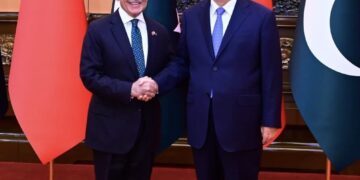
According to the Foreign Office, Dar and Wang discussed bilateral ties, regional developments and cooperation in multilateral forums. Dar thanked Wang for recognising Pakistan’s diplomatic efforts to promote regional peace and stability, while the Chinese foreign minister conveyed his best wishes for Pakistan’s upcoming chairmanship of the SCO Council of Heads of State and its hosting of the SCO Summit in 2027.
Dar also called on Kyrgyz President Zhaparov alongside the foreign ministers of other SCO member states. The Foreign Office said the two sides exchanged views on regional and global developments and discussed the SCO’s growing role as a platform for cooperation. Dar also highlighted the importance of continued coordination among member states as Pakistan prepares to assume the SCO chairmanship for 2026–27.
Founded in 2001 as a regional security grouping, the SCO has since expanded its focus to include trade, economic cooperation and broader regional development. It currently comprises 10 member states — China, Russia, Pakistan, India, Iran, Kazakhstan, Kyrgyzstan, Tajikistan, Uzbekistan and Belarus — while Afghanistan and Mongolia hold observer status.
Earlier this month, President Asif Ali Zardari and Kyrgyz President Zhaparov reaffirmed their commitment to strengthening bilateral relations, with particular emphasis on expanding trade, economic and investment cooperation.