



























































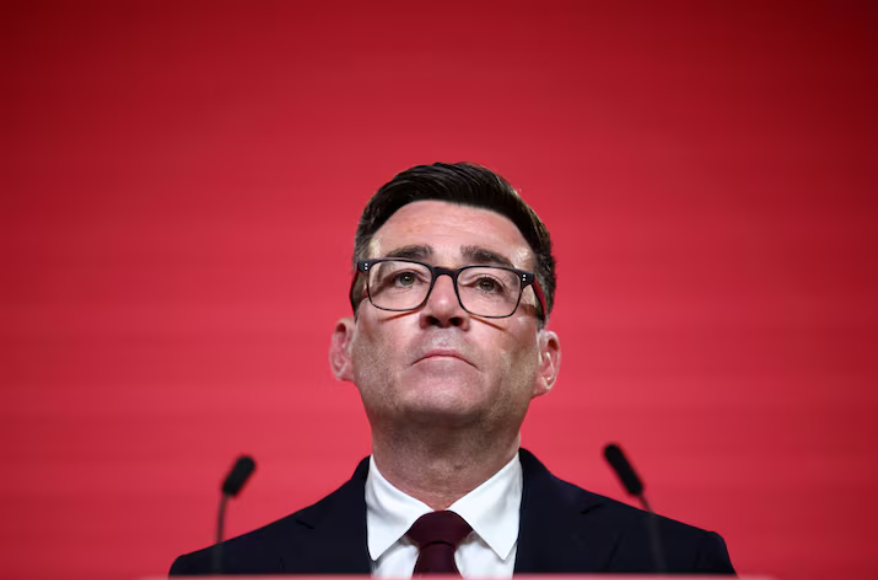
Andy Burnham will become the United Kingdom’s new prime minister on Monday following the resignation of Keir Starmer, pledging to “rewire” the country by focusing on the cost-of-living crisis, public services and economic reform.

Starmer is expected to deliver a farewell speech outside 10 Downing Street before formally submitting his resignation to King Charles. Burnham, the former mayor of Greater Manchester, will then meet the monarch and be invited to form a new government.
The 56-year-old, often referred to as the “King of the North,” becomes Britain’s seventh prime minister in a decade and takes office amid sluggish economic growth, struggling public services and mounting pressure to improve living standards.
After securing the Labour Party leadership, Burnham described his election as “the most significant change moment in our politics for 40 years” and pledged sweeping reforms.
“The government I lead will confidently lay that path out starting next week,” he said on Friday. “It will take us to a country where life is more affordable and all people and places are lifted from where they are now.”
Labour lawmakers have expressed confidence that Burnham could strengthen the party’s standing and counter the growing influence of Reform UK, led by veteran Brexit campaigner Nigel Farage.
One of Burnham’s first major decisions will be appointing his cabinet, with particular attention focused on the choice of finance minister. The position has attracted significant speculation within Labour.
Energy Security and Net Zero Secretary Ed Miliband was initially seen as a leading contender, although Interior Minister Shabana Mahmood has since emerged as a favourite for the role.
Burnham urged party members to ignore media speculation, saying on Friday that he had not yet finalised his ministerial team.
His new administration is expected to move quickly on its policy agenda. One of its first actions was to abandon plans for mandatory digital identity documents for all employees, a scheme intended to tackle illegal migration that was later criticised by a cross-party parliamentary committee as a “fiasco.”
The government is also expected to face close scrutiny over its approach to taxation, public spending, energy policy and the future of underperforming utility companies, which Burnham wants to place under stronger public oversight.
On Sunday, Deputy Labour Leader Lucy Powell suggested that debt-laden utility company Thames Water could be placed under “special measures,” allowing it to operate under government control.
Explaining Burnham’s priorities, Powell told Sky News, “He wants to refocus and reprioritise the government’s resources, the government’s attention onto his priorities of tackling the cost of living, really rewiring the way the country, the economy works.”