












































































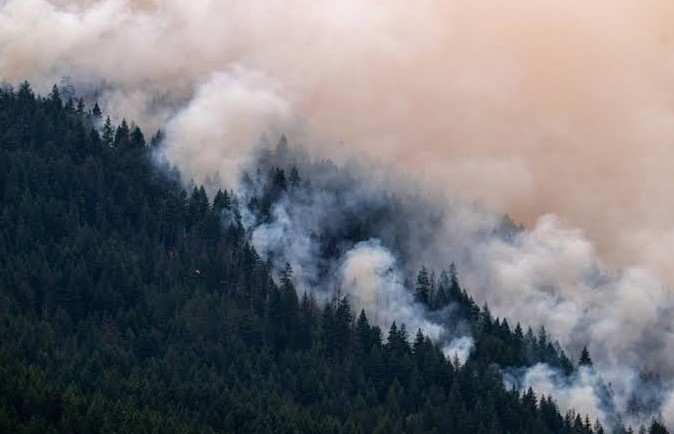
ISLAMABAD (MNN); Smoke from increasingly frequent and intense wildfires is emerging as a major global public health threat, damaging nearly every organ in the human body and causing tens of thousands of deaths annually, according to multiple international medical studies.

Health experts told international media that wildfire smoke can trigger immediate health emergencies, including asthma attacks, heart attacks, cardiovascular complications, respiratory illnesses and mental health disorders. Hospitals often experience a surge in emergency admissions within hours or days of heavy smoke exposure.
Medical researchers warn that pregnant women exposed to wildfire smoke face a higher risk of premature births and babies with low birth weight, increasing the likelihood of lifelong respiratory complications. Long-term exposure has also been linked to certain cancers, dementia and other chronic illnesses.
Environmental health experts say wildfire smoke causes widespread inflammation by overstimulating the body’s immune system. Studies have found that it can affect the brain, skin, cardiovascular system and even male reproductive health, while older adults face an increased risk of stroke during prolonged smoke exposure.
Scientists describe wildfire smoke as a toxic mixture of particles and gases produced by burning forests, vegetation, buildings, vehicles and other materials. More than 1,000 harmful chemicals, including formaldehyde and volatile organic compounds, have been identified in wildfire smoke.
Climate researchers say global warming is making wildfires more frequent, larger and more destructive across North America, Europe, Canada and the Arctic. In the United States alone, more than 14,860 square kilometres have burned so far this year—31 percent above the ten-year average.
The smallest smoke particles, measuring about one micron in size, can bypass the body’s natural defenses, penetrate deep into the lungs and enter the bloodstream, triggering inflammation that affects the heart and lungs within minutes or hours.
A recent scientific study estimates that prolonged exposure to wildfire smoke causes an average of 24,100 deaths annually in the continental United States. Globally, researchers estimate that nearly 678,000 people die each year due to wildfire smoke, with almost 39 percent of the victims being children under the age of five.
Doctors also report significant increases in asthma attacks, pneumonia and respiratory illnesses during prolonged wildfire events. Studies have further linked smoke exposure to impaired cognitive function, depression and other mental health problems.
Health experts recommend avoiding smoke whenever possible, wearing high-quality protective masks outdoors, keeping windows and doors properly sealed, using effective air filtration systems and seeking refuge in clean-air shelters during severe smoke events.
Scientists warn that as climate change accelerates, wildfire smoke is likely to become one of the world’s fastest-growing environmental health risks, requiring stronger public health preparedness and climate action.