













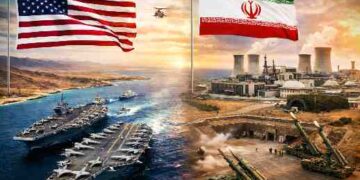































US President Donald Trump has retreated from his proposal to enforce a 20 percent transit tariff on vessels navigating the strategic Strait of Hormuz. Announcing the shift on Tuesday, Trump stated he would instead pursue major trade and investment agreements with Gulf Arab nations as part of Washington’s ongoing confrontation with Tehran.

The backpedaling came just under five hours before the controversial fee was scheduled to take effect at 2000 GMT. Trump clarified that the crucial shipping channel would remain accessible to all maritime traffic, excluding Iranian vessels. He had initially proposed the fee on Monday while restoring a blockade on Iranian maritime cargo following Tehran’s declaration that it was shutting the strait.
“Based on highly productive conversations with Middle East leadership, I have decided to replace the 20% United States Reimbursement Fee with Trade and Investment Deals that the various Gulf States will be making into the United States,” Trump posted on Truth Social.
Fresh Military Strikes and Regional Alarms
Even as the tariff plan was shelved, military hostilities flared across the region for a third consecutive night.
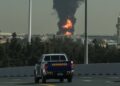
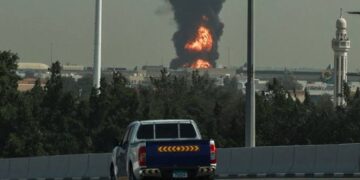
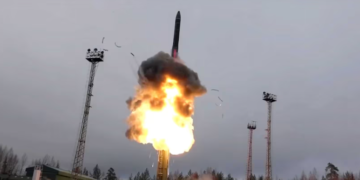
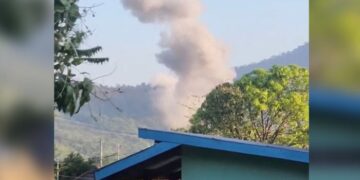
- Strikes in Iran: According to Iranian state media, a US projectile struck the governor’s office on Qeshm Island, located in the Strait of Hormuz, at approximately 7:00 PM on Tuesday. The semi-official Tasnim news agency reported another explosion near a water and power utility plant on Kish Island, while state media reported blasts in Andimeshk within the southern Khuzestan province.
- Iranian Retaliation: Prior to these strikes, Iran launched ballistic missiles at a US Army base in Jordan, and Bahrain reported successfully repelling an Iranian aerial offensive. Jordan confirmed its forces shot down four incoming ballistic missiles, and explosions were heard in Bahrain’s capital, Manama.
- Kuwait Alerts: During the early evening hours, Kuwait’s armed forces engaged “hostile” aerial targets, triggering air raid sirens across the country.
The escalating conflict has thrown a shadow over last month’s memorandum of understanding, casting doubt on whether it will successfully bring about a lasting ceasefire. The continuing war has rattled global energy markets and triggered widespread fears of rising global inflation.
Strong Resistance to the Proposed Shipping Fee
The initial transit fee proposal met with swift international condemnation. The United Nations’ maritime watchdog criticized the initiative, maintaining that charging mandatory transit tolls on international navigation channels has no basis under international law. German shipping giant Hapag-Lloyd similarly condemned the proposal, labeling it “fundamentally wrong”.
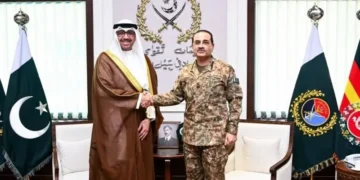
Trump later remarked that he personally disliked the idea of a transit fee, asserting that various foreign leaders had reached out to express their preference for direct investments in the US over a toll system. However, he did not outline specific agreements or binding commitments made by any Gulf states, stating only that upcoming investments would be “MASSIVE but, at the same time, extraordinarily good for them, and their future.”
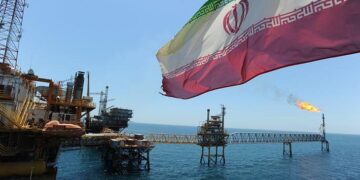
Due to the renewed naval blockade on Iran and the escalating military exchanges, global oil prices surged roughly 2 percent on Tuesday, reaching a one-month high. Prior to the outbreak of hostilities, about one-fifth of the world’s oil and liquefied natural gas (LNG) passed through the Strait of Hormuz daily.
Geopolitical Stakes and Rome Peace Talks
While the exchange of fire remains intense, regional experts suggest the military actions are still calculated moves as both sides attempt to gain leverage ahead of potential diplomatic negotiations.
“I doubt the two sides will resume a full war, especially as Trump will suffer though there is also a distinct possibility that the Iranians will overplay their hand. That is true of Trump too, of course,” commented Yezid Sayigh, a senior fellow at the Carnegie Middle East Center.
The war has generated substantial political friction in the United States, where rising gasoline prices have alienated voters ahead of the crucial November congressional elections. A recent Reuters opinion poll revealed that 50 percent of Americans surveyed believe the conflict has not been worth the cost.
The current conflict began on February 28 following joint US and Israeli strikes on Iran, which triggered retaliatory Iranian attacks on Israel and regional Gulf partners harboring US military facilities. The hostilities also reignited a destructive secondary conflict between Israel and Hezbollah in Lebanon, resulting in thousands of casualties and the displacement of millions.
Amid the ongoing air and sea battles, diplomatic channels remain open. Lebanese and Israeli delegations reconvened in Rome on Tuesday. Beirut is pressing for an organized Israeli military withdrawal from southern Lebanon under a US-mediated framework.