






































































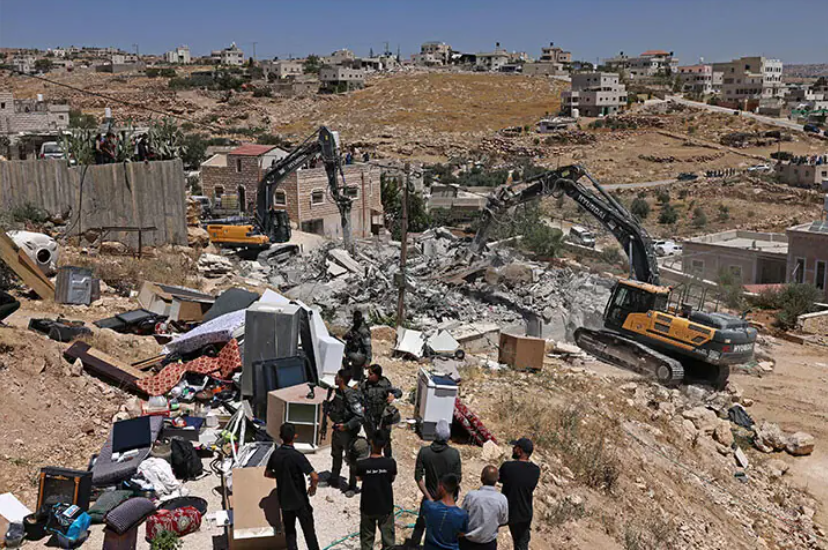
Israel’s security cabinet has greenlit a 1.3 billion shekel ($434 million) budget to construct 34 new settlements in the occupied West Bank. Announced on Tuesday by right-wing Finance Minister Bezalel Smotrich, the decision has further escalated friction over territory widely considered essential for any future Palestinian state.

The international community, United Nations bodies, and Palestinians overwhelmingly view these settlements as illegal under international conventions and a primary roadblock to peace.
Smotrich, a vocal opponent of Palestinian statehood who leads the Religious Zionism party, is currently campaigning for the upcoming legislative elections on October 27. The newly approved plans will bring the total number of settlements authorized during his four-year term to 103. He noted that an additional 1.075 billion shekels would be designated to construct access roads for the new sites, following a ministerial referral of the funding plan to the security cabinet last month.
Calling the cabinet’s authorization a historic milestone, Smotrich described it as a “day of celebration for Israel and settlements” and thanked Prime Minister Benjamin Netanyahu for his backing. Netanyahu is currently projected to lose the October election, according to recent opinion polls.
In a statement, Smotrich defended the expansion: “We are strengthening the security of the State of Israel, killing the idea of establishing a terrorist state in the heart of the country, and strengthening our hold on the homeland in Judea and Samaria,” using the biblical names for the West Bank region.
The funding approval comes alongside a recent spike in settler violence targeting Palestinians and their property. Roughly 700,000 Israeli settlers live in the West Bank and East Jerusalem, alongside 2.7 million Palestinians. While Israel has stopped short of formally extending its sovereignty over the occupied West Bank, it continues to reject international condemnation, arguing the land is disputed territory with thousands of years of Jewish historical ties.