












































By Sarfraz Raja

The two-day 9th Ministerial Conference on Women of the Organisation of Islamic Cooperation (OIC) concluded with the adoption of the historic “Islamabad Declaration” and the launch of a voluntary initiative for women’s digital inclusion, marking a significant milestone in the collective efforts to advance women’s empowerment across the Muslim world.
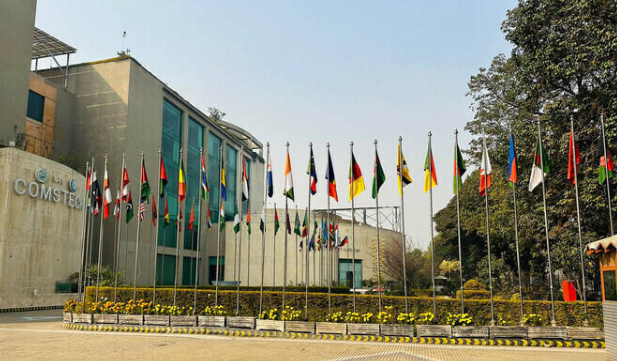
Hosted by the Government of Pakistan under the auspices of the Ministry of Human Rights, the conference brought together around 190 delegates from all 57 OIC member states, including ministers responsible for women and family affairs, senior government officials, representatives of OIC institutions, international organizations, and development partners. The high-level gathering was held at the Jinnah Convention Center under the theme “Socio-economic and Political Empowerment of Women in the OIC Countries: Challenges and Way Forward”.
Pakistan Assumes Chairmanship
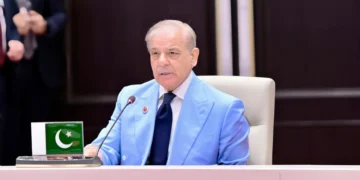
A key development of the conference was Pakistan formally assuming the chairmanship of the OIC Ministerial Conference on Women from Egypt for the next two years. Prime Minister Muhammad Shehbaz Sharif inaugurated the ministerial session, while Federal Minister for Law and Justice Azam Nazeer Tarar chaired the conference on behalf of Pakistan.
Addressing the gathering, Tarar described hosting the conference as a “significant honour” for Pakistan and emphasized that the OIC is one of the world’s largest multilateral forums after the United Nations. He noted that Pakistan would utilize the forum to showcase its initiatives aimed at promoting gender equality and building an inclusive society.
Prominent Pakistani leaders who addressed the conference included Punjab Chief Minister Maryam Nawaz Sharif, Minister for Information Technology and Telecommunication Shaza Fatima Khawaja, and parliamentarians Wajeeha Qamar and Saba Sadiq.
High-Level Participation
The conference witnessed participation from senior officials across the Islamic world. Notable attendees included Saudi Arabia’s Family Affairs Council Secretary General Dr. Maimoonah Khalil Alkhalil, Egypt’s National Council for Women President Amal Ammar, Bangladesh’s Women and Children Affairs Minister Abu Zafar Md. Zahid Hossain, and Iraq’s Vice President for Women and Family Affairs Dr. Zainab Al-Mulla Al-Sultani. Libya’s Minister of State for Women’s Affairs Grebe Randa, Yemen’s Dr. Ahed Mohammed Jassous, Nigeria’s Women Affairs Minister Imaan Sulaiman-Ibrahim, and Somalia’s Family and Human Rights Development Minister Khadija Makhzoumi were also among the delegates.
In a significant moment, Syrian Minister of Social Affairs and Labour Hind Kabawat described her participation as a milestone, noting that Syria had been unable to attend such gatherings since 2012. “Following Syria’s liberation and the end of dictatorship, we are now free to be here and to raise our voice for Syrian women who made tremendous sacrifices for freedom,” she said.
OIC Secretary-General Hissein Brahim Taha, represented by Assistant Secretary-General for Humanitarian, Cultural and Social Affairs Ambassador Dr. Tareg Ali Bakheet, emphasized that women’s empowerment represents a fundamental pillar of joint Islamic action and a top priority on the Organization’s agenda.
The Islamabad Declaration
The conference concluded with the adoption of the Islamabad Declaration, setting out a shared agenda on women’s socio-economic and political advancement. The declaration urged member states to remove barriers to women’s education and employment, expand access to quality education, vocational training, and leadership development. It also called for strengthening women’s economic empowerment through improved access to employment, finance, entrepreneurship support, and social protection systems.
A significant portion of the declaration focused on women’s role in technology-driven sectors, emphasizing greater participation in science, technology, engineering, mathematics (STEM), artificial intelligence, and emerging fields. Member states were urged to bridge the digital gender divide by expanding affordable digital infrastructure, connectivity, and digital literacy programmes, particularly in rural communities.
The declaration also pressed for stronger action against violence targeting women and girls, including cyber harassment, online abuse, and other technology-enabled threats. It expressed solidarity with the women and girls of Palestine and Indian Illegally Occupied Jammu and Kashmir, appealing to the international community to extend legal, humanitarian, and psychosocial support.
Digital Inclusion Initiative
Alongside the declaration, the conference launched the Islamabad Initiative on Women’s Digital Inclusion, described as a voluntary OIC platform. The initiative aims to promote digital literacy, digital entrepreneurship, STEM education, artificial intelligence skills, cybersecurity awareness, and equitable access to digital technologies for women and girls across OIC member states. Interested member states, OIC institutions, and development partners were invited to contribute through training programmes, scholarships, mentorship, and exchange of expertise.
An omnibus resolution was also adopted, integrating future policies and programmes on women’s empowerment.
In his concluding remarks, OIC Assistant Secretary-General Ambassador Dr. Tarig Ali Bakheet said the deliberations reflected the collective determination of member states to advance the status of women as a key pillar of sustainable development and the prosperity of the Muslim Ummah. “The real measure of success will not lie in the resolutions adopted but in the collective commitment to implement them effectively,” he said.
The declaration concluded by reaffirming that empowering women and girls through education, skills development, leadership, and economic participation is essential for the progress, resilience, and prosperity of OIC societies.