














































































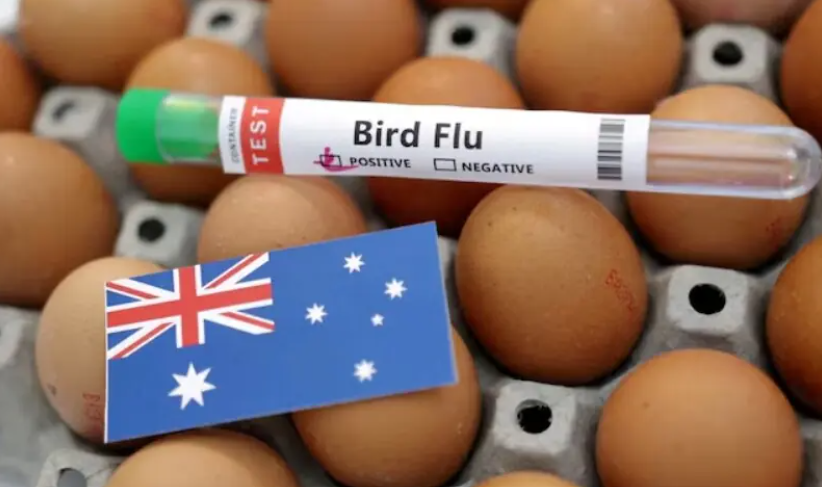
Scientists have detected the highly contagious H5 bird flu strain in an Australian seabird for the first time, the government said on Friday.

Australia had remained the only continental landmass free of the H5 strain for years, despite the virus causing severe illness and high death rates among poultry and wild birds around the world.
Since June, 12 cases of H5 bird flu have been confirmed in Australia, all involving migratory seabirds. The latest detection was found in a greater crested tern in Robe, South Australia, after laboratory testing confirmed the infection.
Agriculture Minister Julie Collins said the development was concerning but not unexpected.
“While this, of course, is a concerning development, it is not unexpected,” Collins said.
She added that there was currently no evidence of widespread deaths caused by the virus.
“I do want to reiterate, though, that at this time there is still no evidence of any mass mortality due to the H5 bird flu,” she told a news conference in Hobart, the capital of Tasmania.
Collins said there were no indications that the virus had spread to other animal populations, poultry farms or agricultural systems, while the risk to human health remained low.
Scientists are now working to identify how the virus reached the Australian seabird population.
“What we do know is that this is a coastal seabird that has an overlapping coastal range with migratory seabirds that have previously tested positive for H5,” Collins said.
Authorities increase monitoring
The South Australian government has introduced “enhanced surveillance” in the area where the infected bird was discovered.
Officials have expressed concern that the spread of H5 bird flu could increase threats to Australia’s unique wildlife, with many native species already facing extinction risks.
Nearly half of Australia’s wild bird species and 83 percent of its mammals are found nowhere else in the world.
The H5 strain has mainly affected wild birds such as waterfowl, shorebirds, seabirds and birds of prey. The virus has also been detected in marine mammals and other animals, including cats, goats, alpacas and pigs.
Australian authorities had previously been investigating whether the virus entered the country through migratory birds arriving from the sub-Antarctic region.
Scientists reported in June that the H5 strain had killed more than 13,000 elephant seal pups after spreading through a breeding colony on the remote Heard and McDonald Islands, an Australian external territory in the sub-Antarctic.