

























































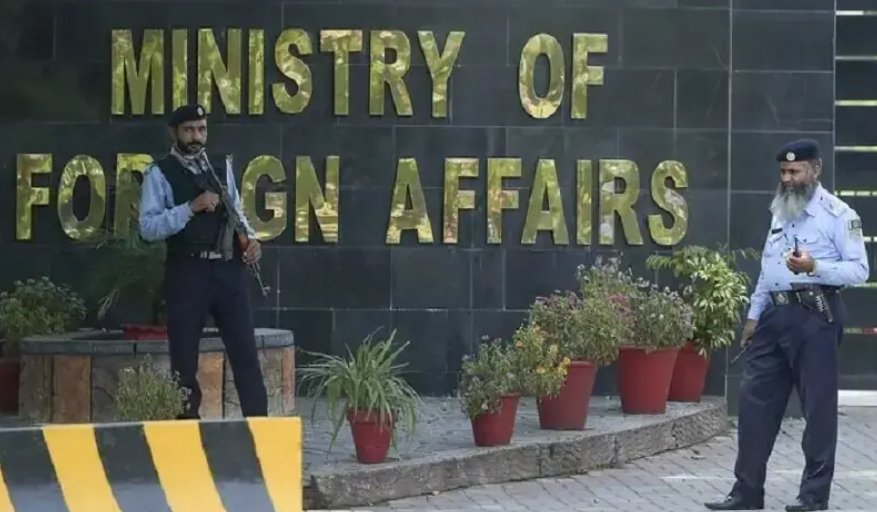
Pakistan’s Foreign Office (FO) on Monday summoned the Afghan chargé d’affaires and issued a strong demarche over the recent terrorist attack on a Pakistan Rangers facility in Karachi, saying the involvement of Afghan nationals highlighted the continued use of Afghan territory for attacks inside Pakistan.

The move follows Saturday night’s assault on the Pakistan Rangers (Sindh) headquarters in Karachi’s Gulistan-i-Jauhar area, in which three security personnel were martyred and four others were injured, according to the Inter-Services Public Relations (ISPR).
ISPR stated that the attack was carried out by terrorists “belonging to Indian proxy Jamaatul Ahrar” (JuA), adding that three attackers were killed during the security forces’ response while one suspect, identified as an Afghan national, was arrested alive.
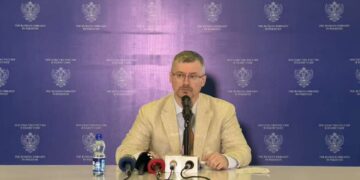
Responding to media queries, Foreign Office spokesperson Tahir Andrabi confirmed that the Afghan envoy had been summoned to the Ministry of Foreign Affairs.
He added that Pakistan’s Ambassador to Afghanistan, Ubaidur Rehman Nizamani, also delivered a “similar demarche” to the Afghan Ministry of Foreign Affairs.
“These demarches were issued in light of the fact that Afghan nationals, including one apprehended alive, participated in this attack, proving yet again that Afghan soil and Afghan nationals continue to be used to orchestrate terrorist attacks inside Pakistan,” the FO spokesperson highlighted.
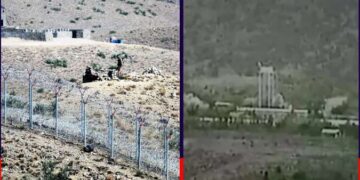
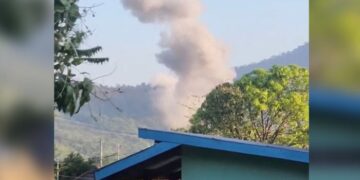
Separately, Pakistan conducted an intelligence-based ground operation along the Pakistan-Afghanistan border in Bajaur overnight, followed by what Information Minister Attaullah Tarar described as “calibrated strikes” on terrorist hideouts linked to JuA and Fitna al Khawarij.
According to Tarar, the operation killed 29 terrorists. He said Khawarji commander Khan Farosh, also known as Zabal, and three other militants were killed during the Bajaur operation, while another 25 terrorists were killed in “precision strikes” targeting locations in Afghanistan’s Paktia, Paktika and Kunar provinces.
Fitna al Khawarij is the term used by the Pakistani state to refer to members of the banned Tehreek-i-Taliban Pakistan (TTP).
Following the Karachi attack, security sources said the arrested suspect identified himself as Usman Ali and disclosed that he had entered Pakistan from Jalalabad approximately a week earlier.
According to the sources, the suspect admitted being affiliated with JuA and identified the group’s commander in Afghanistan as Ahrar Moulvi. He also stated that he and his associates had received training in Afghanistan.
According to information available on the United Nations Security Council website, Jamaatul Ahrar is based in Nangarhar province. The group was established in 2014 by Abdul Wali, also known as Omar Khalid Khorasani, after splitting from the TTP. The two groups later reunited in 2024, although JuA was reportedly not assigned significant positions in the TTP’s organisational appointments announced in early 2025.
Pakistan has repeatedly expressed concern over the resurgence of terrorism since the Afghan Taliban returned to power in Kabul in 2021, urging the Afghan authorities to dismantle militant sanctuaries allegedly used to launch attacks inside Pakistan.
Islamabad maintains that these appeals have largely gone unanswered.
Earlier this year, on the night of February 26, Pakistan launched Operation Ghazab lil-Haq against terrorist hideouts following what it described as unprovoked firing by the Afghan Taliban from across the border.
The Foreign Office had previously summoned the Afghan chargé d’affaires in May after a suicide attack on the Fateh Khel police post in Bannu that claimed the lives of 15 police personnel.