
















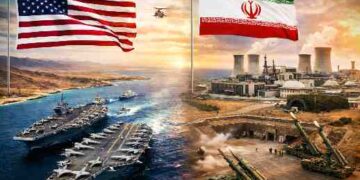







































US and Saudi Arabian forces carried out coordinated airstrikes in eastern Iraq on Wednesday, targeting what they described as “Iran-aligned terrorists” in retaliation for a series of recent drone attacks, marking a renewed escalation after a brief pause in hostilities involving Iran.

The joint military operation came as US President Donald Trump hosted Israeli Prime Minister Benjamin Netanyahu at the White House for their first face-to-face meeting since the Middle East conflict began in late February.
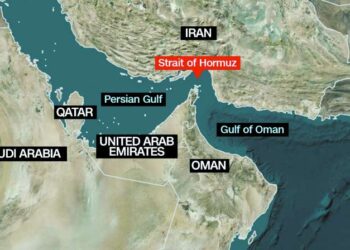
Global oil markets reacted swiftly to the latest escalation, with crude prices rising more than four per cent amid renewed concerns over supplies passing through the strategic Strait of Hormuz.
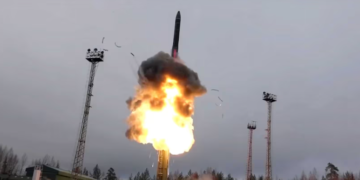
According to the US military, American and Saudi fighter aircraft conducted precision strikes against logistics hubs and weapons sites used by “Iran-aligned terrorists” allegedly directed by the Islamic Revolutionary Guard Corps (IRGC) to attack US forces and Saudi energy facilities.
“US and Saudi fighter aircraft struck multiple terrorist logistics and weapons sites across eastern Iraq in a strong response to over 30 IRGC-directed aerial drone attacks in the last 72 hours,” the military said.
“The IRGC and its terrorist proxies must cease these attacks to avoid further US military response,” it added.
Saudi Arabia’s defence ministry said the targeted groups were “terrorist militias loyal to Iran” responsible for attacks on the kingdom’s oil infrastructure.
The latest strikes followed the collapse of a brief suspension in hostilities. Late on Tuesday, US forces reported intercepting Iranian missiles fired at American military bases in the Gulf.
Iran claims ‘full control’
Washington had previously said the temporary halt in fighting was intended to create space for fresh negotiations, including discussions concerning the Strait of Hormuz.
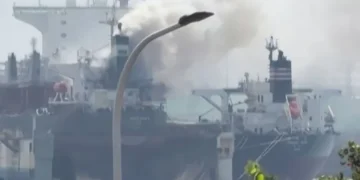
On Wednesday, Iran’s IRGC claimed it had intercepted and stopped three oil tankers in the waterway, insisting it maintained “full control” over the strategic shipping route.
Meanwhile, Trump and Netanyahu held around 90 minutes of closed-door talks in Washington, with the White House describing the meeting as “positive and productive”.
The discussions took place as both leaders seek to bridge public differences over the ongoing regional conflict.
Netanyahu later said the meeting was “one of the best conversations I’ve ever had with the president of the United States” and focused on “our common goal: ensuring that Iran does not obtain nuclear weapons”.
Trump offered few details, saying only that the two leaders had a “very good meeting”.
Israel has not directly participated in the latest exchange of hostilities between the United States and Iran, which intensified earlier this month after an April ceasefire broke down.
Regional issues remain unresolved
Trump and Netanyahu were also expected to discuss implementation of a US-backed agreement signed between Israel and Lebanon last month, although applying the deal on the ground has proven difficult.
The two leaders were also anticipated to address the situation in Gaza, where reconstruction efforts remain stalled despite ongoing diplomatic initiatives.
It was not immediately clear whether those topics featured prominently during their discussions.
“Had a very good meeting!” Trump wrote on social media, alongside photographs from the Oval Office.
“Obviously, many important subjects were discussed.”
Nearly three years into the Israel-Hamas war, humanitarian conditions in Gaza remain severe, while Israeli forces continue operations against individuals the military says are militants.
Israel’s ambassador to the United Nations, Danny Danon, said Netanyahu’s visit came at a “critical time for the Middle East,” accusing Iran of continuing “to choose terrorism over negotiations” while blocking navigation through the Strait of Hormuz.
Tensions rise in the Strait of Hormuz
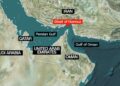
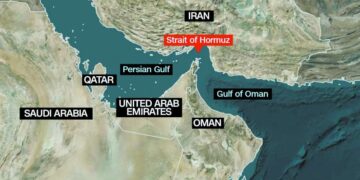
The Strait of Hormuz remains central to efforts aimed at easing regional tensions, with Iran insisting it has authority over security in the vital energy corridor.
Iran’s Revolutionary Guards said they stopped three oil tankers on Wednesday after the vessels allegedly ignored warnings and continued using what Tehran described as an “unsafe and illegal route”.
The statement said the tankers were targeted because they “ignored our warnings and continued sailing an unsafe and illegal route”.
Earlier this week, Iran said it had held talks with Oman on shared principles and operational mechanisms to ensure safe maritime navigation through the strait.
In June, Tehran and Muscat also announced discussions on introducing service fees for vessels transiting the waterway, a proposal opposed by Washington.
Relations between Iran and Oman have since become strained after Muscat suggested ships could alternatively pass through Omani waters, prompting a hostile response from Tehran, including attacks on vessels.