






















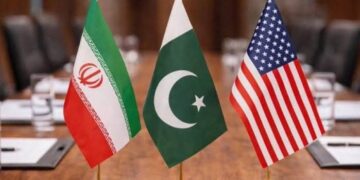





















AFP: The United States and Iran are set to hold indirect talks in Switzerland on Thursday, aiming to strike a deal to avert fresh conflict and end weeks of escalating threats.

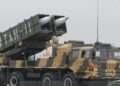
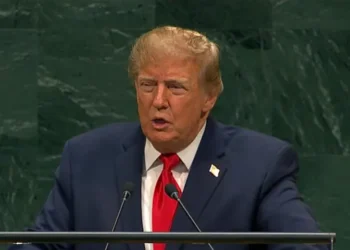
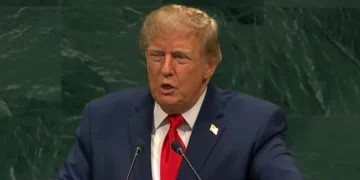
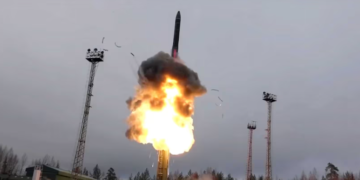
The new round of negotiations in Geneva follows a US military build-up in the region and repeated warnings from President Donald Trump that Washington could strike Iran if no agreement is reached.In his State of the Union address on Tuesday, Trump accused Iran of “pursuing sinister nuclear ambitions”. He also claimed Tehran had developed missiles capable of threatening Europe and US bases overseas and was working on missiles that could eventually reach the United States.
Iran’s foreign ministry dismissed the allegations as “big lies”.Tehran has publicly stated that the maximum range of its missiles is 2,000 kilometres. The US Congressional Research Service estimates the range at about 3,000km — still far short of reaching the continental United States.
The core dispute centres on Iran’s nuclear programme. Western powers believe it is aimed at developing an atomic bomb, while Iran insists it is for peaceful purposes.
The United States is also pressing Iran to negotiate on its ballistic missile programme and its support for armed groups hostile to Israel. Secretary of State Marco Rubio said Iran must address its missile programme, calling its refusal to discuss ballistic weapons “a big, big problem”. He added that President Trump prefers a diplomatic solution.
Iran has ruled out discussions beyond the nuclear issue and is demanding that US sanctions affecting its economy be lifted as part of any agreement.Iranian President Masoud Pezeshkian said he had a “favourable outlook for the negotiations” and hoped to move beyond the current “neither war nor peace” situation.
Foreign Minister Abbas Araghchi, who is leading Iran’s delegation, described the talks as “a historic opportunity” and said a deal was “within reach”. In a statement following a meeting with Oman’s foreign minister, Araghchi said success would depend on the “seriousness” of the United States and avoiding contradictory positions.
The US delegation includes envoy Steve Witkoff and Jared Kushner. Oman is mediating the talks.Earlier discussions were held in Oman this month, followed by a second round in Geneva last week.
A previous attempt at negotiations collapsed after Israel launched surprise strikes on Iran last June, triggering a 12-day conflict that briefly involved the United States targeting Iranian nuclear sites.Tensions rose again in January after Iran carried out a crackdown on widespread protests. President Trump has repeatedly threatened to intervene to “help” the Iranian people.
Emile Hokayem, senior fellow for Middle East security at the International Institute for Strategic Studies, said the region appears to be bracing for conflict. He noted that several Middle Eastern states had earlier urged the United States not to strike Iran, amid concerns that any new war could be larger than the one in June.
Residents in Tehran expressed mixed views about the possibility of renewed conflict. A 60-year-old homemaker said war would be devastating, warning of famine and further suffering, but added that it might at least bring clarity to the current uncertainty.