




















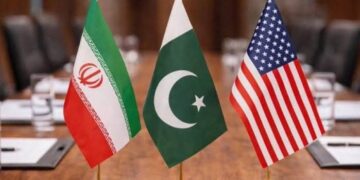





















The Pentagon said on Tuesday that the ongoing conflict with Iran has cost the United States more than $29 billion since fighting began in February, as hopes for lasting peace in the Middle East continued to fade amid hardening positions from both Washington and Tehran.

Jules Hurst, currently performing the duties of comptroller, told US lawmakers that the amount includes operational expenses as well as the repair and replacement of military equipment.
“The joint staff team and the comptroller team are constantly looking at that estimate,” Hurst said while appearing alongside Defence Secretary Pete Hegseth and Chairman of the Joint Chiefs of Staff General Dan Caine.
The updated figure marks a sharp increase from the Pentagon’s April 29 estimate of $25bn.
The announcement came shortly before President Donald Trump departed for China on his first visit to Beijing since 2017, where talks with Chinese President Xi Jinping are expected to focus on trade, Taiwan and Iran.
Earlier, the United States reportedly rejected Iran’s response to a proposed peace offer, with Trump describing the ceasefire as being on “massive life support”. According to CNN, some aides are now seriously considering renewed military operations against Tehran.
Responding to a question about whether Washington required Beijing’s assistance regarding Iran, Trump said, “No, I don’t think we need any help with Iran. We’ll win it one way or the other. We’ll win it peacefully or otherwise.”
“Their navy’s gone, their air force is gone, every single element of their war machine is gone,” he claimed, adding that the blockade on Iranian ports had been “100 per cent effective”.
Trump also reiterated that Iran would not be allowed to develop nuclear weapons, saying Iranian officials had assured him they intended to retrieve nuclear material from sites he previously described as “obliterated” during last year’s US-Israeli strikes.
Meanwhile, Iranian parliamentary spokesperson Ebrahim Rezaei warned that Tehran could enrich uranium up to 90 per cent purity — considered weapons-grade — if attacked again.
“One of Iran’s options in the event of another attack could be 90 per cent enrichment. We will review it in the parliament,” Rezaei wrote on X.
Iranian media also reported that the Revolutionary Guards carried out military exercises in Tehran on Tuesday in preparation for any future confrontation.
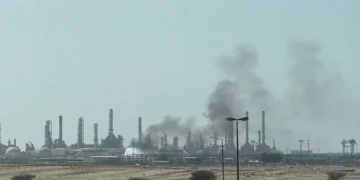
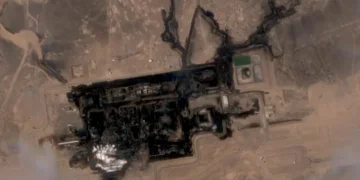
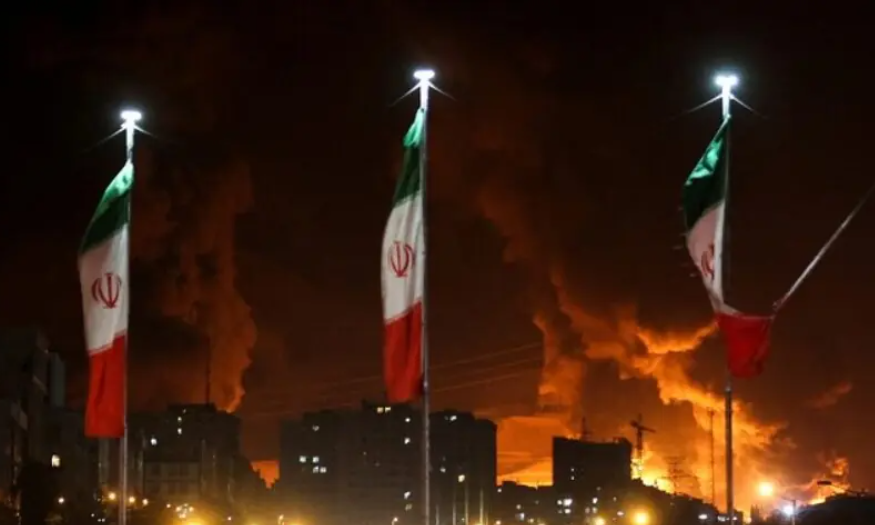
Separately, The Wall Street Journal reported that the United Arab Emirates launched attacks on Iran last month, targeting a refinery on Lavan Island around the same time Trump announced a ceasefire following a five-week air campaign.
According to the report, the US quietly welcomed the Emirati strikes and encouraged Gulf allies interested in joining operations against Iran. Iranian state broadcaster IRIB had earlier reported missile and drone attacks on the UAE and Kuwait shortly after Lavan Island facilities were targeted.
The refinery was reportedly Iran’s 10th-largest processing facility as of 2020, handling approximately 60,000 barrels of crude oil daily.
At the same time, Iran has expanded its operational definition of the Strait of Hormuz, with IRGC Navy official Mohammad Akbarzadeh describing it as a much broader strategic zone rather than a narrow shipping passage.
On the diplomatic front, European Union foreign policy chief Kaja Kallas said the bloc may consider expanding its Red Sea naval mission to include the Strait of Hormuz once the conflict ends.
“Operation Aspides already makes a crucial contribution in protecting shipping in the Red Sea but its activities could also be extended to the strait,” Kallas said after a meeting of EU defence ministers.
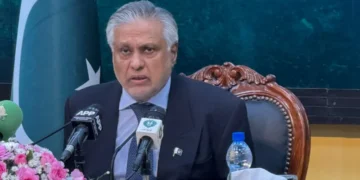
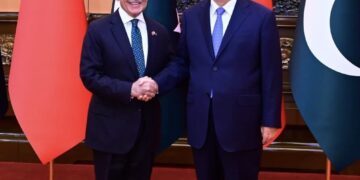
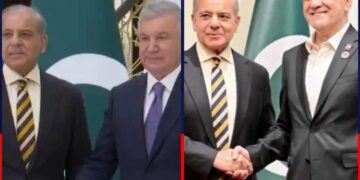
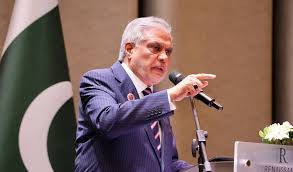
Pakistan also continued diplomatic efforts aimed at easing tensions. Foreign Minister Ishaq Dar discussed regional developments and mediation efforts with Chinese Foreign Minister Wang Yi, with both sides stressing the importance of maintaining a durable ceasefire and ensuring safe navigation through the Strait of Hormuz.
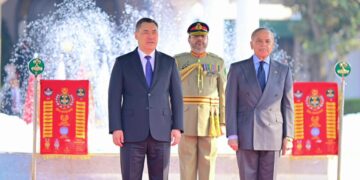
The Iran conflict was also discussed during a phone call between Prime Minister Shehbaz Sharif and Azerbaijan President Ilham Aliyev, who praised Pakistan’s role in seeking a ceasefire between Tehran and Washington.