














































MOSCOW, May 9 (Reuters) – Russia holds its most scaled-back Victory Day parade in years on Saturday due to the threat of attack from Ukraine, where victory for Moscow’s forces has proven elusive more than four years into the deadliest European conflict since World War Two.

The May 9 parade on Red Square marks Russia’s most revered national holiday – a time to celebrate the Soviet Union’s victory over Nazi Germany and to pay homage to the 27 million Soviet citizens, including many from Ukraine, who perished.
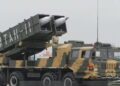
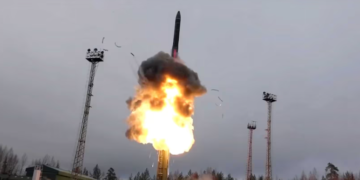
Once used to show off Russia’s vast military, including its nuclear-capable intercontinental ballistic missiles, this year’s parade will have no tanks or other military equipment rolling over the cobbles of Red Square.
Soldiers will still march and cheer in the shadow of Vladimir Lenin’s Mausoleum, fighter planes will fly above the towers of the Kremlin and President Vladimir Putin will make a speech before laying flowers at the tomb of the Unknown Soldier.
“In general, everything is as usual, except for the demonstration of military equipment,” Kremlin aide Yuri Ushakov told reporters.
Russia, which invaded Ukraine in 2022, has warned that any attempt by Kyiv to disrupt the event would lead to a massive missile strike on the Ukrainian capital. Moscow told foreign diplomats that they should evacuate Kyiv staff in the event of such an attack.
Ukraine’s President Volodymyr Zelenskiy said his country’s actions on May 9 would depend on how the situation would develop on Friday, accusing Moscow of violating its own ceasefire.
Moscow is defended by rings of air defences and electronic barriers designed to confuse and shoot down drones and missiles approaching the capital, which along with the surrounding region has a population of 22 million.
THE WAR IN UKRAINE HAUNTS RUSSIA’S PARADE
After Nazi Germany invaded the Soviet Union in 1941, the Red Army eventually pushed Nazi forces back to Berlin, where Adolf Hitler committed suicide and the red Soviet Victory Banner was raised over the Reichstag in May 1945.
Nazi Germany’s unconditional surrender came into force at 11:01 p.m. on May 8, 1945, marked as “Victory in Europe Day” by Britain, the United States and France. In Moscow it was already May 9, which became the Soviet Union’s “Victory Day” in what Russians call the Great Patriotic War of 1941-45.
But this year’s parade comes amid a wave of anxiousness in Moscow about the ultimate outcome of the conflict in Ukraine.
The war has killed hundreds of thousands of people, left swathes of Ukraine in ruins and drained Russia’s $3 trillion economy, while relations with Europe are worse than at any time since the depths of the Cold War.
“The crisis is still deepening gradually, but any sharp movement can send the economy (and not only the economy) into a tailspin,” jailed pro-war Russian nationalist Igor Girkin, who has criticised the Kremlin for its conduct of the war, said in a post on Telegram.
Girkin, a former Federal Security Service officer, used a naval analogy to say that Russia’s leaders were more worried about being kicked out of their cabins than about a shipwreck.
Kremlin spokesman Dmitry Peskov dismissed CNN and other Western media reports that Putin’s protection had been intensified because of fears of a coup or assassination. Russian officials have dismissed reports of a coup plot as nonsense.