

















































BEIRUT: Lebanon and Israel are set to hold the next round of US-mediated talks in Italy on August 4, a Lebanese official said on Wednesday, as both sides began implementing an agreement involving a phased Israeli military withdrawal and the deployment of Lebanese troops in the country’s south.

The two sides have engaged in more than three months of direct, ambassador-level negotiations aimed at achieving a lasting end to hostilities between Israel and Hezbollah following the broader US-Iran conflict.
The talks are considered significant as Lebanon and Israel remain officially at war and have no formal diplomatic relations after decades of conflict, military occupation and cross-border violence.
Five rounds of negotiations hosted by the United States resulted in a framework agreement last month that outlines Hezbollah’s disarmament, the gradual withdrawal of Israeli forces from southern Lebanon and the deployment of the Lebanese army.
Subsequent meetings have shifted to Rome, where officials are discussing technical arrangements and operational guidelines for the so-called pilot zones, where the phased implementation will take place.
Lebanon seeks complete Israeli withdrawal
The first Israeli withdrawal under the pilot zone plan took place this week, with Israeli troops pulling out of the southern town of Zawtar al-Gharbiyeh.
The Lebanese army has since begun deploying in the area but urged residents to postpone returning until unexploded ordnance is cleared.
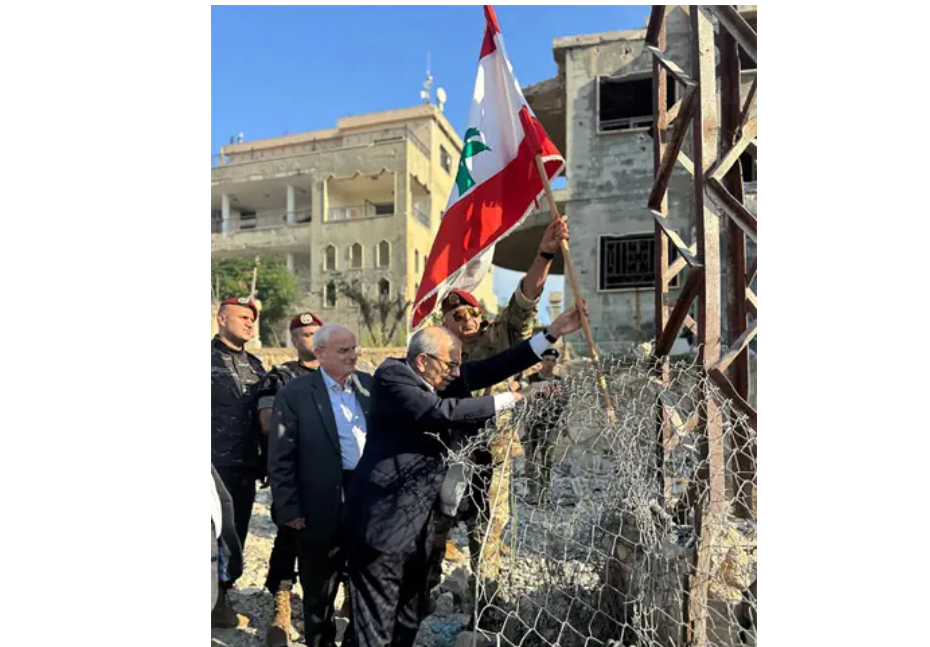
Lebanese Prime Minister Nawaf Salam visited the town on Wednesday, raising the national flag and pledging that the government would reopen roads, remove debris and restore essential public services to facilitate the return of displaced residents.
While welcoming the Israeli pullback as an important initial step, Salam stressed that Lebanon’s objective remained a complete Israeli withdrawal from all occupied areas.
Israel continues to maintain control over what it describes as a security buffer zone extending roughly 10 kilometres into Lebanese territory along the border. Israeli forces have ordered civilians to leave the area and demolished several villages.
Although a ceasefire took effect last month, controlled demolitions have continued in parts of southern Lebanon.
Thousands of displaced Lebanese remain unable to return because their communities are either still occupied by Israeli troops or have been destroyed.
Israeli officials have maintained that their forces will stay in southern Lebanon until Hezbollah is fully disarmed. Hezbollah has rejected direct negotiations between Beirut and Tel Aviv and continues to oppose full disarmament.
During his first official visit to Washington, Lebanese President Joseph Aoun said a full Israeli withdrawal would eliminate “the root cause that Hezbollah has long cited as its justification”.
According to his office, Aoun said Hezbollah could only be disarmed once Israel had completely withdrawn from Lebanese territory.
Residents await return home
The conflict caused extensive destruction across southern Lebanon, although violence has eased following separate agreements between the United States and Iran, as well as between Lebanon and Israel, signed last month.
According to the United Nations, more than 700,000 displaced people have returned to their homes in recent weeks.
In Zawtar al-Gharbiyeh, residents gathered at the village entrance waiting for permission to return.
“We will enter the town with our heads held high, thanks to the presence of the Lebanese army,” said 73-year-old Abbas Yaghi.
The Lebanese military has advised residents to stay away until security operations are completed.
Army units are continuing clearance operations in the town, which borders the Israeli-controlled area around neighbouring Zawtar al-Sharqiya.
Israeli forces, meanwhile, continue to carry out intermittent strikes in nearby areas, with the latest reported attack taking place in Nabatieh al-Fawqa.