


















































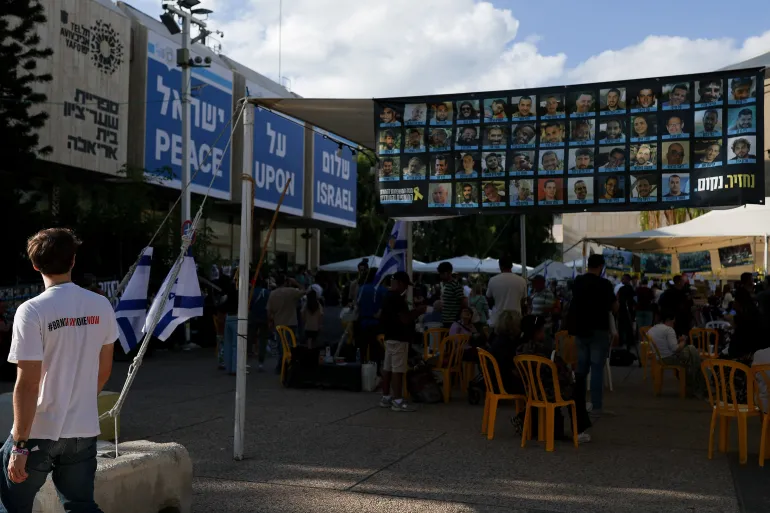
Web Desk; Israel expects all its remaining living captives to be released from Gaza early Monday, a major step under the ongoing ceasefire agreement with Hamas.

Government spokesperson Shosh Bedrosian confirmed on Sunday that 20 captives are due to be handed over together. As in earlier exchanges, the Red Cross will receive them first, then transfer them to an Israeli military base inside Gaza for health checks before they reunite with their families in Israel.
A Hamas official told Al Jazeera Arabic that the captives had been moved to three secure sites ahead of the handover. Following their return, Israel plans to release about 2,000 Palestinian detainees, including 250 serving life terms. However, long-imprisoned Palestinian leader Marwan Barghouti will not be among those freed.
Israel is also preparing to receive the bodies of 28 captives confirmed dead during captivity.
In a televised speech, Prime Minister Benjamin Netanyahu described the expected release as a moment of unity. “Tomorrow our children will return to our borders,” he said, expressing hope for healing and national solidarity. Yet, families of captives have accused Netanyahu of prioritizing military goals over negotiations.
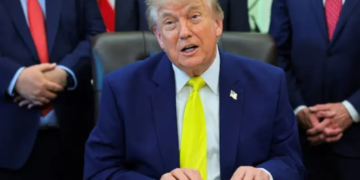
The exchange comes as former US President Donald Trump, who brokered the ceasefire, travels to Israel before co-chairing a summit in Sharm el-Sheikh, Egypt, with President Abdel Fattah el-Sisi. Trump, accompanied by senior officials, told reporters before departure that “the war is over,” and praised Qatar’s role in mediation.
Al Jazeera’s reporters described the visit as “Trump’s show,” noting his planned meetings with families, an address to the Knesset, and participation in the summit.
Meanwhile, humanitarian aid has begun trickling into Gaza, though distribution remains slow. Civilians returning to destroyed neighborhoods described them as “wastelands.” Aid agencies warn that food, medicine, and shelter are urgently needed.
The summit in Egypt is expected to bring together over a dozen world leaders, including UN chief Antonio Guterres, Jordan’s King Abdullah II, and Turkey’s President Recep Tayyip Erdogan. Iran has refused to attend, citing US strikes on its nuclear facilities earlier this year.
Phase two of the ceasefire, still under negotiation, will focus on Hamas’s disarmament, Israeli withdrawal, governance arrangements, and Gaza’s reconstruction. Analysts warn that while the release of captives may mark a symbolic victory, the path to stability will be long and uncertain.