

















































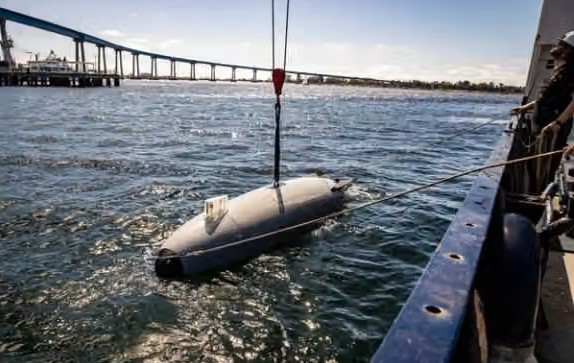
TEHRAN/ISLAMABAD (MNN); Iran’s state media on Tuesday claimed that the country’s armed forces had captured a US Navy unmanned underwater vehicle near the entrance to the Strait of Hormuz during what Tehran described as a complex intelligence operation.

Iranian state broadcaster IRIB reported that one of the US military’s advanced autonomous underwater systems had been seized by Iranian forces and brought into the country.
Tasnim News Agency identified the system as a Dive-LD, an autonomous unmanned underwater vehicle developed by US defence technology company Anduril Industries. According to the report, the system was first delivered to the US Navy’s Unmanned Undersea Vehicle Group 1 in 2025.
Iranian state media described the vehicle as incorporating sophisticated underwater technology and said the Islamic Revolutionary Guard Corps (IRGC) would release photographs and detailed video footage of the captured system.
Iran Claims US MQ-1 Drone Shot Down
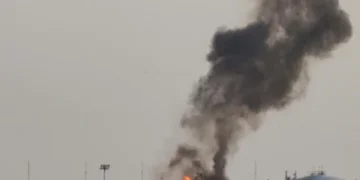
Separately, Iran’s army claimed that its air defence forces had shot down a US MQ-1 drone over the Strait of Hormuz.
According to Iranian state broadcaster Press TV, Iranian air defence units detected and tracked the drone over southeastern Iran before targeting and destroying it.
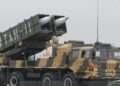
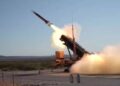
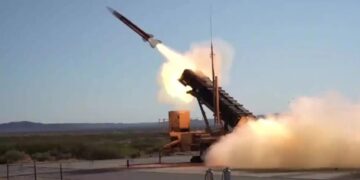
The report said the drone was brought down using what Iranian authorities described as a newly developed advanced air-defence system integrated into the country’s wider air-defence network.
There was no immediate independent confirmation of Iran’s claims.
Trump Says Iran Has Been “Punished Greatly”
US President Donald Trump meanwhile said Iran had been severely affected by the US naval blockade, describing the operation as highly effective.
“Iran will not have a nuclear weapon. And they’ve been punished greatly,” Trump said while speaking at an event outside the White House.
Praising US military operations against Iran, Trump said the performance of American forces had been “unbelievable” and described the blockade as powerful and effective.
US Imposes Sanctions on 36 Iran-Linked Aviation Targets
The US Treasury Department announced another round of sanctions against Iran, targeting 36 entities and individuals linked to the country’s aviation sector.
The measures reportedly include 27 airlines and other companies and intermediaries accused of helping Iran transport weapons, personnel and illicit cargo.
The Treasury said the sanctions were imposed under its campaign against Iran’s economic networks and also targeted firms allegedly involved in helping Tehran obtain US-origin aircraft and aviation technology.
Treasury Secretary Scott Bessent said the measures were intended to disrupt financial channels supporting the Iranian government. He warned companies dealing with sanctioned Iranian airlines that they could face restrictions that would effectively cut them off from the international financial system.
The Office of Foreign Assets Control also targeted third-country companies accused of supporting sanctioned Iranian aviation operations.
Tehran Calls for US Return to Islamabad Understanding
Iranian Foreign Minister Abbas Araghchi said a US return to its commitments under the Islamabad memorandum could provide a pathway toward reducing regional tensions.
During a telephone conversation with Japanese Foreign Minister Toshimitsu Motegi, Araghchi blamed the current escalation on what Tehran described as Washington’s failure to honour its commitments under the understanding.
“The solution is simple,” Araghchi said, arguing that US compliance with the Islamabad memorandum would help restore normal conditions.
The Iranian foreign minister also briefed his Japanese counterpart on negotiations between Iran and Oman concerning the Strait of Hormuz.
According to Tehran, the two countries have made significant progress toward establishing a temporary transit arrangement through the strategic waterway, with further consultations planned over its future management.
Japan Urges Maximum Restraint
Japanese Foreign Minister Toshimitsu Motegi expressed deep concern over the renewed US-Iran confrontation and called for an early reduction in tensions and a resumption of negotiations.
He urged Tehran to demonstrate maximum flexibility to prevent the current deadlock from continuing.
Motegi also raised concerns over Iran’s alleged attacks on civilian vessels and called on Tehran to exercise maximum restraint.
Japan stressed that safe and unrestricted navigation through the Strait of Hormuz should be restored as soon as possible without imposing additional costs.
Tokyo said any future arrangements concerning the strait should be discussed under international law with the participation of Gulf littoral states, countries using the waterway and the International Maritime Organisation.
Motegi also urged Iran to encourage Yemen’s Houthi movement to show restraint and stressed the importance of maintaining stability around the Bab el-Mandeb Strait.
Pezeshkian Vows to Resist Aggression
Iranian President Masoud Pezeshkian said Tehran had consistently opposed war but would defend itself with full force against aggression.
In a message on X, Pezeshkian said Iran’s priority remained protecting the interests of its people and regional security, while stressing that the country would continue to defend its national rights.
His remarks came as Iranian authorities announced plans for additional measures around the Strait of Hormuz, including a proposed maritime exclusion zone extending from the perimeter of the US blockade through the strait and into the Gulf.
Iran Warns of Maritime Response to Economic Pressure
Iranian Supreme National Security Council Secretary Mohsen Rezaei warned that continued US economic pressure could trigger a broader maritime response in the Persian Gulf.
Rezaei said Iran had recalibrated its operational posture toward US warships and military bases following recent exchanges of fire.
Iran maintains missile and drone capabilities that could threaten commercial shipping through the Strait of Hormuz as well as US military facilities across the region.
Acting Defence Minister Brigadier General Seyyed Majid Ibn al-Reza separately claimed that Iran possessed the capability to target US warships involved in enforcing economic restrictions.
He said Iran’s military capabilities would demonstrate the consequences of attempts to exert economic pressure through naval means.