










































































DOHA/ISLAMABAD/JEDDAH (MNN); Yemen’s Houthi movement on Saturday claimed responsibility for missile and drone strikes targeting what it described as “sensitive sites” in Saudi Arabia’s capital Riyadh and Aramco facilities in the port city of Yanbu.

The claim came hours after residents in Riyadh reported explosions and Saudi authorities issued overnight alerts warning of a possible aerial threat over the capital and the nearby city of Al-Kharj.
Houthi military spokesman Yahya Saree said the group had carried out two operations using ballistic and cruise missiles and drones. According to Saree, one operation targeted “sensitive sites” in Riyadh while the second targeted Saudi Aramco facilities in Yanbu.
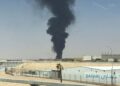
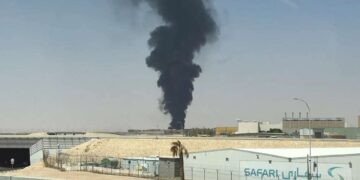
The Houthi statement followed a fire at a fuel depot near King Khalid International Airport in Riyadh. An AFP journalist at the scene reported seeing firefighters extinguish flames from a fuel tank bearing the Saudi Aramco logo.
Smoke reported near Riyadh airport
A large column of black smoke was seen near Riyadh’s main airport after residents reported loud explosions. Reuters footage showed smoke rising in the vicinity of the airport, with the terminal and airport highway visible in the foreground.
Flight-tracking website FlightRadar24 reported significant disruption at King Khalid International Airport, including flight delays and cancellations.
Saudi Civil Defence issued warnings to residents overnight, telling people in affected areas to remain indoors because of what the alerts described as a hostile aerial threat. Residents subsequently reported hearing explosions before an all-clear was issued.
One Riyadh resident told AFP that an alarm was followed by shaking windows, while another described the incident as frightening because the all-clear did not come immediately.
Saudi authorities did not immediately publicly identify the source of the threat in the overnight alerts.
Escalation with the Houthis
The latest incident comes amid a renewed escalation between Saudi Arabia and Yemen’s Houthis. The Houthis have accused Saudi Arabia of carrying out repeated airstrikes in Yemen and have vowed to respond.
The group has also announced attacks against Saudi-linked shipping in the Red Sea after declaring what it described as a naval blockade against Riyadh.
The escalation has raised concerns about the security of shipping through the Red Sea and Bab al-Mandab, a major maritime route connecting the Red Sea with the Gulf of Aden.
The Houthis maintain that their restrictions do not constitute a general threat to maritime traffic but specifically target Saudi vessels.
On Friday, Houthi military spokesman Yahya Saree said the group had foiled what he called “criminal attempts” in Sana’a and blamed Saudi Arabia, promising a response.
The Houthis have also claimed that Saudi forces have carried out hundreds of airstrikes against their positions in recent days.
International concern
The United Nations Security Council on Friday condemned continued Houthi attacks against Saudi Arabia, including attacks affecting civilian and energy infrastructure. The council also condemned the latest military escalation in Yemen.
The latest developments come as the United States has approved a possible $24.3 billion sale of 48 F-35 fighter aircraft to Saudi Arabia. The US State Department said the proposed sale would help Riyadh deter current and future threats.
Meanwhile, reports cited by AFP said the Houthis were strengthening defensive positions along newly controlled areas of Yemen’s Red Sea coastline, including installing radar systems and constructing tunnels.
The United Nations said renewed fighting in Yemen had displaced more than 112,000 people, while nearly 3,000 others had crossed the sea to Djibouti.
Background
Yemen’s war began in 2014 after the Houthis seized control of Sana’a and other parts of the country. Saudi Arabia subsequently led a military intervention in Yemen in March 2015.
A fragile truce reached in 2022 significantly reduced the intensity of fighting, but the ceasefire collapsed in July amid renewed confrontation between Riyadh and the Houthis.
The latest attacks represent another escalation in a conflict that has increasingly become linked to wider regional security, oil supplies and international shipping routes.