
































































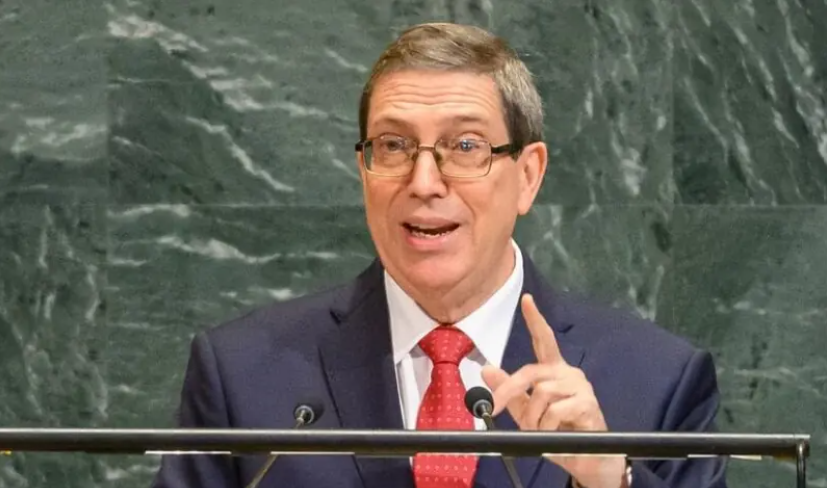
Cuban Foreign Minister Bruno Rodriguez criticised the decades-long US embargo on the island nation during a UN General Assembly debate on Tuesday, describing it as a “ruthless” policy and calling for international action against what Havana considers collective punishment.

“The government of the United States is carrying out against Cuba a multi-dimensional, non-conventional warfare that has already lasted for almost seven decades now and has become ever more cruel and more ruthless during the last seven months,” Rodriguez told the assembly, accusing Washington of imposing severe hardship on the Cuban population.
“Paying attention to this ruthless crime is also a responsibility of the United Nations,” he added.
Rodriguez said the economic damage caused by the embargo between March 2025 and February 2026 reached a record $8 billion, marking a 7 per cent increase compared with the previous year. He said the estimate did not include the “extreme impact” of a fuel blockade imposed by the United States on Cuba in February.
Several regional groups, including countries from Africa and the Caribbean, voiced support for Cuba and criticised the US restrictions during the debate.
Since 1992, the UN General Assembly has repeatedly passed a non-binding resolution calling for an end to the US blockade against Cuba. However, support slightly declined last October, when 165 countries voted in favour, seven opposed, and 12 abstained.
A vote on whether to hold Tuesday’s debate showed further divisions, with 136 countries supporting it, nine voting against, and 30 abstaining, including traditional supporters Germany and Canada.
“There is no American blockade,” US Ambassador Mike Waltz said during the session. “The only embargo in Cuba is the guillotine the regime keeps over the heads of its people.”
Addressing recent diplomatic discussions between Havana and Washington, Rodriguez said there had been “no progress” and suggested further developments were unlikely as long as US officials continued to view Cuba “as a vanquished or conquered adversary, as a colonial possession.”
While criticising US policy, some representatives also highlighted Cuba’s internal challenges.
“The dire situation of the Cuban people is not only due to the embargo,” said European Union Ambassador to the UN Stavros Lambrinidis.
He called on Cuban authorities to pursue “meaningful political and economic reforms,” including greater respect for human rights, while also criticising Havana’s support for Moscow amid Russia’s war in Ukraine.
Pakistan voices support for Cuba
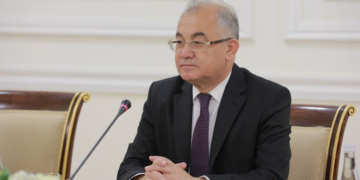
Pakistan’s Permanent Representative to the UN, Asim Iftikhar Ahmad, called for an end to the economic, commercial, and financial restrictions imposed on Cuba, saying their removal would help address humanitarian challenges and support the country’s development.
“Lifting the restrictions would help ease the humanitarian situation, enable the Cuban people to realise their right to development and prosperity, and reaffirm the principles of multilateralism and international cooperation,” he said.
Speaking during the debate, Ahmad expressed concern over the effects of the embargo on Cuba and its people, stressing that international cooperation based on sovereign equality and mutual respect remains essential for global stability.
He said “unilateral economic measures, particularly when applied selectively against developing countries, run counter to these principles.”
The ambassador reaffirmed Pakistan’s commitment to the UN Charter, including respect for sovereignty, territorial integrity, and political independence of all states. He also emphasised resolving disputes through peaceful means and encouraged continued diplomacy.
Under the ongoing blockade, Cuba is facing worsening economic difficulties, including widespread power cuts aimed at conserving fuel supplies.
The country is also experiencing shortages of food, drinking water, and medicines, while the United Nations has warned of a growing humanitarian crisis.