












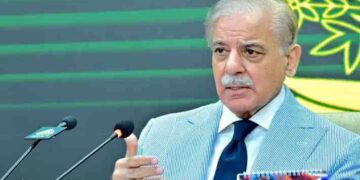
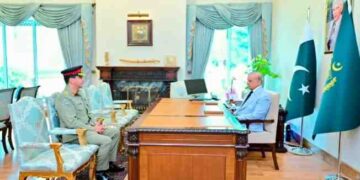






































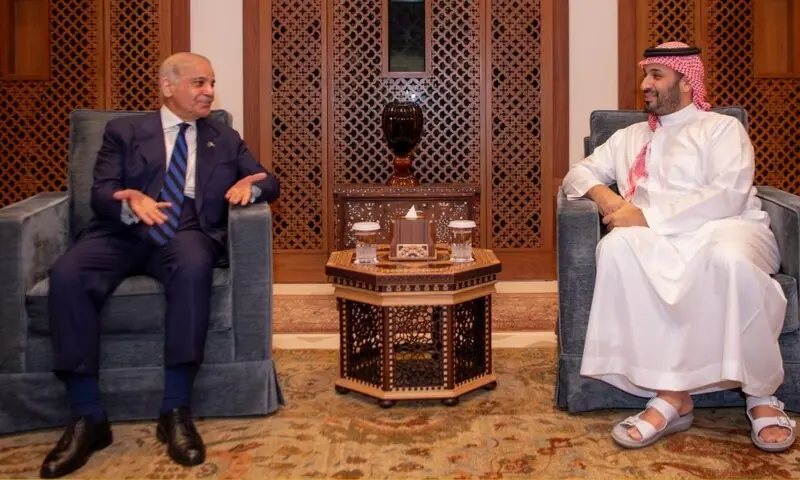
NEWS DESK (MNN); Prime Minister Shehbaz Sharif held a restricted meeting with Saudi Crown Prince Mohammed bin Salman in Jeddah on Thursday during his brief official visit to the Kingdom, as tensions in the Middle East continue to escalate.

According to Prime Minister’s spokesperson for foreign media Mosharraf Zaidi, the meeting focused on the evolving security situation in the region and ways to promote peace and stability.
During the meeting, Prime Minister Shehbaz expressed Pakistan’s “full solidarity and support” for Saudi Arabia in the current challenging circumstances. Both leaders agreed to work closely together to ensure regional peace and stability.
The statement said the prime minister also conveyed his respects and best wishes to the Custodian of the Two Holy Mosques, King Salman bin Abdulaziz Al Saud, and thanked the Kingdom for its longstanding support for Pakistan.
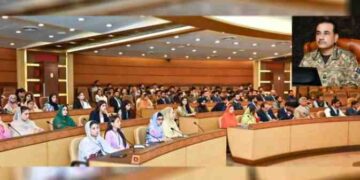
Deputy Prime Minister and Foreign Minister Ishaq Dar and Pakistan’s Chief of Army Staff and Chief of Defence Forces Asim Munir were also present during the meeting.
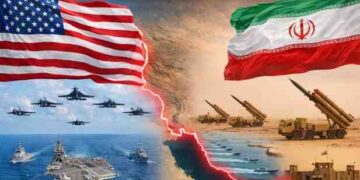
The visit comes at a time when the Middle East is witnessing intense hostilities. Several Gulf countries, including Saudi Arabia, have been facing missile and drone attacks from Iran, which Tehran says are aimed at United States and Israeli military sites in response to large-scale strikes against it.
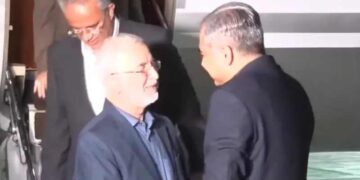
Earlier, the prime minister was received at the Royal Terminal of King Abdulaziz International Airport by Deputy Governor of the Makkah Region Prince Saud bin Mishal bin Abdulaziz along with Pakistan’s Ambassador to Saudi Arabia Ahmad Farooq and Consul General in Jeddah Syed Mustafa Rabani.
According to officials, the visit lasted only a few hours and was undertaken at the invitation of Crown Prince Mohammed bin Salman. The two leaders exchanged views on regional tensions, security concerns and bilateral relations between Pakistan and Saudi Arabia.
Pakistan’s Foreign Office spokesperson Tahir Andrabi said the visit should be seen in the broader context of Pakistan’s diplomatic efforts to encourage an early cessation of hostilities and promote dialogue in the region.
He said Pakistan has been consistently emphasising three key principles in its diplomatic engagements: respect for sovereignty and territorial integrity, adherence to international law and the principles of the United Nations Charter, and the resumption of dialogue to reach a peaceful resolution of the crisis.
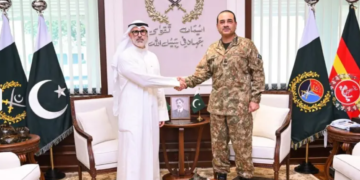
Earlier this month, Field Marshal Asim Munir visited Saudi Arabia where he held talks with Saudi Defence Minister Khalid bin Salman Al Saud regarding the regional security situation following Iranian missile and drone attacks.
According to Pakistan’s military media wing Inter-Services Public Relations, both sides also discussed joint measures to counter such threats under the Strategic Mutual Defence Agreement signed between the two countries last year.
Mosharraf Zaidi recently reiterated that Pakistan would stand by Saudi Arabia whenever needed, emphasising that the relationship between the two countries is based on mutual support. (UPDATED)
NEWS DESK (MNN); Prime Minister Shehbaz Sharif arrived in Saudi Arabia on Thursday for a brief official visit as tensions continue to rise in the Middle East with no clear signs of de-escalation in the ongoing conflict.
According to state broadcaster Pakistan Television Corporation, the prime minister landed at the Royal Terminal of King Abdulaziz International Airport in Jeddah. He was received by Deputy Governor of the Makkah Region Prince Saud bin Mishal bin Abdulaziz along with Pakistan’s Ambassador to Saudi Arabia Ahmad Farooq, Consul General in Jeddah Syed Mustafa Rabani and other diplomatic officials.
The visit, expected to last only a few hours, will include a meeting between Prime Minister Shehbaz Sharif and Saudi Crown Prince Mohammed bin Salman.
Earlier, the Prime Minister’s Office said the visit was being undertaken at the invitation of the Saudi crown prince. During the meeting, both leaders are expected to exchange views on the evolving security situation in the Middle East, the ongoing conflict in the region and bilateral relations between Pakistan and Saudi Arabia.
The region has witnessed heightened tensions in recent weeks as several Gulf states, including Saudi Arabia, have faced attacks from Iran involving missiles and drones. Tehran claims the strikes are aimed at United States and Israeli military targets in response to large-scale attacks carried out by the two countries.
The Prime Minister’s Office said the visit highlights Pakistan’s constructive role in regional diplomacy and reiterated Islamabad’s commitment to promoting peace and stability through dialogue.
Foreign Office spokesperson Tahir Andrabi said the prime minister’s visit should also be viewed within the broader framework of Pakistan’s diplomatic efforts aimed at achieving an early cessation of hostilities and violence in the region.
Speaking during a weekly press briefing, Andrabi said Pakistan has consistently emphasised three key principles to all concerned parties. These include respect for sovereignty and territorial integrity, adherence to international law and the principles of the United Nations Charter, and the resumption of dialogue to achieve a peaceful resolution of the crisis.
Meanwhile, Prime Minister’s spokesperson for foreign media Mosharraf Zaidi recently stated that Pakistan would stand by Saudi Arabia whenever needed.
Earlier this month, Pakistan’s Chief of Defence Forces and Chief of Army Staff Asim Munir visited Saudi Arabia where he held discussions with Saudi Defence Minister Khalid bin Salman Al Saud.
According to Pakistan’s military media wing Inter-Services Public Relations, the two sides reviewed the serious security challenges arising from Iranian missile and drone attacks on Saudi territory.
They also discussed joint measures to counter such threats under the Strategic Mutual Defence Agreement signed between Pakistan and Saudi Arabia last year.
Officials say Pakistan is actively engaged in diplomatic efforts to prevent further escalation in the Middle East while maintaining close coordination with regional partners.