








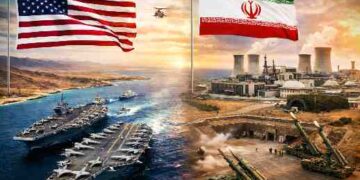







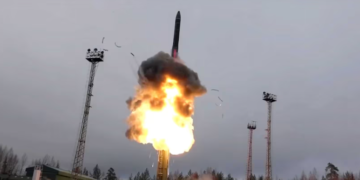

























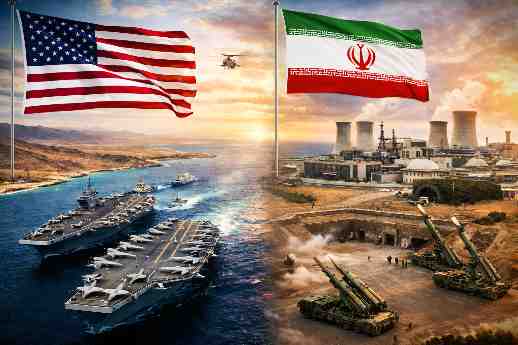
TEHRAN/ISLAMABAD/WASHINGTON (MNN); Tensions in the Middle East escalated sharply as the United States launched fresh strikes against targets linked to Iran’s Islamic Revolutionary Guard Corps (IRGC), while Tehran warned Washington of severe retaliation.

US Central Command (CENTCOM) said the latest military action followed alleged attempts by the IRGC to target commercial shipping in the Strait of Hormuz and American troops deployed across the region.
In a statement posted on X, CENTCOM said the strikes were carried out in response to what it described as recent hostile actions by Iranian forces.
Iran’s IRGC spokesperson Brigadier General Hossein Mohammadi strongly condemned the attacks and warned that the United States would face consequences.
“A harsh punishment awaits the aggressors, and the United States will regret its new attacks,” he said.
Iranian state broadcaster IRIB reported multiple explosions in several locations, including areas east of Bandar Abbas. More than five explosions were reportedly heard near the village of Masan on Qeshm Island, while four blasts were also reported near the Strait of Hormuz.
Officials in Hormozgan province said there were no immediate reports of casualties or major incidents.
Meanwhile, the deputy governor of Iran’s Sistan-Baluchistan province said four projectiles had struck areas near Chabahar and Konarak, according to Iran’s Fars news agency.
A US official told Al Jazeera that military operations against IRGC-linked targets inside Iran were continuing.
Amid rising regional tensions, the US State Department issued a security alert advising American citizens in the Middle East to remain highly vigilant and prepare for possible flight cancellations, airspace closures and travel disruptions.
US embassies in Israel, Qatar and Jordan also warned American nationals that the regional security situation remained complex and could escalate without warning.
US President Donald Trump warned Tehran against retaliating, saying Iran would be hit again at a “much harder and higher level” if it responded to the ongoing strikes.
Iranian Parliament Speaker Mohammad Bagher Ghalibaf, meanwhile, warned that Tehran would respond militarily if Washington intensified what he described as a “siege” of Iran.
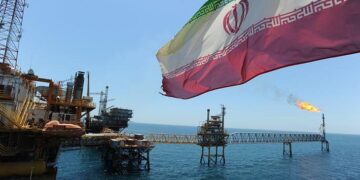
“If the enemy prevents us from exporting oil from the Persian Gulf, then no one will be able to export oil,” Ghalibaf warned.
CENTCOM said it had redirected 84 commercial vessels, disabled three ships and boarded two others as part of Washington’s naval blockade operations involving Iran.
Ghalibaf, however, claimed Iranian forces remained in control of the Strait of Hormuz and were resisting US efforts to secure shipping routes through the strategic waterway.
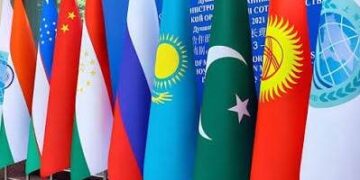
The Shanghai Cooperation Organisation (SCO) also expressed deep concern over developments surrounding Iran and the wider Middle East.
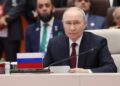
In its summit declaration, the SCO condemned military strikes on Iranian territory, saying such actions had resulted in civilian casualties and significant economic damage.
Meanwhile, Iran’s military claimed significant success in defending its airspace.
The commander of Iran’s air defence forces, Brigadier General Alireza Elhami, claimed that indigenous Iranian air defence systems had shot down 200 enemy aircraft during the US-Israeli war.
Separately, Army Coordinating Deputy Commander Brigadier General Mohammad Sadeghian said air defence systems had been deployed at around 3,800 locations across Iran.
The situation remains highly volatile, with military operations continuing and both Washington and Tehran issuing increasingly strong warnings, raising fears of a broader regional escalation.