














































































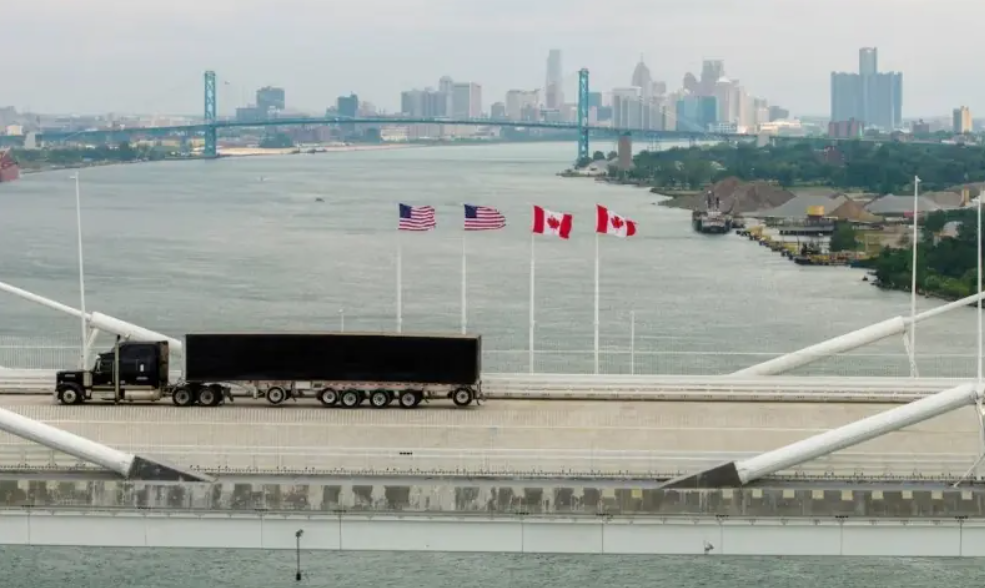
The United States imposed 50 per cent tariffs on selected Canadian goods on Saturday after trade negotiations between the two allies failed, with Washington and Ottawa blaming each other for the breakdown in talks.

The duties, which took effect shortly after midnight, apply to around $20 billion worth of Canadian imports, including products such as wooden ice hockey sticks. The affected goods account for just over 5pc of Canada’s exports to the US, meaning the immediate economic impact is expected to be limited.
However, the move signals growing tensions between US President Donald Trump and Canadian Prime Minister Mark Carney and could complicate efforts to renegotiate the US-Mexico-Canada free trade agreement.
Carney announced that Canada had suspended negotiations and would respond to the new tariffs with equivalent measures.
“I have decided to suspend trade negotiations with the US and have directed Canada’s negotiators to return to Ottawa,” Carney said in a statement.
“They (negotiators) have worked hard, in good faith, to defend the interests of Canadians throughout these negotiations up until the very last minute,” he said.
“However, last-minute changes in the US proposed terms were unfair, uneconomic, and called into question the reliability of any deal.”
Earlier, both sides had appeared close to reaching an agreement that could have reduced tariffs on steel, aluminium and automobiles, while potentially allowing American alcohol to return to Canadian liquor stores.
US Trade Representative Jamieson Greer said Canada had ultimately refused to finalise the agreement.
“Tonight, Canada declined to finalise the trade deal under the terms agreed earlier this week,” US Trade Representative Jamieson Greer said during a White House briefing.
“This is a missed opportunity for Canada to partner with the United States, which is the fastest-growing economy in the G7,” Greer said.
A senior Trump administration official said Washington’s proposal would have offered Canada a more favourable tariff position than other major exporters but claimed Ottawa had continued to seek further concessions, particularly regarding steel, aluminium, automobiles and softwood lumber.
No further negotiations are currently planned as the new tariffs come into effect.
Trump had previously threatened duties on a range of Canadian products, including wine, furniture, dairy goods, cement, clothing, fishing equipment and hockey gear.
Trade experts have warned that the latest measures could severely affect sectors that do not qualify for preferential treatment under the US-Mexico-Canada trade agreement, potentially resulting in job losses and business closures.
The tariffs follow three days of talks in Washington between Canada’s minister responsible for trade with the US, Dominic LeBlanc, and Greer. They also add to existing American tariffs on Canadian steel, lumber and automobiles, sectors that have already faced significant pressure over the past 18 months.