















































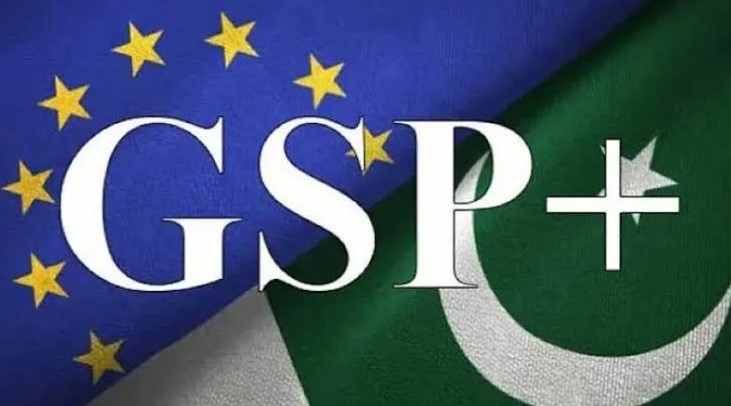
ISLAMABAD (MNN); The European Union has expressed concern over Pakistan’s compliance with its commitments under the Generalised Scheme of Preferences Plus (GSP+), warning that Islamabad will need to address shortcomings in human rights, governance and the rule of law to remain eligible under the revised GSP+ framework, which will come into effect on January 1, 2027.

The observations were made in the European Commission’s latest report on the implementation of the GSP+ scheme for the 2023–2025 period. The report noted that while Pakistan had taken several positive legislative and administrative measures, progress in many key areas remained limited and, in some cases, had deteriorated.
According to the Commission, Pakistan’s continued access to the EU’s preferential trade regime will depend on measurable improvements in areas including accountability for human rights violations, prevention of torture, prison and capital punishment reforms, addressing enforced disappearances, and protecting freedom of expression.
The report acknowledged a number of positive developments during the review period, including the establishment of the National Commission for Minorities, a reduction in the scope of the death penalty, continuation of the unofficial moratorium on executions, implementation rules under the Anti-Torture Act, the Domestic Violence Act for Islamabad Capital Territory, and Pakistan’s first conviction in a marital rape case. It also praised the National Commission for Human Rights for strengthening the country’s human rights framework.
However, the Commission stressed that most reforms had remained legislative or administrative in nature and had yet to produce meaningful improvements on the ground.
The report expressed concern over an increase in enforced disappearances and alleged extrajudicial killings, stating that accountability for perpetrators remained inadequate. It also highlighted the absence of legislation specifically criminalising enforced disappearances.
The European Commission further voiced concern over restrictions on freedom of expression, arguing that amendments to the Pakistan Electronic Crimes Act (PECA), anti-terrorism, blasphemy and criminal defamation laws contain broadly defined provisions that could potentially be used against journalists, human rights defenders, political dissidents, minorities and civil society activists.
According to the report, media freedom continued to face challenges despite legal protections for journalists, with media professionals reportedly subjected to intimidation, harassment, violence and strategic lawsuits aimed at discouraging reporting on sensitive issues.
The Commission also raised concerns about recent constitutional amendments, saying they had attracted criticism over their potential impact on judicial independence, accountability and the rule of law. It further referred to concerns surrounding the integrity of Pakistan’s 2024 general elections, legal proceedings involving opposition leaders, and military trials, which it said did not fully meet international fair trial standards.
The report also highlighted discrimination against religious minorities, violence against women and children, child labour, child marriages, overcrowded prisons, out-of-school children and concerns regarding the treatment of Afghan refugees returning under Pakistan’s repatriation programme.
At the same time, the Commission recognised Pakistan’s efforts to strengthen social protection programmes, improve prison reforms, expand education initiatives, combat gender-based violence and enhance institutional mechanisms for human rights protection.
Pakistan remains the largest beneficiary of the European Union’s GSP+ programme, which grants preferential market access to countries implementing 27 international conventions relating to human rights, labour rights, environmental protection, climate action and good governance.
The report noted that the EU continues to be Pakistan’s largest export destination, accounting for around 28 percent of the country’s total exports. Textile and clothing products comprise nearly three-quarters of Pakistan’s exports to the European market.
According to the Commission, Pakistan exported goods worth €8.3 billion to the European Union in 2024, while approximately 90 percent of its exports qualified for GSP+ preferences. The country benefited from an estimated €732 million in tariff concessions during the year.
Besides governance and human rights, the report also reviewed Pakistan’s commitments on labour rights, environmental protection, climate change and sustainable development. While welcoming Pakistan’s ratification of the International Labour Organisation’s Forced Labour Protocol and improvements in labour inspections, the Commission said enforcement remained weak and called for stronger implementation of labour and environmental obligations under the revised GSP+ framework.