










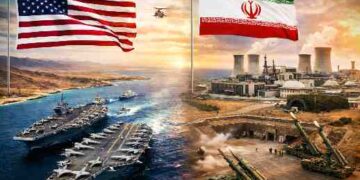



























DUBAI/DOHA/ISLAMABAD (MNN); The Middle East moved closer to another major regional conflict on Wednesday as the United States reimposed a naval blockade on Iran and launched fresh waves of airstrikes, while Tehran warned it was prepared for a broader military confrontation if Washington failed to honour the terms of the interim agreement reached last month.

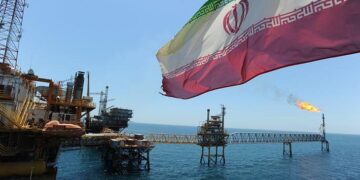
According to The Associated Press (AP), Reuters and U.S. Central Command (CENTCOM), the renewed American military campaign comes after Iran resumed attacks on commercial vessels attempting to transit the Strait of Hormuz, one of the world’s most strategically important shipping lanes through which nearly one-fifth of global oil and liquefied natural gas supplies pass during normal times.
The latest escalation has effectively shattered the fragile 60-day interim agreement brokered last month to pause hostilities and create space for negotiations over Iran’s nuclear programme and regional security issues. Diplomatic efforts have since stalled as both sides accuse each other of violating the terms of the understanding.
The United States had initially imposed a naval blockade in April before lifting it following the interim agreement. However, after renewed attacks on shipping and increasing military activity around the Strait of Hormuz, Washington announced the blockade had been reinstated.
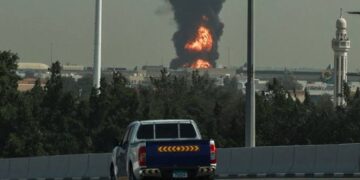
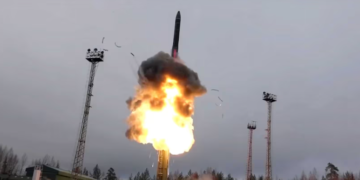
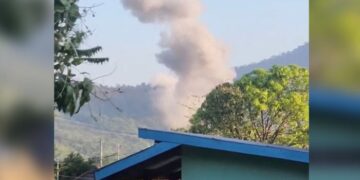
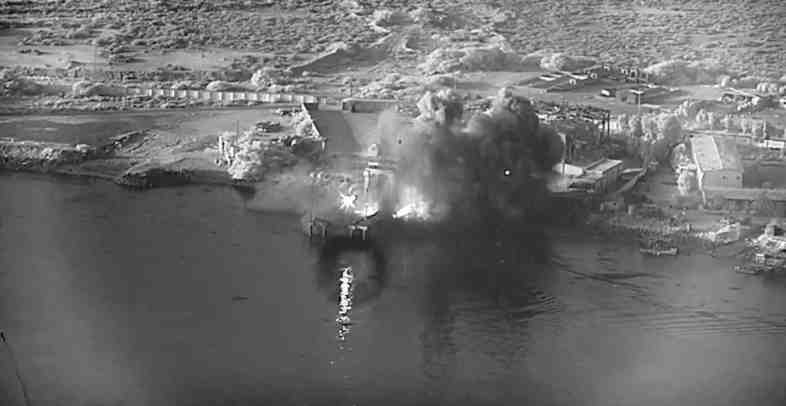
According to CENTCOM, U.S. forces carried out multiple waves of precision airstrikes over the past 24 hours against what it described as Iranian military infrastructure, missile facilities and strategic defence positions along Iran’s southern coastline. Military officials said targets included installations in Bandar Abbas, Bushehr, Khormuj, Ahvaz, Qeshm Island and Kuh-e Stak.
Iranian state media also reported that an army barracks belonging to the 388th Mechanized Infantry Brigade in Sistan and Baluchestan Province came under missile attack. Iranian officials said at least seven soldiers were killed and several others wounded in the strike. The country’s Health Ministry later stated that more than 35 people had been killed and over 300 injured in recent U.S. airstrikes, although it did not specify how many were civilians or military personnel. These casualty figures have not been independently verified.
In one of the most significant developments, CENTCOM claimed that U.S. forces intercepted the Curaçao-flagged oil tanker Belma after it allegedly ignored repeated warnings while sailing towards Iran’s Kharg Island oil terminal. According to the U.S. military, a military aircraft disabled the vessel by firing Hellfire missiles into its smokestack. Two other commercial ships were reportedly ordered to alter course and complied. Iran has not independently confirmed the incident.
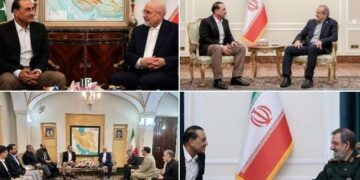
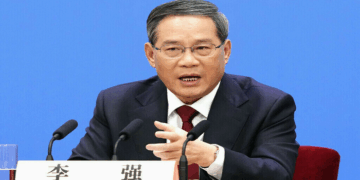
Meanwhile, Iranian officials strongly condemned the renewed U.S. military action. Parliament Speaker Mohammad Bagher Qalibaf, who is also involved in negotiations with Washington, accused the United States of abandoning commitments made under the interim agreement.
In a statement carried by Iranian media, Qalibaf said Tehran had fulfilled its obligations regarding arrangements for navigation through the Strait of Hormuz but alleged that Washington had instead chosen military pressure after exhausting diplomatic options. He maintained that negotiations should not be viewed as surrender but as part of Iran’s broader strategy of resistance.
Iran’s Islamic Revolutionary Guard Corps (IRGC) also issued a stern warning, declaring that if Iran’s energy exports were obstructed, no country in the region would be allowed to export oil or natural gas safely.
“The export of oil and gas from the region will be either for everyone or for no one,” the IRGC said in a statement reported by international media.
Despite the intensifying conflict, U.S. President Donald Trump suggested that diplomacy remained possible.
Speaking at a defence summit at the U.S. Army War College in Pennsylvania, Trump said Iran appeared interested in reaching a peace agreement despite ongoing military operations.
“They don’t like what we’re doing, and they do want to settle. We’ll find out whether we settle with them, or we just finish it off,” Trump said.
Regional tensions also continued to spread beyond Iranian territory.
Missile warning sirens were activated in Bahrain and Kuwait after authorities reported incoming Iranian missile attacks. Jordanian officials said their air defence systems intercepted three missiles entering the country’s airspace. Iran later claimed responsibility for strikes targeting Bahrain, Kuwait and Jordan, all of which host American military facilities. These battlefield claims remain difficult to verify independently.
According to Reuters, commercial shipping through the Strait of Hormuz has slowed considerably, while insurance premiums for vessels operating in the Gulf have risen sharply.
International benchmark Brent crude oil traded above 85 dollars per barrel on Wednesday, representing a significant increase since the conflict began, although prices remain below the peaks recorded during the initial weeks of fighting.
Economists have warned that continued disruption in the Strait of Hormuz could have far-reaching consequences for global energy markets and inflation.
Analysts at the International Monetary Fund (IMF) said global oil inventories had helped cushion recent supply shocks but warned that the available surplus had been significantly reduced.
“Unless inventories are replenished, the world will start from a weaker position when the next shock comes,” IMF economists Azim Sadikov and Jean-Marc Natal wrote in an official analysis.
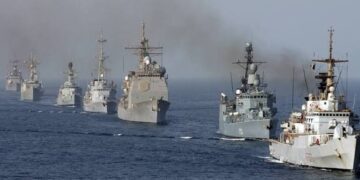
Security experts say reopening the Strait of Hormuz through military force would require an extensive multinational naval deployment and possibly a much larger ground force than currently deployed in the region.
Diplomatic observers fear the latest military escalation could derail any remaining prospects for negotiations and push the Middle East back toward a wider regional conflict involving multiple countries.
The situation remains highly fluid, with international governments continuing to monitor developments closely while urging restraint to prevent further escalation.