



















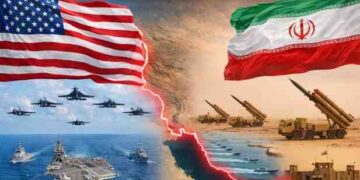





































WASHINGTON/ISLAMABAD (MNN); The United States House of Representatives on Wednesday approved a Democratic-led resolution seeking to limit further military action against Iran unless explicitly authorized by Congress, reflecting growing concern among lawmakers over the conflict and its consequences despite the Trump administration’s insistence that its military objectives have been achieved.

The resolution passed by a vote of 215-208, with four Republican lawmakers joining Democrats in support of the measure. The vote highlighted increasing unease on Capitol Hill over the administration’s handling of the conflict, even among members of President Donald Trump’s own party.
The congressional move came as Trump signaled optimism regarding ongoing negotiations with Iran. Speaking to reporters at the White House, the US president said discussions with Tehran were progressing positively and suggested that both sides could move toward finalizing an agreement in the coming days.
Trump also indicated that he wanted negotiations related to the conflict in Lebanon to be handled separately from discussions concerning the US-Iran confrontation, despite Iran’s position that the regional conflicts remain interconnected.
“I’d like to separate it because it is separate,” Trump told reporters, expressing hope that diplomatic efforts could continue independently on multiple fronts.
Meanwhile, US Secretary of State Marco Rubio appeared before the House Foreign Affairs Committee, where he declared that Washington’s military campaign against Iran, known as “Operation Epic Fury,” had formally ended.
Rubio told lawmakers that the United States was no longer conducting sustained military strikes inside Iran and that any future American military action would be defensive rather than offensive.
“We’re no longer conducting sustained strikes inside Iran because Epic Fury is over,” Rubio said, describing the operation as a successful military campaign.
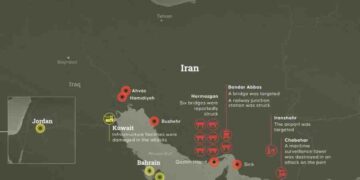
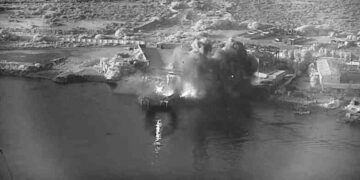
According to Rubio, the operation achieved its principal objectives by significantly degrading Iran’s conventional military capabilities. He claimed that US and allied operations had destroyed much of Iran’s defense industrial infrastructure, reduced its missile-launching capacity, weakened its drone arsenal, eliminated what remained of its conventional air force and effectively neutralized its traditional naval forces.
Rubio argued that these outcomes constituted a clear victory for Washington.
“The purpose of Epic Fury was to remove Iran’s ability to threaten the region with overwhelming missile and drone capabilities, and we achieved that objective,” he told lawmakers.
However, the secretary acknowledged that Iran still retained some military capabilities, particularly in the areas of drone operations and maritime warfare.
The hearing quickly turned contentious as Democratic lawmakers challenged the administration’s assessment of the conflict.
Representative Sara Jacobs questioned how the administration could declare victory while thousands of American troops remained deployed across the Middle East and the strategically vital Strait of Hormuz remained closed.
Jacobs argued that changing the name or status of the operation did not alter the reality facing US military personnel in the region.
She noted that thousands of American service members continued to face potential danger and questioned whether the administration’s declaration that the war had ended accurately reflected conditions on the ground.
When Jacobs asked who had actually won the conflict, Rubio reiterated that victory should be measured by whether military objectives had been achieved.
He maintained that Washington had successfully damaged Iran’s military infrastructure and significantly reduced its ability to project conventional military power throughout the region.
The exchange intensified when Jacobs cited intelligence assessments suggesting that Iran was rebuilding portions of its military-industrial capacity more quickly than previously anticipated.
According to Jacobs, intelligence analysts believed Iran still retained a substantial portion of its missile stockpile and mobile missile launchers.
She also argued that the strategic situation had worsened since the conflict began, noting that the Strait of Hormuz had been open before the war but remained closed afterward.
Rubio disputed the characterization, saying he was unaware of the intelligence assessments being cited and emphasizing that classified intelligence matters would not normally be discussed publicly.
The debate highlighted continuing divisions in Washington over the consequences of the conflict and whether the military operation produced lasting strategic gains.
Separately, federal watchdog agencies announced a formal review of expenditures associated with Operation Epic Fury. According to US officials, inspectors general from the Department of War, the Department of State and the US Agency for International Development will oversee the investigation.
The review is required under federal law because the military operation exceeded 60 days and involved overseas contingency activities. Officials said the purpose of the audit is to ensure transparency and accountability regarding the use of taxpayer funds and foreign assistance resources linked to the mission.
Inspector General Platte B. Moring III will lead the oversight effort.
Rubio also revealed that the future of Iran’s highly enriched uranium stockpiles remains a central issue in ongoing negotiations between Washington and Tehran.
Speaking before lawmakers, he said documents exchanged between both sides had addressed the matter, but Iran had not yet formally approved a final agreement.
“Iran’s system has not provided final sign-off as of this morning,” Rubio said.
Despite expressing optimism about diplomacy, Rubio stressed that regime change was never the objective of the military campaign.
Responding to comments from Republican Congressman Michael McCaul regarding hopes for a “free Iran,” Rubio said that while Washington would welcome political reforms inside Iran, the mission’s purpose was limited to addressing security threats.
“The goal of our mission was not regime change,” Rubio said. “It was to remove Iran’s ability to threaten the region through missiles, drones and a potential nuclear weapons capability.”
The hearing also featured strong criticism from senior Democrat Gregory Meeks, who accused the Trump administration of abandoning diplomacy and escalating tensions in the Middle East.
Meeks argued that Trump had promised Americans there would be no new wars but had instead drawn the country deeper into regional conflict.
He claimed the administration had once again chosen military force over diplomatic engagement and questioned assertions that the conflict had made America safer or more prosperous.
While the Trump administration continues to portray Operation Epic Fury as a military success and insists that the offensive phase of the conflict has ended, congressional critics remain skeptical, arguing that regional instability, threats to US forces and uncertainty over Iran’s future capabilities continue to pose serious challenges.